ni'o la .tlon. joi la .ukybar. joi la .orbis.tertius.
ni'o la'o sy.Jorge Luis Borges.sy. finti
ni'o la'o sy.Jorge Luis Borges.sy. finti
| lojbo | glico | spano |
|---|---|---|
| ni'o ni'o ni'o bau le lojbo | English version | original en español |
| ni'o la .tlon. joi la .ukybar. joi la .orbis.tertius. | Tlön, Uqbar, Orbis Tertius | Tlön, Uqbar, Orbis Tertius |
| ni'o la'o sy.Jorge Luis Borges.sy. finti | by Jorge Luis Borges | por Jorge Luis Borges |
| ni'o la gleki cu fanva fi le lojbo | English translation by la gleki | original en español |
| ni'o finti de'i nanca bu 1940 | Published in 1940 | -1940 |
| ni'o ni'o pa mo'o | I | I |
| .i mi facki fi la ukybar ri'a tu'a lo minra joi lo skecku | I owe to the conjunction of a mirror and an encyclopedia the discovery of Uqbar. | Debo a la conjunción de un espejo y de una enciclopedia el descubrimiento de Uqbar. |
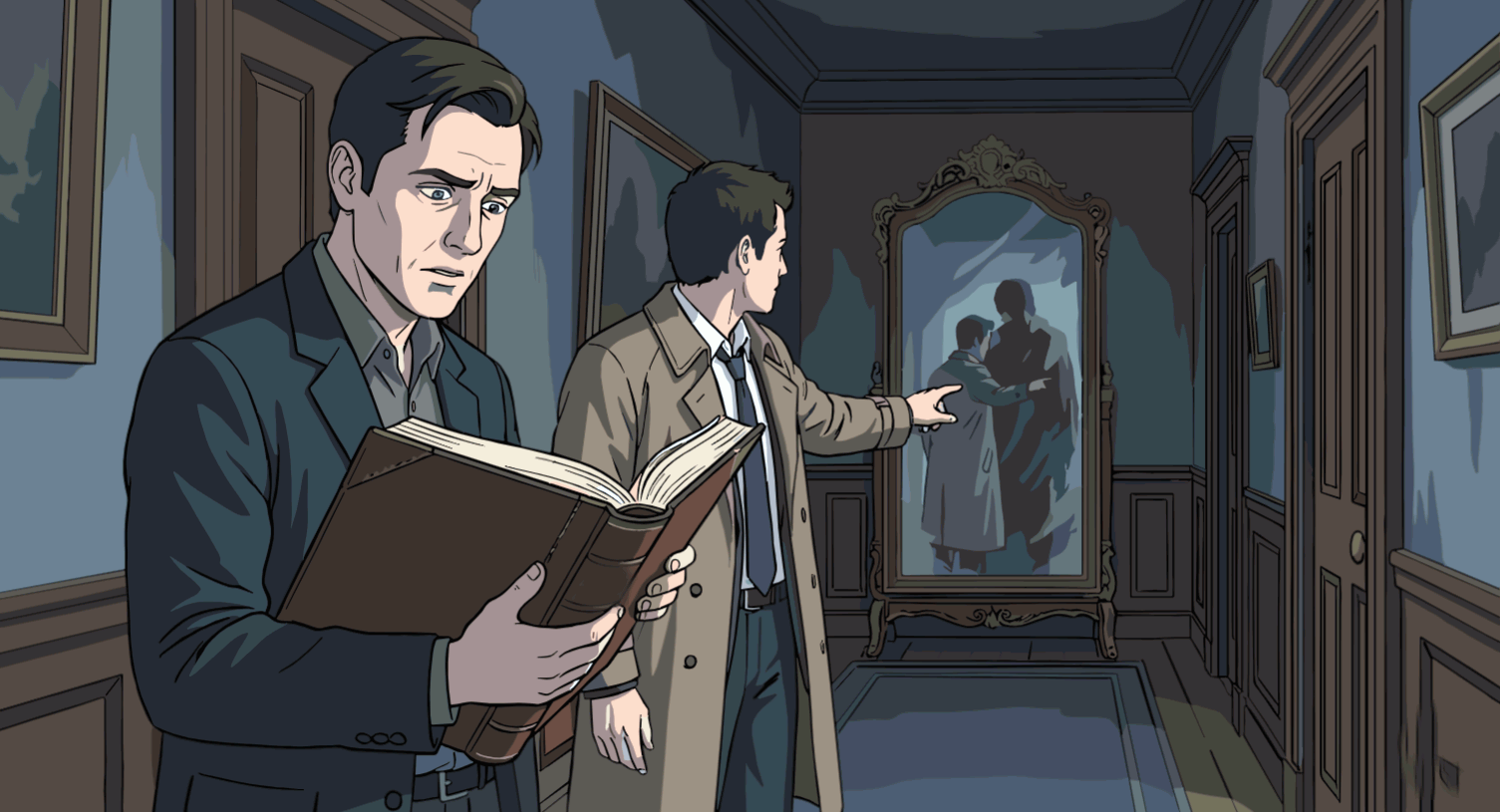
| .i le minra pu ca'o raktu le trixe be le klaji be le nenri be le nurma dinju be bu'u le klaji be me'e zoi sy.Gaona.sy. bei bu'u la'o sy.Ramos Mejía.sy. i le skecku cu se srera se cmene zoi gy.The Anglo-American Cyclopaedia.gy. (to'i sa'a la glico joi merko skecku toi) (to la .nuiork. de'i li nanca bu 1917 toi) gi'e satci gi'e ku'i no'e cinri fukpi la'o gy.Encyclopaedia Britannica.gy. (to'i sa'a la brito skecku toi) (to de'i li nanca bu 1902 toi) | The mirror disturbed the end of a corridor in a country house on Calle Gaona, in Ramos Mejía; the encyclopedia is fallaciously called The Anglo-American Cyclopaedia (New York, 1917) and is a verbatim, but also lazy, reprint of the Encyclopaedia Britannica of 1902. | El espejo inquietaba el fondo de un corredor en una quinta de la calle Gaona, en Ramos Mejía; la enciclopedia falazmente se llama The Anglo-American Cyclopaedía (New York, 1917) y es una reimpresión literal, pero también morosa, de la Encyclopaedia Britannica de 1902. |
| .i fasnu pu la'u le nanca be li ji'i mu | The event occurred about five years ago. | El hecho se produjo hará unos cinco años. |
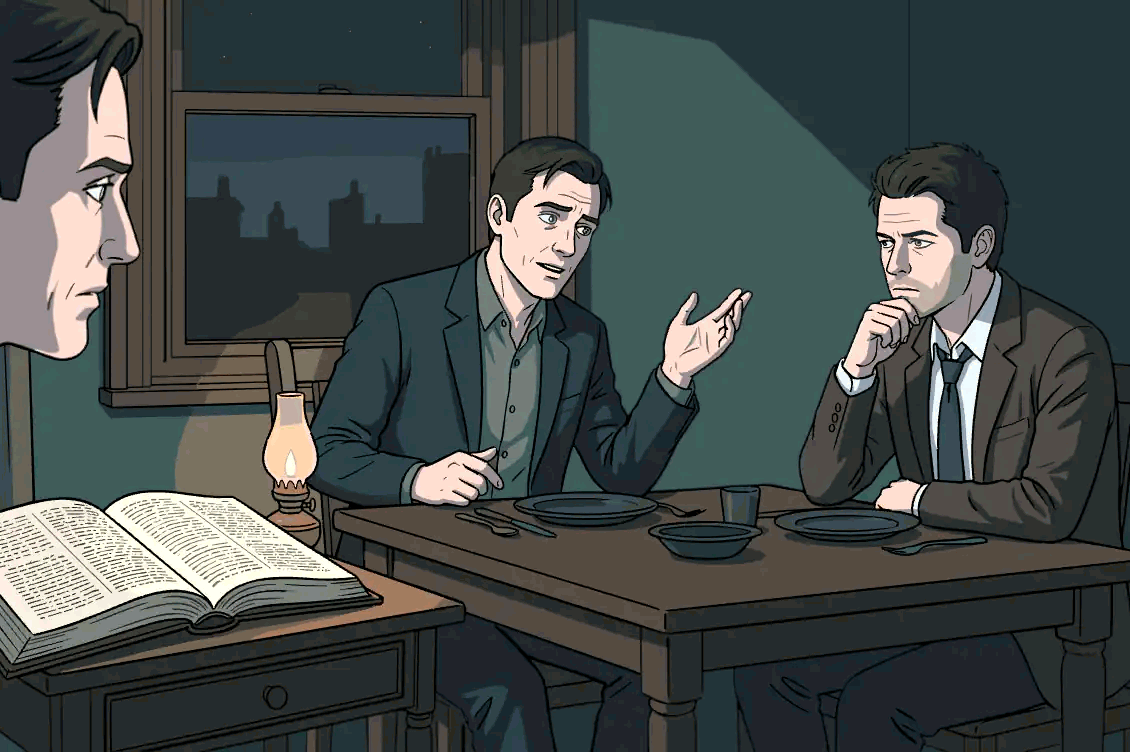
| .i la .biois.kasares. jo'u mi pu citka lo vanci sanmi .i mi'a za'o casnu le nabmi be fi lo nu cfika tu'a vo'i joi lo nu na'e skicu su'o fasnu gi'a bo xusra su'o boi su'o va'e jitfa gi'e ciksi fo su'o natfe vau ja'e lo nu so'u je mo'a tcidu cu smadi tu'a lo jetnu noi mabla gi'a na'e cizra | Bioy Casares had dined with me that night and we were delayed by a vast controversy about the execution of a novel in the first person, whose narrator omitted or distorted the facts and incurred various contradictions, which would allow a few readers - very few readers - the divination of an atrocious or banal reality. | Bioy Casares había cenado conmigo esa noche y nos demoró una vasta polémica sobre la ejecución de una novela en primera persona, cuyo narrador omitiera o desfigurara los hechos e incurriera en diversas contradicciones, que permitieran a unos pocos lectores -a muy pocos lectores- la adivinación de una realidad atroz o banal. |
| ||
| .i to'o le condi be le klaji be le dinju le minra ca'o zgana kalte mi'a | From the remote depth of the corridor, the mirror stalked us. | Desde el fondo remoto del corredor, el espejo nos acechaba. |
| .i mi'a pu facki (to ca le'e tai nicte le nu tai facki na ka'e se rivbi toi) le du'u lo ka cizra fi su'o da fa lo'e minra | We discovered (in the high night such discovery is inevitable) that there is something monstrous about mirrors. | Descubrimos (en la alta noche ese descubrimiento es inevitable) que los espejos tienen algo monstruoso. |
| .i ba ku la .biois.kasares. morji be di'a ku cusku le se du'u le pa zerjdafi'i pe la .ukybar. pu xusra le du'u lo'e nu minra e lo'e nu gletu cu mabla ki'u lo nu le nei cu rinka lo nu loi remna cu zenba lo ka xokau mei | Then Bioy Casares remembered that one of the heresiarchs of Uqbar had declared that mirrors and copulation are abominable, because they multiply the number of men. | Entonces Bioy Casares recordó que uno de los heresiarcas de Uqbar había declarado que los espejos y la cópula son abominables, porque multiplican el número de los hombres. |
| ||
| .i mi pu cpedu fi by.ky. fe lo ka cusku lo sinxa be le krasi be le ra voi zabna jufra .i by.ky. spusku le se du'u le se cukta be la'o gy.The Anglo-American Cyclopaedia.gy. cu vreji gi'e se pagbu le .artigo be la .ukybar. | I asked him the origin of that memorable sentence and he replied that The Anglo-American Cyclopaedia recorded it, in its article on Uqbar. | Le pregunté el origen de esa memorable sentencia y me contestó que The Anglo-American Cyclopaedia la registraba, en su artículo sobre Uqbar. |
| .i le dinju noi mi'a pu te vecnu lo ka ze'a xabju ke'a voi se nilce cu se zvati le pa fukpi be ra voi cukta | The quinta (which we had rented furnished) had a copy of that work. | La quinta (que habíamos alquilado amueblada) poseía un ejemplar de esa obra. |
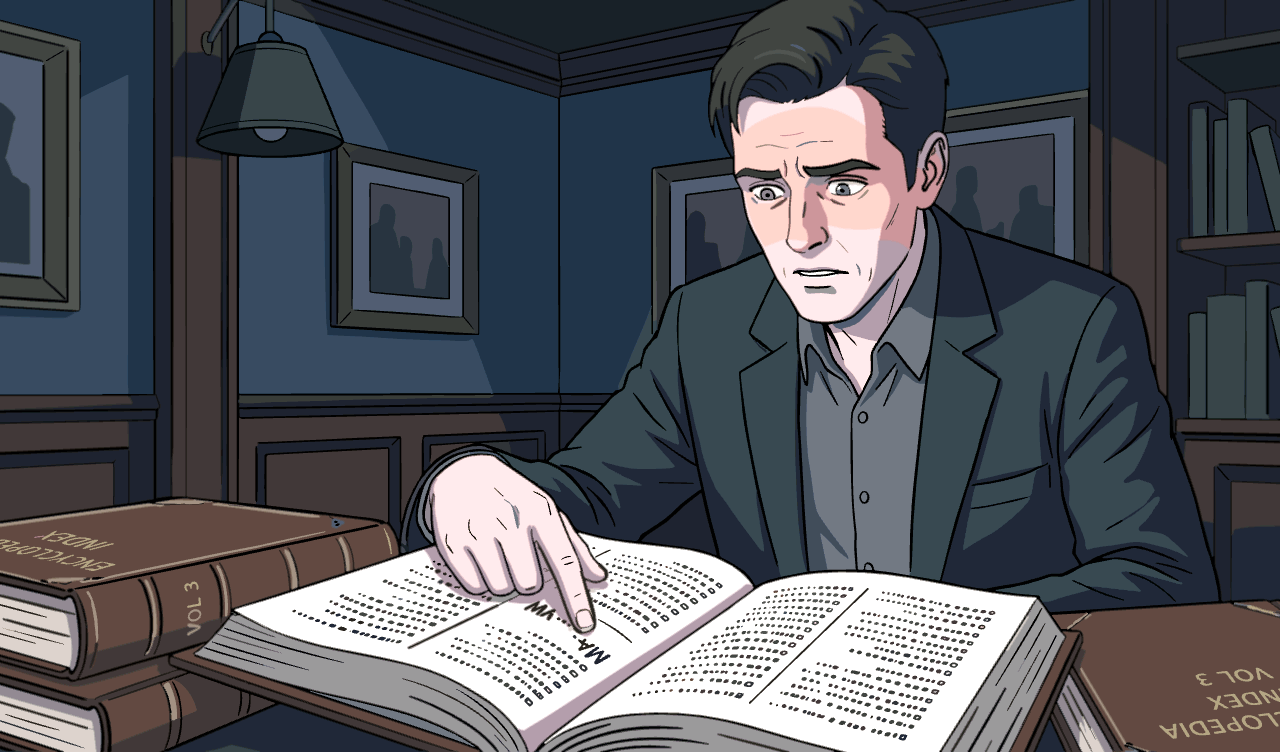
| .i fi le so'o boi so'amoi papri be le pa xa moi slecku fa mi'a pu tcidu le artigo be la'o zoi.Uppsala.zoi .i je fi le so'o boi so'u moi papri be le pa ze moi slecku pu go'i le se go'i be lei ural zei altai bangu fe no da pe la .ukybar. | In the last pages of volume XLVI we came across an article on Uppsala; in the early part of XLVII, with one on Ural-Altaic Languages, but not a word on Uqbar. | En las últimas páginas del volumen XLVI dimos con un artículo sobre Upsala; en las primeras del XLVII, con uno sobre Ural-Altaic Languages, pero ni una palabra sobre Uqbar. |
| .i la .bios. fau le nu ri burna kei cu kucli catlu le slecku be lo judri be lo valsi | Bioy, a little embarrassed, interrogated the volumes of the index. | Bioy, un poco azorado, interrogó los tomos del índice. |
| ||
| .i by.ky. ja'e no da catlu ro lu'a lei se xanri vlatai ku noi zoi zoi.Ukbar.zoi .e zoi.Ucbar.zoi .e zoi.Ookbar.zoi .e zoi.Oukbahr.zoi me ke'a | He exhausted in vain every imaginable spelling: Ukbar, Ucbar, Ookbar, Oukbahr... | Agotó en vano todas las lecciones imaginables: Ukbar, Ucbar, Ookbar, Oukbahr... |
| .i ca lo nu by.ky. pu'o cliva kei ri cusku fi mi fe le se du'u ra diklo la .irak. a le cmalu xadzo | Before leaving, he told me that it was a region of Iraq or of Asia Minor. | Antes de irse, me dijo que era una región del Irak o del Asia Menor. |
| .i sei mi stace mi tugni cusku fo tu'a le stedu be mi fau le nu mi na'e kufra | I confess that I nodded with some discomfort. | Confieso que asentí con alguna incomodidad. |
| .i mi pu smadi le du'u le bi'u nai na'e se skicu gugde .e le bi'u nai zerjdafi'i ne me'e nai cu se finti byky. ki'u lo nu ri cumla kei fi lo nu le se xusra cu se birti | I conjectured that this undocumented country and this anonymous heresiarch were a fiction improvised by Bioy's modesty to justify a statement. | Conjeturé que ese país indocumentado y ese heresiarca anónimo eran una ficción improvisada por la modestia de Bioy para justificar una frase. |
| .i le nu lanli pa le cartu pe la .iustus.pertes. cu jalge le nu facki no da .e le nu mi zenba lo ka senpi | The fruitless examination of one of Justus Perthes' atlases strengthened my doubt. | El examen estéril de uno de los atlas de Justus Perthes fortaleció mi duda. |
| .i pu ku ca lo bavlamdei byky. fonsku benji fi mi fo la .buenos.aires. | The next day, Bioy called me from Buenos Aires. | Al día siguiente, Bioy me llamó desde Buenos Aires. |
| .i byky. cusku fi mi fe le se du'u le nei ca ca'o catlu le artigo be la .ukybar. bei sepa'u le pa xa moi slecku be sepa'u la brito skecku | He told me that he was looking at the article on Uqbar, in the XLVI volume of the Encyclopedia. | Me dijo que tenía a la vista el artículo sobre Uqbar, en el volumen XLVI de la Enciclopedia. |
| .i le cmene be le zerjdafi'i na se cusku .i ku'i pa da notci le se krici pe selkritru bu gi'e so'e va'e dunli le pu se cusku be byky gi'e bo ku'i ba'e la'a zmadu fi lo ka mabla lo ka se tarmi | The name of the heresiarch was not mentioned, but there was a note on his doctrine, formulated in words almost identical to those repeated by him, although -perhaps- literarily inferior. | No constaba el nombre del heresiarca, pero sí la noticia de su doctrina, formulada en palabras casi idénticas a las repetidas por él, aunque -tal vez- literariamente inferiores. |
| .i byky. pu morji cusku zoi .glic.Copulation and mirrors are abominable.glic. (to'i sa'a lo'e nu gletu .e lo'e nu minra cu mabla toi) | He had recalled: Copulation and mirrors are abominable. | Él había recordado: Copulation and mirrors are abominable. |
| .i notci sepa'u le se skecku fa "lu ni'o sei se jinvi be pa le bi'u nai prije le ka se zgana munje cu ka se xanri gi'e sei zmadu satci se'u tcica | The text of the Encyclopedia said: For one of these Gnostics, the visible universe was an illusion or (more precisely) a sophism. | El texto de la Enciclopedia decía: Para uno de esos gnósticos, el visible universo era una ilusión o (más precisamente) un sofisma. |
| .i lo'e nu minra .e lo'e nu rorci cu se xebni (to'i sa'a zoi .glic.mirrors and fatherhood are hateful.glic. toi) ki'u lo nu ri'a lo'e nei cu zenba lo ka xo kau mei kei gi'e preja vau fa loi pagbu be le munje li'u" | Mirrors and fatherhood are hateful because they multiply and disseminate that universe. | Los espejos y la paternidad son abominables (mirrors and fatherhood are hateful) porque lo multiplican y lo divulgan. |
| .i mi stace cusku fi byky. fe le se du'u mi djica lo nu mi viska le cukta be le artigo | I told him, without disrespecting the truth, that I would like to see that article. | Le dije, sin faltar a la verdad, que me gustaría ver ese artículo. |
| .i ba ku la'u lo djedi be li so'o byky. mo'u bevri le cukta | A few days later he brought it. | A los pocos días lo trajo. |
| .i le nu go'i cu spaji mi ki'u lo nu le'i judri be lo stuzi be'o poi se liste lo satci pe la'o .dotc.Erdkunde.dotc. pe fi'e la'o .dotc.Ritter.dotc. cu ba'e na se cmima zo .ukybar. | Which surprised me, because the scrupulous map indices in Ritter's Erdkunde completely ignored the name of Uqbar. | Lo cual me sorprendió, porque los escrupulosas índices cartográficos de la Erdkunde de Ritter ignoraban con plenitud el nombre de Uqbar. |
| .i le slecku noi byky. mo'u bevri cu je'a pa xa moi slecku be se pa'u la'o .glic.Anglo-American Cyclopaedia.glic. | The volume that Bioy brought was indeed the XLVI of the Anglo-American Cyclopaedia. | El volumen que trajo Bioy era efectivamente el XLVI de la Anglo-American Cyclopaedia. |
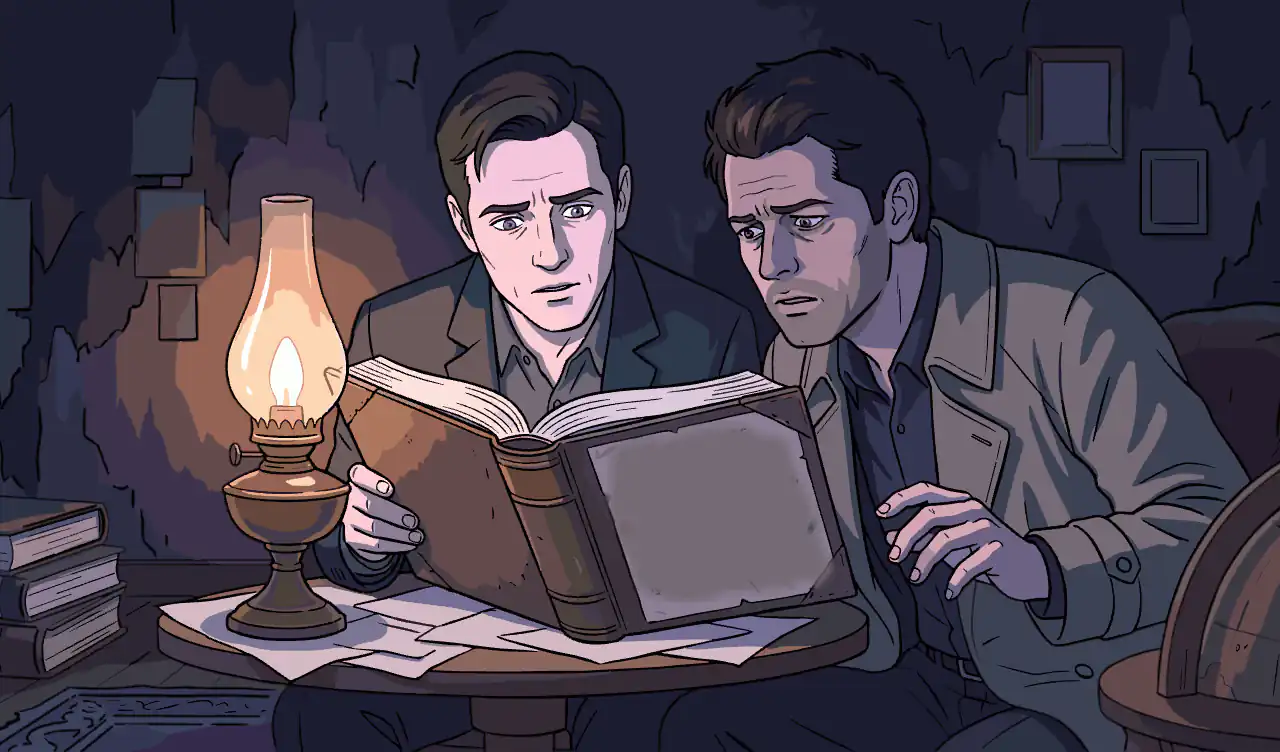
| .i le cmepapri e le te bakfu be fi le cukta cu te tcidu zo tor ce'o ups vu'o noi sinxa le se kuspe be loi artigo .i ku'i le cukta cu se papri 921 da seba'i lo nu nei 921 de | On the half-title page and on the spine, the alphabetical indication (Tor-Ups) was that of our copy, but instead of 917 pages it consisted of 921. | En la falsa carátula y en el lomo, la indicación alfabética (Tor-Ups) era la de nuestro ejemplar, pero en vez de 917 páginas constaba de 921. |

| ||
| .i lei vo se jmina papri cu te tcidu le artigo be la ukybar gi'e na jai rinka (to le tcidu be dei ka'e didnu toi) tu'a le sinxa be le se kuspe be loi artigo | Those four additional pages comprised the article on Uqbar; not foreseen (as the reader will have noticed) by the alphabetical indication. | Esas cuatro páginas adicionales comprendían al artículo sobre Uqbar; no previsto (como habrá advertido el lector) por la indicación alfabética. |
| ||
| .i ba za ku mi'a facki le du'u panra fi tu'a la'e di'u | We later found that there was no other difference between the volumes. | Comprobamos después que no hay otra diferencia entre los volúmenes. |
| .i le re cukta (to mi krici le du'u mi pu cusku toi) cu fukpi la brito skecku ku poi pa no moi | Both (as I think I have indicated) were reprints of the tenth Encyclopaedia Britannica. | Los dos (según creo haber indicado) son reimpresiones de la décima Encyclopaedia Britannica. |
| .i by.ky. pu jinga le ka ponse le fukpi kei fo pa le so'i nu gubni vecnu | Bioy had acquired his copy in one of many auctions. | Bioy había adquirido su ejemplar en uno de tantos remates. |
| .i mi'a tcidu le artigo fau le nu jundi | We read the article carefully. | Leímos con algún cuidado el artículo. |
| .i le pa jufra poi bycy. pu cusku cu se steci lo ka jai spaji | The passage recalled by Bioy was perhaps the only surprising one. | El pasaje recordado por Bioy era tal vez el único sorprendente. |
| .i le drata pagbu cu simlu lo ka mutce lakne gi'e mutce sarxe le tarmi be le se finti gi'e li'a jai se badri | The rest seemed very plausible, very much in keeping with the general tone of the play, and (of course) a bit boring. | El resto parecía muy verosímil, muy ajustado al tono general de la obra y (como es natural) un poco aburrido. |
| .i ca lo nu mi'a mo'u za'u re'u tcidu kei mi'a dacki le du'u le carmi prosa cu se jicmu lo smuni poi na'e satci | Re-reading it, we discovered under its rigorous prose a fundamental vagueness. | Releyéndolo, descubrimos bajo su rigurosa escritura una fundamental vaguedad. |
| .i klesi lei 14 cmene poi se pilno tu'a le pagbu pe le jai tai tutra ku'o lo ka se slabu mi'a vau fa lei ci po'o da ku noi du la xorasan joi la armenias joi la erzerum vu'o noi se jmina fi le te gerna tai lo nu le smuni na zenba lo ka se jimpe | Of the fourteen names that appeared in the geographical part, we only recognized three - Khorasan, Armenia, Erzerum -, interpolated in the text in an ambiguous way. | De los catorce nombres que figuraban en la parte geográfica, sólo reconocimos tres -Jorasán, Armenia, Erzerum-, interpolados en el texto de un modo ambiguo. |
| .i go'i lei cmene be lo laldo fa lei pa po'o da ku noi du lu'o lu'i la smerdis voi te makfa lu'u noi se pilno fi tu'a lo so'i va'e lo ka metfo | Of the historical names, only one: the impostor Smerdis the magician, invoked more as a metaphor. | De los nombres históricos, uno solo: el impostor Esmerdis el mago, invocado más bien como una metáfora. |
| .i le notci cu simlu lo ka notci lei korbi be la ukybar be'o ku noi ku'i linji lu'i le na'e satci lu'u noi se cmima le rirxe .a le cukla skuro be le tumla be'o .a le derxi be lo cmana be ba'e le bi'u nai se diklo | The note seemed to specify the borders of Uqbar, but its nebulous landmarks were rivers and craters and ridges of that very region. | La nota parecía precisar las fronteras de Uqbar, pero sus nebulosos puntos de referencias eran ríos y cráteres y cadenas de esa misma región. |
| .i mi'a pu tcidu fe mu'a le se du'u lei dizlo tumla be la tsaixaldun be'o joi le ve rirxe be fo la aksa cu jimte le snanu kei .i go'i le se du'u za'u cilce xirma cu xabju le za'u daplu be le bi'u nai ve rirxe | We read, for example, that the lowlands of Tsai Khaldun and the Axa delta defined the southern border and that wild horses breed on the islands of that delta. | Leímos, verbigracia, que las tierras bajas de Tsai Jaldún y el delta del Axa definen la frontera del sur y que en las islas de ese delta procrean los caballos salvajes. |
| .i tcidu lu'i la'e di'u le 918 moi papri | That, at the top of page 918. | Eso, al principio de la página 918. |
| .i fo le pagbu pe le citri (to 920 moi papri toi) mi'a cilre le du'u ja'e lo nu kalte le se lijda ca le 13 moi sorna'acedra kei le krici cu zukte fi lo nu ri se marbi le za'u daplu bi'u nai noi bu'u ke'a lo pixra kamji pe le krici ca'o stali gi'e cafne fa lo nu kakpa loi dertu lo rokci pixra pe le krici | In the historical section (page 920) we learned that as a result of the religious persecutions of the thirteenth century, the Orthodox sought refuge on these islands, where their obelisks still remain and where it is not uncommon to unearth their stone mirrors. | En la sección histórica (página 920) supimos que a raíz de las persecuciones religiosas del siglo trece, los ortodoxos buscaron amparo en las islas, donde perduran todavía sus obeliscos y donde no es raro exhumar sus espejos de piedra. |
| .i le pagbu poi notci lo bangu e lo'e se cukta cu tordu | The language and literature section was brief. | La sección idioma y literatura era breve. |
| .i lo ka jerna lo ka se morji cu steci le du'u le mirgumi cu cusku le se du'u lo'e se prosa be bu'u la ukybar cu xanri .e le se du'u ro da poi se ranmi cu srana le se zvati be le mirgumi be'o na e lei re xanri stuzi poi du la mleinas joi la .tlon. i go'i ge'e | A single memorable trait: he noted that the literature of Uqbar was of a fantastic nature and that its epics and legends never referred to reality, but to the two imaginary regions of Mlejnas and Tlön... | Un solo rasgo memorable: anotaba que la literatura de Uqbar era de carácter fantástico y que sus epopeyas y sus leyendas no se referían jamás a la realidad, sino a las dos regiones imaginarias de Mlejnas y de Tlön... |
| .i le notci be loi krasi cu se pagbu le vo slecku ku noi mi'a nu'o penmi .i je ku'i le cimoi noi se cmene zoi .glic.Silas Haslam: History of the Land Called Uqbar.glic. gi'e jai se detri li nanca bu 1874 cu cmima le se liste pe la'o gy.Bernard Quaritch.gy. (to pamai toi) | The bibliography listed four volumes that we have not found so far, although the third—Silas Haslam: History of the Land Called Uqbar, 1874— figures in Bernard Quaritch's bookstore catalogs (1). | La bibliografía enumeraba cuatro volúmenes que no hemos encontrado hasta ahora, aunque el tercero -Silas Haslam: History of the Land Called Uqbar, 1874-figura en los catálogos de librería de Bernard Quaritch (1). |
| .i le pamoi noi se cmene zoi .dotc.Lesbare und lesenswerthe Bemerkungen über das Land Ukkbar in Klein-Asien.dotc. cu jai se detri le nanca bu 1641 gi'e cukta fi la'o dotc.Johannes Valentinus Andreä.dotc. | The first, Lesbare und lesenswerthe Bemerkungen über das Land Ukkbar in Klein-Asien, dates from 1641 and is the work of Johannes Valentinus Andreä. | El primero, Lesbare und lesenswerthe Bemerkungen über das Land Ukkbar in Klein-Asien, data de 1641 y es obra de Johannes Valentinus Andreä. |
| .i le fatci cu vajni .i ba la'u lo nanca be li so'o mi penmi tcidu le bi'u nai cmene le noi na jai se kanpe vau papri be le cukta be fi la'o .glic.DeQuincey.glic. be me'e "lu lei se finti .i pa ci moi slecku li'u" gi'e cilre le du'u ra cmene le pa dotco ceiskepre noi ca le krasi be le 17 moi sorna'acedra cu skicu le pa xanri cecmu be le rozykrucypre be'o noi lo drata ba ganzu fi ke'a ta'i lo nu jai gau zasti fai lo fukpi be le jai xanri be le ceiskepre | The fact is significant; a couple of years later, I came across that name in the unexpected pages of De Quincey (Writings, thirteenth volume) and learned that it was that of a German theologian who, at the beginning of the seventeenth century, described the imaginary community of the Rosicrucians - that others later founded, in imitation of what he had prefigured. | El hecho es significativo; un par de años después, di con ese nombre en las inesperadas páginas de De Quincey (Writings, decimotercero volumen) y supe que era el de un teólogo alemán que a principios del siglo XVII describió la imaginaria comunidad de la Rosa-Cruz -que otros luego fundaron, a imitación de lo prefigurado por él. |
| .i ca le lamji nicte mi'a mo'u klama la natmi ckumuzga | That night we visited the National Library. | Esa noche visitamos la Biblioteca Nacional. |
| .i ja'e no da mi'a tadni lo cartu e lo liste e lo nanca cukta be fi lo cecmu be lo tutskepre .i go'i lo cukta be lo se morji be lo litru a lo certu be tu'a lo citri .i no ra pu zvati la ukybar. | In vain we exhausted atlases, catalogues, yearbooks of geographical societies, travelers' and historians' memoirs: no one had ever been to Uqbar. | En vano fatigamos atlas, catálogos, anuarios de sociedades geográficas, memorias de viajeros e historiadores: nadie había estado nunca en Uqbar. |
| .i le ralju liste pe le skecku pe byky na si'a liste lo se cmima be le cmene | The general index of Bioy's encyclopedia did not record that name either. | El índice general de la enciclopedia de Bioy tampoco registraba ese nombre. |
| .i ca le bavla'i djecitsi la'o .span.Carlos Mastronardi.span. noi mi pu skicu tu'a le nabmi ke'a ganse bu'u le zarci be lo cukta bei bu'u la'o .span.Corrientes.span. joi la'o .span.Talcahuano.span. fe su'oi te bakfu be su'oi lo ne pa'u lo xekri .e lo carmi pelxu ku slecku be sepa'u la'o gy.The Anglo-American Cyclopaedia.gy. | The following day, Carlos Mastronardi (to whom I had referred the matter) noticed in a bookstore on Corrientes and Talcahuano the black and gold spines of the Anglo-American Cyclopaedia... | Al día siguiente, Carlos Mastronardi (a quien yo había referido el asunto) advirtió en una librería de Corrientes y Talcahuano los negros y dorados lomos de la Anglo-American Cyclopaedía... |
| .i ra mo'u klama le nenri gi'e tadni le pa xa moi slecku | He entered and interrogated Volume XLVI. | Entró e interrogó el volumen XLVI. |
| .i li'a ra facki fi no da pe la .ukybar. | Naturally, he did not find the slightest trace of Uqbar. | Naturalmente, no dio con el menor indicio de Uqbar. |
| ni'o ni'o re mo'o | II | II |
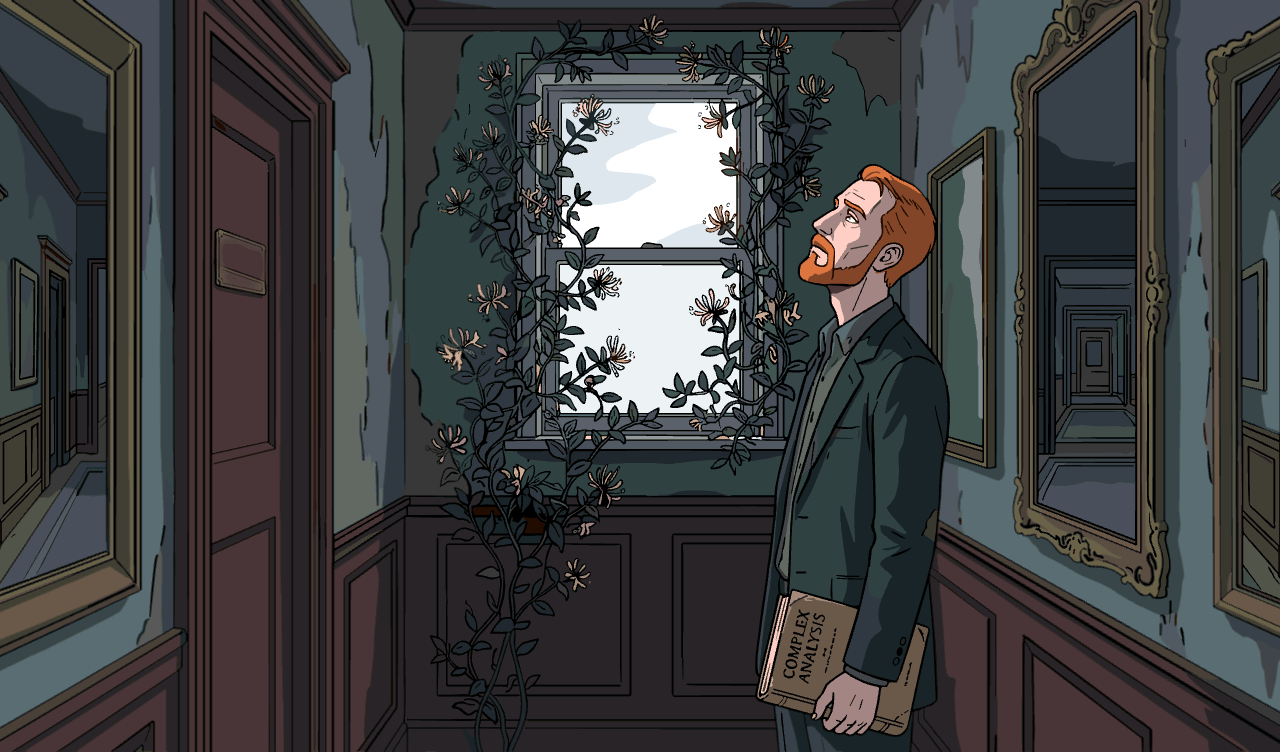
| .i le noi se jimte gi'e jdika vau jai se morji be fi la erbert ac noi enge lei snanu te trene ku'o ca'o ku zvati le xotli la'o .span.Adrogué.span. gi'e jbini le za'u na'e rinju sparkaprifoliace'ai gi'e nenri le mucti condi be fi le za'u minra | Some limited and waning memory of Herbert Ashe, an engineer of the southern railways, persists in the hotel at Adrogué, among the effusive honeysuckle and in the illusory depths of the mirrors. | Algún recuerdo limitado y menguante de Herbert Ashe, ingeniero de los ferrocarriles del Sur, persiste en el hotel de Adrogué, entre las efusivas madreselvas y en el fondo ilusorio de los espejos. |
| ||
| .i fi le nu ra jmive kei fa ra renvi lo ka te simlu lo ka ra na zasti .i ra noi nau morsi ku'o co'u pruxi ji'a | In life he suffered from unreality, like so many Englishmen; dead, he is not even the ghost that he already was then. | En vida padeció de irrealidad, como tantos ingleses; muerto, no es siquiera el fantasma que ya era entonces. |
| .i ra pu clani gi'e na'e plana. i je le jai se tatpi je kurfa xejykre be ra pu pu xunre | He was tall and listless and his tired rectangular beard had once been red. | Era alto y desganado y su cansada barba rectangular había sido roja. |
| .i mi jijnu le du'u ra pu co'u se speni gi'e se panzi no da | I understand that he was a widower with no children. | Entiendo que era viudo, sin hijos. |
| .i ta'e ce'e paroi lo nanca be li so'o ra klama (to mi nusna fo tu'a le so'o pixra noi pu ku gau mi'a catlu toi) le glico tumla te zu'e lo nu ra zgana pa soljunla e so'o cindu tricu | Every few years he would go to England: to visit (I judge from some photographs he showed us) a sundial and some oak trees. | Cada tantos años iba a Inglaterra: a visitar (juzgo por unas fotografías que nos mostró) un reloj de sol y unos robles. |
| .i le patfu be mi pu jitro ra (to le bridi cu dukse toi) lo ka pendo tai le'e nu glico poi nu ca ro cfari cu zukte rivbi lo ka lacri gi'e ta'e tavla | My father had established with him (the verb is excessive) one of those English friendships that begin by excluding confidence and very quickly omit dialogue. | Mi padre había estrechado con él (el verbo es excesivo) una de esas amistades inglesas que empiezan por excluir la confidencia y que muy pronto omiten el diálogo. |
| .i le'i re prenu pu ta'e simxu lo ka plicru fi lo cukta e lo karni kei e lo ka jivna fi tu'a lo caxmati fa ce'u ce'u noi smaji | They used to have an exchange of books and newspapers; they used to play chess, taciturnly... | Solían ejercer un intercambio de libros y de periódicos; solían batirse al ajedrez, taciturnamente... |
| .i mi vedli lo ka pu zgana lo nu ra zvati le nenri klaji be le xotli gi'e jgari le cukta be lo cmaci le xance be ra gi'e ta'e nai catlu le tsani noi skari lo ka ru'i cenba | I remember him in the hotel corridor, with a math book in his hand, sometimes looking at the irrecoverable colors of the sky. | Lo recuerdo en el corredor del hotel, con un libro de matemáticas en la mano, mirando a veces los colores irrecuperables del cielo. |
| .i ca pa lerci donri mi'a casnu le si'o saclu fi li pa re (to le saclu be me'o pa no bei li pa re du le saclu be me'o pa re bei li pa re toi) | One afternoon, we discussed the duodecimal numeral system (in which twelve is written 10). | Una tarde, hablamos del sistema duodecimal de numeración (en el que doce se escribe 10). |
| .i la .ac. cusku le se du'u (to'u ri pu fanva sa'u lo se tcidu be fi lo noi na'e jai se djuno mi vau gredile vau lo se gerna be fi lo saclu be fi li pa no lo se gerna be fi lo saclu be fi li xa no (to li xa no ju'u pa no du li pa no ju'u xa no toi) | Ashe said that he was just translating I don't know what tables from duodecimal to sexagesimal (in which sixty is written 10). | Ashe dijo que precisamente estaba trasladando no sé qué tablas duodecimales a sexagesimales (en las que sesenta se escribe 10). |
| .i le go'i cu jmina cusku le se du'u le te gunka ri te minde le norgo bu'u la'o .braz.Rio Grande do Sul.braz. | He added that this work had been entrusted to him by a Norwegian: in Rio Grande do Sul. | Agregó que ese trabajo le había sido encargado por un noruego: en Rio Grande do Sul. |
| .i mi'a pu se slabu ra ze'a lo nance be li 8 .i je ra no roi cusku su'o srana lo nu ra pu zvati bu'u bu | We had known him for eight years and he had never mentioned his stay in that region... | Ocho años que lo conocíamos y no había mencionado nunca su estadía en esa región... |
| .i mi'a casnu lo'e nu xabju lo nurma e lo'e jai gau zekri e le brazo krasi be zoi zoi.gaucho.zoi. noi se fanva fi le bankle be so'o le laldo urguuaio fu zoi zoi.gaúcho.zoi. i cusku no drata pe (to ko fraxu mi doi cevni toi) lo'e nu fanva lo saclu be fi li pa re | We talked about pastoral life, capangas, the Brazilian etymology of the word gaucho (which some old Uruguayans still pronounce gaúcho) and nothing more was said - God forgive me - about duodecimal functions. | Hablamos de vida pastoril, de capangas, de la etimología brasilera de la palabra gaucho (que algunos viejos orientales todavía pronuncian gaúcho) y nada más se dijo -Dios me perdone- de funciones duodecimales. |
| .i de'i li nanca bu 1937 masti bu 9 (to mi'a na zvati le xotli toi) la .xerbert.ac. co'a morsi ja'e lo nu lo punli be lo vasru be loi ciblu cu spoja | In September 1937 (we were not at the hotel) Herbert Ashe died of a ruptured aneurysm. | En setiembre de 1937 (no estábamos nosotros en el hotel) Herbert Ashe murió de la rotura de un aneurisma. |
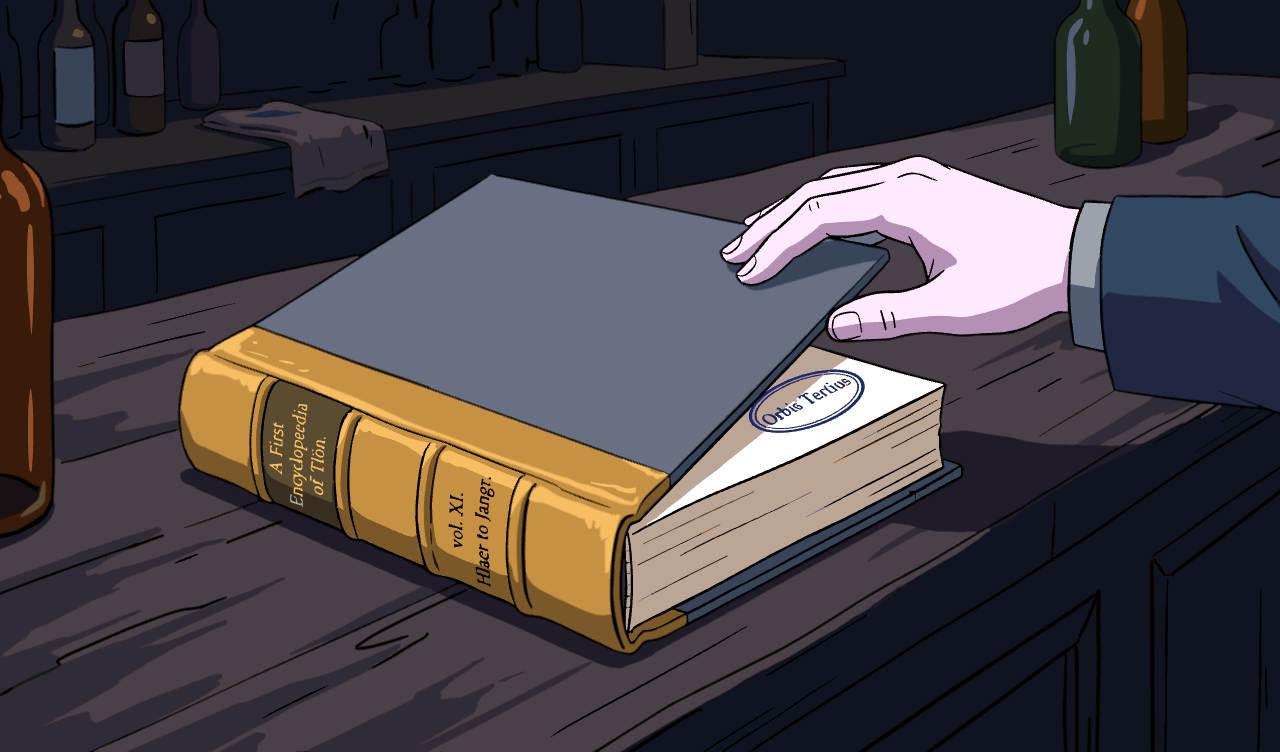
| .i pu la'u pa djedi be li so'o ra cpacu le pa bakfu noi se stela gi'e se pikta | Days before, he had received a sealed and certified package from Brazil. | Días antes, había recibido del Brasil un paquete sellado y certificado. |
| ||
| .i nenri fa le pa cukta noi barda oktavo | It was a book in large octavo. | Era un libro en octavo mayor. |
| .i la ac cliva ra bu'u le barja noi ba la'u le masti be li za'u mi penmi ra ke'a | Ashe left it at the bar, where - months later - I found it. | Ashe lo dejó en el bar, donde -meses después- lo encontré. |
| .i mi co'a jai gau carna fai le papri gi'e manci gi'e cinmo lo ka pu'o de'a cikna .i ai mi na skicu le nu go'i .i ki'u bo lisri le nu mi cinmo na .e tu'a .ukybar. joi la .tlon. joi la .orbis.tertius. | I began to leaf through it and felt an astonished and light vertigo that I will not describe, because this is not the story of my emotions but of Uqbar and Tlön and Orbis Tertius. | Me puse a hojearlo y sentí un vértigo asombrado y ligero que no describiré, porque ésta no es la historia de mis emociones sino de Uqbar y Tlön y Orbis Tertius. |
| .i ca pa nicte po la islam zi'e poi se cmene "lu traji be fi lo'i nicte li'u" le za'u sivni vorme pe le tsani co'a kalri .ica bo le djacu poi se kabri co'i zenba lo ka titla .i da'i .u'e ganai le vorme cu kalri gi mi nu'o cinmo le se cnimo be mi bei ca le do'i fanmo be le donri | On a night in Islam called the Night of Nights, the secret doors of heaven open wide and the water in the pitchers is sweeter; If those doors were opened, I wouldn't feel what I felt that afternoon. | En una noche del Islam que se llama la Noche de las Noches se abren de par en par las secretas puertas del cielo y es más dulce el agua en los cántaros; si esas puertas se abrieran, no sentiría lo que en esa tarde sentí. |
| .i le cukta cu cukta lo jufra poi glico ku'o gi'e se papri pa no no pa da | The book was written in English and consisted of 1001 pages. | El libro estaba redactado en inglés y lo integraban 1001 páginas. |
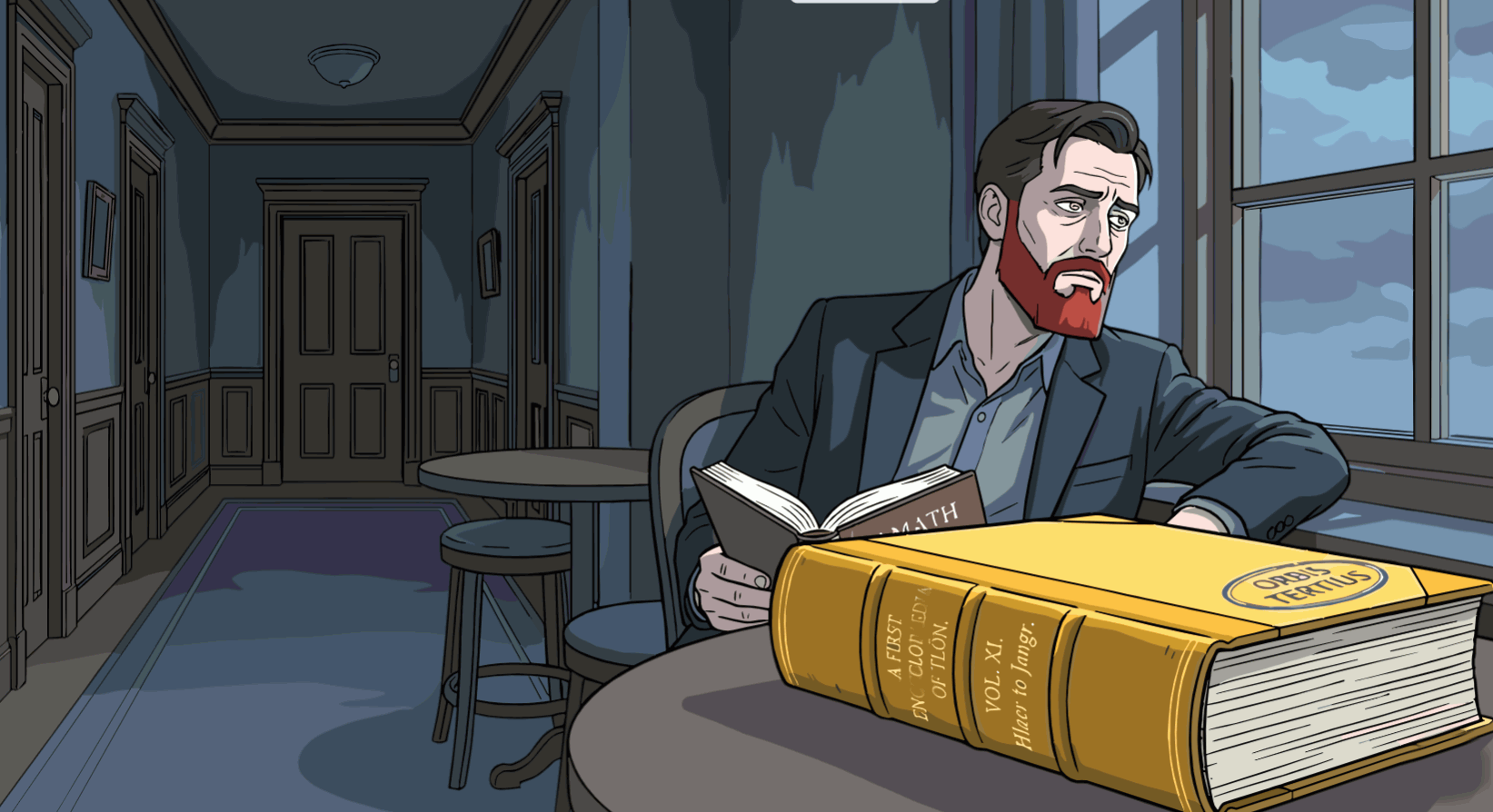
| .i fi le pelxu skapi te bakfu fa mi tcidu le valsi ku voi ji'a se tcidu fi le barty gacri zi'e voi du "lu pa moi skecku la .tlon. i pa pa moi slecku fe'e co'a la'o .latm.Hlaer.latm. fe'e co'u la'o .latm.Jangr.latm. | On the yellow leather spine I read these curious words that the false cover repeated: A First Encyclopaedia of Tlön. vol. XI. Hlaer to Jangr. | En el amarillo lomo de cuero leí estas curiosas palabras que la falsa carátula repetía: A First Encyclopaedia of Tlön. vol. XI. Hlaer to Jangr. |
| .i no da sinxa le detri .a le stuzi | There was no indication of date or place. | No había indicación de fecha ni de lugar. |
| ||
| .i fe le pamoi papri e le boxfo be loi pelji be'o poi gacri pa le skari boxfo cu prina fa le blanu cukla e la'e zoi .latm.Orbis Tertius.latm. | On the first page and on a sheet of tissue paper that covered one of the colored plates he had stamped a blue oval with this inscription: Orbis Tertius. | En la primera página y en una hoja de papel de seda que cubría una de las láminas en colores había estampado un óvalo azul con esta inscripción: Orbis Tertius. |
| .i pu la'u le nanca be li re mi penmi fi le pa slecku be se pa'u le pa tadjycku fe le tordu uencu be lo nu skicu le pa xanri gugde .i ca ku mi se funca tu'a su'o zmadu be fi lo ka jadni gi'e pluja | Two years ago I had discovered in a volume of a certain practical encyclopedia a cursory description of a false country; now chance provided me with something more precious and more arduous. | Hacía dos años que yo había descubierto en un tomo de cierta enciclopedia práctica una somera descripción de un falso país; ahora me deparaba el azar algo más precioso y más arduo. |
| .i ca ku mi jgari fi le ka xance vau le vreji be fo lo barda bei fe le pagbu be le satci citri be ko'a voi fange terdi .i je me lo se terdi be ko'a fa lo finti be lo te morna be fi lo zdani fe lo finti be lo kelci karda fa lo terpa be lo se ranmi fa lo se bangu be lo simlu be lo ka se cmoni kei fa lo balnoltru .i je ko'a se xamsi da gi'e te kunra gi'e terdi lo cipni e lo finpe .i je me lo se terdi be ko'a fa lo pilno be lo algebra fa lo pilno be lo fagri fa lo darlu tu'a lo cevni a lo se jetnu | Now I had in my hands a vast methodical fragment of the total history of an unknown planet, with its architectures and its decks, with the fear of its mythologies and the murmur of its languages, with its emperors and its seas, with its minerals and its birds and their fish, with their algebra and their fire, with their theological and metaphysical controversy. | Ahora tenía en las manos un vasto fragmento metódico de la historia total de un planeta desconocido, con sus arquitecturas y sus barajas, con el pavor de sus mitologías y el rumor de sus lenguas, con sus emperadores y sus mares, con sus minerales y sus pájaros y sus peces, con su álgebra y su fuego, con su controversia teológica y metafísica. |
| .i le vreji cu cukta lo nu makcu je manfo lo ka ciksi te zu'e nai za'a lo nu da krici gi'e za'a na ckasu | All of this articulated, coherent, with no visible doctrinal purpose or parodic tone. | Todo ello articulado, coherente, sin visible propósito doctrinal o tono paródico. |
| .i le se slecku be le pa ze moi cu .anci le se slecku be le lidne .e le se lidne | In the "eleventh volume" of which I speak there are allusions to subsequent and preceding volumes. | En el "onceno tomo" de que hablo hay alusiones a tomos ulteriores y precedentes. |
| .i la'o sy.Néstor Ibarra.sy. cu cusku fo lo ka te notci fi da ne nyryfy zi'e noi nau klasiko .i go'i le se du'u jitfa fa le du'u le za'u kansa slecku cu zasti .i la'o sy.Ezequiel Martínez Estrada.sy. e la'o sy.Drieu La Rochelle.sy. co'i darlu le ju'o cu'i jetnu le di'u se xusra | Néstor Ibarra, in a now classic article in the N.R.F., has denied that these companion volumes exist; Ezequiel Martínez Estrada and Drieu La Rochelle have refuted, perhaps victoriously, that doubt. | Néstor Ibarra, en un artículo ya clásico de la N. R. F., ha negado que existen esos aláteres; Ezequiel Martínez Estrada y Drieu La Rochelle han refutado, quizá victoriosamente, esa duda. |
| .i vajni ku'i fa lo nu ro pu nu sisku ca'o jalge no prali | The fact is that until now the most diligent inquiries have been fruitless. | El hecho es que hasta ahora las pesquisas más diligentes han sido estériles. |
| .i ja'e no prali mi'a jai gau kalsa fai le za'u le sorcu be lo cukta be'o noi me le stuzi be ke'a fa le bemro e le ketco e le ropno | In vain we have diarranged the libraries of the two Americas and of Europe. | En vano hemos desordenado las bibliotecas de las dos Américas y de Europa. |
| .i la'o sy.Alfonso Reyes.sy. ja'e le nu ri tatpi le nu tai sisku cu stidi fi mi'a fe lo ka za'u re'u finti le se slecku be le so'i mei noi nu'o se penmi .i va'i zbasu le cinfo le jgalu be ri | Alfonso Reyes, fed up with these inferior fatigues of a police nature, proposes that we all undertake the work of reconstructing the many and massive volumes that are missing: ex ungue leonem. | Alfonso Reyes, harto de esas fatigas subalternas de índole policial, propone que entre todos acometamos la obra de reconstruir los muchos y macizos tomos que faltan: ex ungue leonem. |
| .i ra sruma tai lo nu su'o va'e xalbo gi'e su'o va'e ckasu vau le du'u lo nu pa da zo'u rorci so'i tlon zei skepre poi se cecmu da cu banzu | He calculates, between truth and mockery, that a generation of Tlönists can suffice. | Calcula, entre veras y burlas, que una generación de tlönistas puede bastar. |
| .i le di'u se kanji be fo lo se darsi cu bapli lo nu ma'a za'ure'u kucli tu'a le jicmu nabmi goi la'e "lu ma cecmu gi'e finti la tlon li'u" .i le nu lei finti cu so'i mei na ka'e se ribvi .i ki'u bo le sidbo be le du'u finti fa pa da noi du la leibnits pe'a poi sivni je cumla gunka cu (to'e se zanru ro ma'a | That risky computation brings us back to the fundamental problem: Who invented Tlön? The plurality is inevitable, because the hypothesis of a single inventor - of an infinite Leibniz working in darkness and modesty - has been unanimously discarded. | Ese arriesgado cómputo nos retrae al problema fundamental: ¿Quiénes inventaron a Tlön? El plural es inevitable, porque la hipótesis de un solo inventor -de un infinito Leibniz obrando en la tiniebla y en la modestia- ha sido descartada unánimemente. |
| .i smadi le du'u ti voi se darsi je cnino munje cu jai te gunka fi le sivni cecmu be lo kesytadni e lo mivytadni e lo enge e lo jetytadni e lo te pemci e lo xumtadni e lo mekytadni e lo madytadni e lo te pixra e lo taircmacytadni e lo drata | It is conjectured that this brave new world is the work of a secret society of astronomers, biologists, engineers, metaphysicians, poets, chemists, algebraists, moralists, painters, geometers... | Se conjetura que este brave new worldes obra de una sociedad secreta de astrónomos, de biólogos, de ingenieros, de metafísicos, de poetas, de químicos, de algebristas, de moralistas, de pintores, de geómetras... |
| .i je go'i le du'u le se cecmu cu se bende pa sivni stati | directed by an obscure man of genius. | dirigidos por un oscuro hombre de genio. |
| .i bu'u le munje ku so'i mei fa loi prenu poi certu tu'a la'e poi saske vau di'u ije so'u mei fa loi tende be lo ka finti .i je me'i xo'e mei fa loi kakne be lo ka finti lo te platu | There are plenty of individuals who master these diverse disciplines, but not those capable of invention and even less those capable of subordinating invention to a rigorous systematic plan. | Abundan individuos que dominan esas disciplinas diversas, pero no los capaces de invención y menos los capaces de subordinar la invención a un riguroso plan sistemático. |
| .i le platu cu tai barda .i ja'e bo ro da poi me le finti zo'u le ni vajni fa le se finti be da cu du li ji'i no | That plan is so vast that each writer's contribution is infinitesimal. | Ese plan es tan vasto que la contribución de cada escritor es infinitesimal. |
| .i ca le cfari la tlon cu te jinvi fe le du'u ri kalsa gi'e na'e se fuzme te pikta xanri .i ku'i ka'u bu'o nau ku le go'i cu te jinvi fe le du'u munje fi le se skicu be fo lo rauva'e | At first Tlön was believed to be mere chaos, an irresponsible license of the imagination; now it is known that it is a cosmos and the intimate laws that govern it have been formulated, at least provisionally. | Al principio se creyó que Tlön era un mero caos, una irresponsable licencia de la imaginación; ahora se sabe que es un cosmos y las íntimas leyes que lo rigen han sido formuladas, siquiera en modo provisional. |
| .i .ei be'u cu'i mi za'u re'u xusra le du'u le sinxa be lo natfe be'o pe le se slecku be le pa pa moi cu jicmu je nibli lo nu lo drata slecku cu zasti .i le se go'i cu jetnu lo du'u tai sampu gi'e tai prane vau fa le stura pe le se slecku zi'e poi ka'e se zgana | Let it suffice for me to recall that the apparent contradictions of the Eleventh Volume are the fundamental stone of the proof that the others exist: so lucid and so just is the order that has been observed in it. | Básteme recordar que las contradicciones aparentes del Onceno Tomo son la piedra fundamental de la prueba de que existen los otros: tan lúcido y tan justo es el orden que se ha observado en él. |
| .i so'i da misno gi'e te fraxu cafne karni cu se pagbu su'o artigo be loi jmive pe la tlon ge'u e loi stuzi pe ri .i pe'i loi blaci tirxu pe la tlon ge'u e loi vi'i ve'u dinju vasru be loi ciblu na ju'o cu'i jerna lo ka ranji se jundi loi prenu | The popular magazines have divulged, with pardonable excess, the zoology and the topography of Tlön; I think that their transparent tigers and their towers of blood do not deserve, perhaps, the continuous attention of all men. | Las revistas populares han divulgado, con perdonable exceso, la zoología y la topografía de Tlön; yo pienso que sus tigres transparentes y sus torres de sangre no merecen, tal vez, la continua atención de todos los hombres. |
| .i e'o mi zi le mentu be li so'u mo'u ciksi le sidbo be le munje | I dare to ask for a few minutes for your concept of the universe. | Yo me atrevo a pedir unos minutos para su concepto del universo. |
| .i la'o gy.Hume.gy. cusku fi ro jai balvi fe lo se du'u le se xusra be la'oi gy.Berkeley.gy. na ka'e natfe gi'e na ka'e su'o va'e lo ka se birti | Hume noted for all time that Berkeley's arguments did not admit of the slightest rebuttal and do not cause the slightest conviction. | Hume notó para siempre que los argumentos de Berkeley no admiten la menor réplica y no causan la menor convicción. |
| .i le se go'i noi se jinvi cu jetnu tu'a la ted gi'e ku'i jitfa tu'a la tlon | This opinion is completely true in its application to the earth; completely false in Tlön. | Ese dictamen es del todo verídico en su aplicación a la tierra; del todo falso en Tlön. |
| .i lo'e se terdi be ra pu ze'e djuno fo lo po'o xanri | The nations of that planet are - congenitally - idealist. | Las naciones de ese planeta son -congénitamente- idealistas. |
| .i le bangu be le go'i fa le se krasi be le bangu be'oi noi lo lijda e lo lerfu e lo jetyske cu me ke'a cu se jicmu le si'o djuno fo lo xanri | Their language and the derivations of his language - religion, letters, metaphysics - presuppose idealism. | Su lenguaje y las derivaciones de su lenguaje -la religión, las letras, la metafísica- presuponen el idealismo. |
| .i le munje be ga'a le go'i na du lo'i te jivna be fi lo dacti bu'u lo canlu gi'e ku'i du lo'i nu zukte poi vrici zi'e poi simxu lo ka na rinka | The world for them is not a contest of objects in space; it is a heterogeneous series of independent acts. | El mundo para ellos no es un concurso de objetos en el espacio; es una serie heterogénea de actos independientes. |
| .i ri stura lo te porsi be lo ka balvi gi'a cabna kei e nai lo'i se canlu | It is successive, temporal, not spatial. | Es sucesivo, temporal, no espacial. |
| .i le dzena be ro za'e ca bangu be bu'u la tlon na se gerna tu'a lo sumti valsi .i ku'i pilno lo lujvo poi brisni fi lo porsi be fi lo se cmima be no cmebasti zi'e poi se li'enrafsi be pa slaka gi'e se selyli'enrafsi be ri | There are no nouns in Tlön's conjectural Ursprache, from which the "current" languages and dialects are derived: there are impersonal verbs, qualified by monosyllabic suffixes (or prefixes) of adverbial value. | No hay sustantivos en la conjetural Ursprache de Tlön, de la que proceden los idiomas "actuales" y los dialectos: hay verbos impersonales, calificados por sufijos (o prefijos) monosilábicos de valor adverbial. |
| .i mu'a no da valsi lo ka lunra .i ku'i su'o da gismu lo ka ca'o lunra gi'a ca'a lunra .i "lu le lunra co'a galtu fi le rirxe" cu se fanva fu zoi .tlon.hlör u fang axaxaxas mlö.tlon. noi simsa fi tu'a le porsi fe "lu mo'i ga'u (to ti'a ru'i flecu toi) mluni li'u" (to la xul.solar. pu sutra fanva ra fu "lu fi'o galtu fi'o trixe fi'o flecu ca'o lunra toi) | For example: there is no word that corresponds to the word "moon", but there is a verb that would be in English would be "to moon" or "to moonate." "The moon arose over the river" is said "hlör u fang axaxaxas mlö" that is, in its order: "upward behind the lasting-flow mooned". (Xul Solar briefly translates it as: up after onflowingly moonated). | Por ejemplo: no hay palabra que corresponda a la palabra luna, pero hay un verbo que sería en español lunecer o lunar. "Surgió la lunasobre el río" se dice "hlör u fang axaxaxas mlö" o sea en su orden: hacia arriba (upward) detrás duradero-fluir luneció. (Xul Solar traduce con brevedad: upa tras perfluyue lunó). |
| .i la'e di'u srana le za'u bangu be tu'a le snanu plinyxadba | The above refers to the languages of the southern hemisphere. | Lo anterior se refiere a los idiomas del hemisferio austral. |
| .i lo'e bangu be tu'a le berti plinyxadba be'o noi so'u da vreji fo le pa pa moi slecku cu se jicmu lo'e valsi be lo ka fasnu kei na .e lo'e valsi be lo ka se jinzi be'o poi se pagbu pa slaka | In those of the northern hemisphere (of whose Ursprache there are very few data in the Eleventh Volume) the primordial unit is not the verb, but the monosyllabic adjective. | En los del hemisferio boreal (de cuya Ursprache hay muy pocos datos en el Onceno Tomo) la célula primordial no es el verbo, sino el adjetivo monosilábico. |
| .i le'e za'e sumti cu se zbasu fe loi valsi be lo steci | The noun is formed by accumulation of adjectives. | El sustantivo se forma por acumulación de adjetivos. |
| .i lu'i le lunra na se cusku .i cusku "lu se kai vacri gusni ne'i le se kai manku cukla li'u" a "lu narju kandi co tsani li'u" a su'o drata gunma | "Moon" is not said: it is said "air-light over dark-round" or "orange-dim-of-the-sky" or some other aggregation. | No se dice luna: se dice aéreo-claro sobre oscuro-redondo o anaranjado-tenue-del cielo o cualquier otra agregación. |
| .i "lu bu zo'u le tanru cu sinxa su'o zasti dacti .i ku'i le nu go'i cu cunso | In the case selected, the mass of adjectives corresponds to a real object; but this is purely fortuitous. | En el caso elegido la masa de adjetivos corresponde a un objeto real; el hecho es puramente fortuito. |
| .i ro da ganai prosa fi le xabju be le di'u plinyxadba gi prosa lo simsa be le jinzi munje ne fi'e la meinong bei lo ka se zasti le tarmi poi zasni lo ka gau lo te pemci co'a ja co'u zasti | In the literature of this hemisphere (as in Meinong's subsistent world) ideal objects abound, summoned and dissolved in a moment, according to poetic needs. | En la literatura de este hemisferio (como en el mundo subsistente de Meinong) abundan los objetos ideales, convocados y disueltos en un momento, según las necesidades poéticas. |
| .i ka'u dunda lo ka se cmene lu'o lo simxu be lo ka cabna sa'u | They are determined, sometimes, by mere simultaneity. | Los determina, a veces, la mera simultaneidad. |
| .i ka'u su'o da tarmi loi re de ku noi du lu'o lo se viska ce lo se tirna vu'o noi mu'a du lo skari be lo ka tolfarlu solri be'o ce lo sance be lo ka darno nu lo cipni cu cmoni | There are objects composed of two terms, one visual and the other auditory: the color of the sunrise and the remote cry of a bird. | Hay objetos compuestos de dos términos, uno de carácter visual y otro auditivo: el color del naciente y el remoto grito de un pájaro. |
| .i su'o da tarmi loi so'i de .i mu'a tarmi lo solri joi loi djacu poi lamji lo cutne be lo limna .i ja tarmi lo na'e klani je slilu xunblabi poi ka'e se zgana fi lo ka se kanla lo ganlo .i ja tarmi lo se lifri be su'o da poi ke'a ri'a tu'a lo rirxe lu'u a lo nu ke'a co'a sipna kei ca'o co'u jundi | There are of many terms: the sun and the water against the swimmer's chest, the vague tremulous pink that can be seen with closed eyes, the sensation of one who is carried away by a river and also by sleep. | Los hay de muchos: el sol y el agua contra el pecho del nadador, el vago rosa trémulo que se ve con los ojos cerrados, la sensación de quien se deja llevar por un río y también por el sueño. |
| .i ka'u le tai dacti noi se dzena fi lo ka efku fi li re ta'e simxu lo ka kansa .i pruce fo tu'a lo tordu krati be lo jufra gi'e cimni to'u | Those second-degree objects can be combined with others; the process, by certain abbreviations, is practically infinite. | Esos objetos de segundo grado pueden combinarse con otros; el proceso, mediante ciertas abreviaturas, es prácticamente infinito. |
| .i za'u da miskempavyvlapemci | There are famous poems composed of a single huge word. | Hay poemas famosos compuestos de una sola enorme palabra. |
| .i le tai lujvo cu sinxa lo dacti poi ke'a se finti lo te pemci be ke'a | This word integrates a poetic object created by the author. | Esta palabra integra un objeto poético creado por el autor. |
| .i le du'u no da pe bu'u ra krici tu'a lo'e fasnu poi fatri xanri cu se jalge lo nu le lujvo cu klani li ci'i | The fact that no one believes in the reality of nouns makes, paradoxically, their number endless. | El hecho de que nadie crea en la realidad de los sustantivos hace, paradójicamente, que sea interminable su número. |
| .i lo'e bangu be tu'a le berti plinyxadba be la tlon cu simsa lo'e xindo je ropno bangu lo ka se gerna tu'a lo'e po'o nai sumti valsi poi se smuni le'e se slabu be mi'o | The languages of Tlön's northern hemisphere possess all the nouns of the Indo-European languages and many others. | Los idiomas del hemisferio boreal de Tlön poseen todos los nombres de las lenguas indoeuropeas y otros muchos más. |
| .i ba'u cu'i le klasiko kulnu be la tlon cu se pagbu pa saske noi du le menske | It is no exaggeration to say that the classical culture of Tlön comprises only one discipline: psychology. | No es exagerado afirmar que la cultura clásica de Tlön comprende una sola disciplina: la psicología. |
| .i ri se vipsi le drata | The others are subordinate to it. | Las otras están subordinadas a ella. |
| .i ke'u lo'e se terdi be ra cu jijnu fi le munje fe lo ka porsi fi lo'i pruce be fo lo'i se pensi fe lo ka na sepli fi lo canlu gi'e balvi jo purci | I have said that the men of that planet conceive the universe as a series of mental processes, which do not develop in space but successively in time. | He dicho que los hombres de ese planeta conciben el universo como una serie de procesos mentales, que no se desenvuelven en el espacio sino de modo sucesivo en el tiempo. |
| .i la spinoza pu xusra le du'u le vitno cevni pe le nei cu ckaji lo ka se canlu e lo ka pensi .i no prenu pe la tlon pu jimpe le du'u makau te frica lo ka se canlu noi nalkau ku'o lo ka pensi noi ka munje | Spinoza attributes to his inexhaustible divinity the attributes of extension and thought; nobody would understand in Tlön the juxtaposition of the first (which is only typical of certain states) and the second - which is a perfect synonym of the cosmos -. | Spinoza atribuye a su inagotable divinidad los atributos de la extensión y del pensamiento; nadie comprendería en Tlön la yuxtaposición del primero (que sólo es típico de ciertos estados) y del segundo -que es un sinónimo perfecto del cosmos-. |
| .i va'i le prenu na sruma le du'u su'o se canlu cu renvi su'o da su'o de | In other words, they do not conceive that the spatial endures in time. | Dicho sea con otras palabras: no conciben que lo espacial perdure en el tiempo. |
| .i lo ka ganse lo smoka be bu'u lo tankoi be'o joi lo foldi poi ca'o jelca joi loi sigja poi pu'o co'u jelca cu mupli lo ka te sidbo lo gunma | The perception of a cloud of smoke on the horizon and then of the burning field and then of the half-extinguished cigarette that produced the blaze is considered an example of association of ideas. | La percepción de una humareda en el horizonte y después del campo incendiado y después del cigarro a medio apagar que produjo la quemazón es considerada un ejemplo de asociación de ideas. |
| .i le tai jetnu be lo du'u loi ro da pa mei a lo du'u ka'e djuno fi lo po'o xanri cu natfe lo du'u lo saske cu xamgu | This monism or complete idealism invalidates all science. | Este monismo o idealismo total invalida la ciencia. |
| .i fi'o se tcaci ra ro da poi fasnu zo'u lo ka ciksi gi'a pajni vau da cu ka facki lo du'u da ckini makau .i je lo nu tai facki cu balvi da gi'e na ka'e ku galfi gi'a bo ciksi vau da noi purci | To explain (or judge) a fact is to link it to another; such linkage, in Tlön, is a later state of the subject, which cannot affect or illuminate the previous state. | Explicar (o juzgar) un hecho es unirlo a otro; esa vinculación, en Tlön, es un estado posterior del sujeto, que no puede afectar o iluminar el estado anterior. |
| .i ro da poi nu pensi na ka'e zenaba lo ka tordu .i je ji'a lo nu te cmene da noi va'i nu pajni lo du'u da cmima lo te girzu be ma kau cu nu ciksi fo lo jitfa | Every mental state is irreducible: the mere fact of naming it - i.e., of classifying it - imports a falsification. | Todo estado mental es irreductible: el mero hecho de nombrarlo -id est, de clasificarlo- importa un falseo. |
| .i va'i da'i nibli lo nu no da saske bu'u la tlon e lo ji'a nu no de nu jinvi | From this it could be deduced that there are no sciences in Tlön - not even reasoning. | De ello cabría deducir que no hay ciencias en Tlön -ni siquiera razonamientos. |
| .i ranxi fa lo nu lei saske cu su'o mei gi'e sa'e ci'i mei | The paradoxical truth is that they exist, in almost innumerable numbers. | La paradójica verdad es que existen, en casi innumerable número. |
| .i le du'u ro saske be lo jetnu cu se smuni lo ka nunkei darlu gi'e va'i me la'o dotc.Philosophie des Als Ob.dotc. noi se fanva fu "lu saske be lo tarmi be lo xanri jetnu cu se jalge lo nu lei saske cu zenba lo ka xo kau mei | The fact that every philosophy is by definition a dialectical game, a Philosophie des Als Ob, has contributed to multiplying them. | El hecho de que toda filosofía sea de antemano un juego dialéctico, una Philosophie des Als Ob, ha contribuido a multiplicarlas. |
| .i so'i da cizra ciste gi'e ku'i ga ciste lo zabna gi te ke mutce cinmo | There is an abundance of incredible systems, but either nicely architectured or of sensational type. | Abundan los sistemas increíbles, pero de arquitectura agradable o de tipo sensacional. |
| .i le tadni be lo jicmu be bu'u la tlon sisku lo ka jetnu gi'a ji'a ue lakne na e lo ka se manci | Tlön's metaphysicians do not seek truth or even plausibility: they seek wonder. | Los metafísicos de Tlön no buscan la verdad ni siquiera la verosimilitud: buscan el asombro. |
| .i le nei cu pajni le du'u le'i saske be lo jetnu cu klesi le'i se ranmi | They judge that metaphysics is a branch of fantastic literature. | Juzgan que la metafísica es una rama de la literatura fantástica. |
| .i le nei cu djuno le du'u lo ka ciste cu ka ro da poi tcila le munje zo'u da vipsi fi ce'u | They know that a system is nothing other than the subordination of all aspects of the universe to any one of them. | Saben que un sistema no es otra cosa que la subordinación de todos los aspectos del universo a uno cualquiera de ellos. |
| .i ji'a "lu ro tcila li'u" mabla ni'i lo nu ri jai nibli lo nu jmina su'o da zo'u lo jai cabna be da lo jai purci be da kei noi na cumki | Even the phrase "all aspects" is rejectable, because it supposes the impossible addition of the present moment and the past ones. | Hasta la frase "todos los aspectos" es rechazable, porque supone la imposible adición del instante presente y de los pretéritos. |
| .i "lu le za'u purci li'u" noi sinxa lo za'u mei cu si'a na jai se curmi .i ni'i bo le nei cu jai nibli lo pruce poi na cumki | The plural "the past moments" is not licit either, because it supposes another impossible operation... | Tampoco es lícito el plural "los pretéritos", porque supone otra operación imposible... |
| .i pa da ckule la tlon lo du'u no da temci .i le te go'i cu se krinu lo du'u ro da poi cabna zo'u lo ka balvi be da cu ka xanri gi'e se pacna ca da .i go'i lo du'u ro da poi cabna zo'u lo ka purci be da cu ka xanri gi'e se morji ca da (to'i re mai .i fi la 159 moi papri be la'e "lu nu lanli lo'e menli lu'u poi cukta fi la rasel gi'e se finti de'i li nanca bu 1921 cu tcidu lo du'u la rasel cu smadi lo du'u le plini cu se zbasu pu la'u le mentu be li so'u .i go'i fa ri joi lei remna noi lu'a ke'a cu za'e morji lo xanri purci ianaidai toi) | One of the schools of Tlön goes so far as to deny time: it reasons that the present is indefinite, that the future has no reality except as a present hope, that the past has no reality except as a present memory (2). | Una de las escuelas de Tlön llega a negar el tiempo: razona que el presente es indefinido, que el futuro no tiene realidad sino como esperanza presente, que el pasado no tiene realidad sino como recuerdo presente(2). |
| .i pa da drata ckule fi lo du'u ro de ba'o fasnu e lo du'u le se renvi be ma'a cu te vreji ga lo na'e satci se morji gi fi lo minra noi ju'o cai mo'u cenba gi'e spofu vau ri'a lo pruce be fo lo na ka'e fatne | Another school declares that all time has already passed and that our life is just the twilight memory or reflection, and undoubtedly falsified and mutilated, of an irrecoverable process. | Otra escuela declara que ha transcurrido ya todo el tiempo y que nuestra vida es apenas el recuerdo o reflejo crepuscular, y sin duda falseado y mutilado, de un proceso irrecuperable. |
| .i pa da drata cu go'i fi lo du'u le citri be le munje be'oi noi pagbu ke'a fa le se renvi be ma'a be'o e le tcecmalu tcila be le se renvi be ma'a cu se ciska lisri fi le pa vipsi cevni gi'e se finti fi lo nu ri tavla le pa mabla crida | Another, that the history of the universe - and in it our lives and the most tenuous detail of our lives - is the writing produced by a subordinate god in order to communicate with a demon. | Otra, que la historia del universo -y en ellas nuestras vidas y el más tenue detalle de nuestras vidas- es la escritura que produce un dios subalterno para entenderse con un demonio. |
| .i pa da drata cu go'i fi lo du'u le munje cu simsa lo'e mifra be fi lo ka naku ro da ganai sinxa be ce'u gi jai sarcu lo nu djuno fi ce'u .i go'i lo du'u no drata be lo efku be nu'i lo nicte li su'o lo ka bavlamdei cu fatci | Another, that the universe is comparable to those cryptographies in which not all symbols are valid and that only what happens every three hundred nights is true. | Otra, que el universo es comparable a esas criptografías en las que no valen todos los símbolos y que sólo es verdad lo que sucede cada trescientas noches. |
| .i pa da drata cu go'i fi lo du'u ro da poi me ma'a zo'u ca gi da bu'u de sipna gi da bu'u lo drata cu cikna e lo du'u va'i ro prenu cu gunma re prenu | Another, that while we sleep here, we are awake elsewhere and that thus each man is two men. | Otra, que mientras dormimos aquí, estamos despiertos en otro lado y que así cada hombre es dos hombres. |
| .i traji lo ka xo kau roi darlu fi ce'u kei lo'i se krici pe la tlon fa le si'o lo ka marji cu ka ka'e zasti gi'e na se xanri | Among the doctrines of Tlön, none has deserved as much scandal as materialism. | Entre las doctrinas de Tlön, ninguna ha merecido tanto escándalo como el materialismo. |
| .i so'o na'o pensi cu ciksi le di'u sidbo lo na'e se jimpe e ku'i lo te cinmo tai lo nu da stidi tu'a lo natfe | Some thinkers have formulated it, with less clarity than fervor, like someone who advances a paradox. | Algunos pensadores lo han formulado, con menos claridad que fervor, como quien adelanta una paradoja. |
| .i tezu'e lo nu lo ka jimpe fi le se xusra cu frili ce'e fa le finti be le zekri lijda be'o ne le papamoi be le'i sorna'acedra cu finti le cizra se darlu poi lisri le so sicni zi'e noi simsa fi le ka mabla misno kei fe le velian zei ranji pe le munje be mi'o | To facilitate the understanding of this inconceivable thesis, a heresiarch of the eleventh century (3) devised the sophism of the nine copper coins, whose scandalous renown is equivalent in Tlön to that of the Eleatic aporias. | Para facilitar el entendimiento de esa tesis inconcebible, un heresiarca del undécimo siglo(3) ideó el sofisma de las nueve monedas de cobre, cuyo renombre escandaloso equivale en Tlön al de las aporías eleáticas. |
| .i le'i so'i da tarmi le ve skicu be ra voi cizra nu pensi cu vrici lo ka lisri le xo kau sicni e la xo kau roi penmi .i la'e di'e fadni | There are many versions of this "specious reasoning", which vary the number of coins and the number of finds; here is the most common: | De ese "razonamiento especioso" hay muchas versiones, que varían el número de monedas y el número de hallazgos; he aquí la más común: |
| .i ca le reldei xy klama fo lu'i le kunti dargu gi'e snuti te farlu le so tunka sicni gi'e cirko lo ka ralte ri | On Tuesday, X crosses a deserted road and loses nine copper coins. | El martes, X atraviesa un camino desierto y pierde nueve monedas de cobre. |
| .i ca le vondei ybu penmi fi le dargu fe le vo sicni noi su'o va'e lo ka fusra le carvi be ca le cibdei | On Thursday, Y finds four coins along the way, somewhat rusted from Wednesday's rain. | El jueves, Y encuentra en el camino cuatro monedas, algo herrumbradas por la lluvia del miércoles. |
| .i ca le mumdei zy penmi le ci sicni le dargu | On Friday, Z discovers three coins on the road. | El viernes, Z descubre tres monedas en el camino. |
| .i ca le cerni be le mumdei xy penmi le re sicni le klaji be le nenri be le zdani be xy | On Friday morning, X finds two coins in the corridor of his house. | El viernes de mañana, X encuentra dos monedas en el corredor de su casa. |
| .i le finti be le zekri lijda pu audji lo ka didni fo tu'a le lisri fe le nu fatci noi ba'e du le nu le so sicni cu zvati cu ranji .i da'i fenki fa lo ka jinvi la'e di'e .i le vo me le sicni na ku co'a le reldei ce'e co'u le vondei cu zasti .i je le ci me le sicni na ku co'a le reldei ce'e co'u le lecydo'i be le mumdei cu zasti .i je le re me le sicni na ku co'a le reldei ce'e co'u le cerni be le mumdei cu zasti | The heresiarch wanted to deduce from that story the reality - i. e., the continuity - of the nine recovered coins. It is absurd (he claimed) to imagine that four of the coins did not exist between Tuesday and Thursday, three between Tuesday and Friday afternoon, two between Tuesday and Friday morning. | El heresiarca quería deducir de esa historia la realidad -id est la continuidad- de las nueve monedas recuperadas. Es absurdo (afirmaba) imaginar que cuatro de las monedas no han existido entre el martes y el jueves, tres entre e1 martes y la tarde del viernes, dos entre el martes y la madrugada del viernes. |
| .i racli fa lo ka jinvi le du'u zasti ca le ro mokca pe la'e di'u tai ju'o cu'i lo nu sivni gi'e na jai se curmi fai lo nu lo'e prenu cu jimpe | It is logical to think that they have existed - even in some secret way, of comprehension forbidden to men - in all the moments of those three periods. | Es lógico pensar que han existido -siquiera de algún modo secreto, de comprensión vedada a los hombres- en todos los momentos de esos tres plazos. |
| .i le se gerna pe la tlon cu fanta lo nu skicu le ranxi .i so'i prenu na jimpe | The language of Tlön resisted formulating that paradox; most did not understand it. | El lenguaje de Tlön se resistía a formular esa paradoja; los más no la entendieron. |
| .i lei darlu be le racli be tu'a le kulnu ca le pa moi citsi cu xusra no drata be le du'u lisri lo jitfa | The defenders of common sense limited themselves, at first, to denying the veracity of the anecdote. | Los defensores del sentido común se limitaron, al principio, a negar la veracidad de la anécdota. |
| .i lei darlu cu so'i roi xusra le du'u sa'u nabmi fi lo nu pilno le re cnino valsi noi le catni na curmi lo nu pilno ke'a kei gi'e fange ro ca'a junri pensi gi'e me ke'a zo penmi e "lu cirko lo ka ralte li'u" gi'e jai nibli le nu le so sicni ku poi pa moi cu mintu le so sicni ku poi ro moi | They repeated that it was a verbal fallacy, based on the reckless use of two neologisms, not authorized by use and alien to all severe thought: the verbs "to find" and "to lose," which involve a question of principle, because they presuppose the identity of the first nine coins and the last ones. | Repitieron que era una falacia verbal, basada en el empleo temerario de dos voces neológicas, no autorizadas por el uso y ajenas a todo pensamiento severo: los verbos encontrar y perder, que comportan una petición de principio, porque presuponen la identidad de las nueve primeras monedas y de las últimas. |
| .i lei darlu cu za'u re'u notsku le su'u ro sumti valsi cu se smuni lo po'o metfo | They recalled that every noun (man, coin, Thursday, Wednesday, rain) has only a metaphorical value. | Recordaron que todo sustantivo (hombre, moneda, jueves, miércoles, lluvia) sólo tiene un valor metafórico. |
| .i lei darlu cu to'e zanru le cizra vanbi ku goi la'e "lu su'o va'e lo ka fusra le carvi be ca le cibdei li'u" zi'e noi sinxa le se xusra noi du'u le vo sicni ru'i zvati ca le temci be fi le vondei bei fe le reldei | They denounced the perfidious circumstance "somewhat rusted from Wednesday's rain," which presupposes what they are trying to demonstrate: the persistence of the four currencies, between Thursday and Tuesday. | Denunciaron la pérfida circunstancia algo herrumbradas por la lluvia del miércoles, que presupone lo que se trata de demostrar: la persistencia de las cuatro monedas, entre el jueves y el martes. |
| .i lei darlu cu ciksi fi lo nu le ka dunli na du lo ka mintu .i je lei go'i cu finti lo nibli be lo cizra be'o poi xanri nu su'o da ca le so nicte ku poi lu'i ke'a te porsi lo ka bavlamdei zo'u le so prenu cu cinmo da lo nu le no'a cu cortu | They explained that one thing is equality and another is identity and they formulated a kind of reductio ad absurdum, that is, the hypothetical case of nine men who suffer severe pain on nine successive nights. | Explicaron que una cosa es igualdad y otra identidad y formularon una especie de reductio ad absurdum, o sea el caso hipotético de nueve hombres que en nueve sucesivas noches padecen un vivo dolor. |
| .i xunai da'i bebna sei lei darlu cu spusku lo ka zukte tai lo nu lu'i le so se cinmo cu simxu lo ka mintu li'u" (to'i vo mai toi) .i lei darlu cu xusra le du'u le finti be le zekri lijda pu te mukti fi le po'o mabla nu jinvi le du'u le so'o sampu sicni cu simlu le cevni lo ka zasti .i go'i le du'u le finti xusra ge va'o da le du'u le nu so'imei na fasnu fi va'o lo drata le nu so'i mei cu ja'a fasnu | Wouldn't it be ridiculous - they questioned - to pretend that this pain is the same? (4) They said that the heresiarch was moved only by the blasphemous purpose of attributing the divine category of being to a few simple coins and that sometimes he denied the plurality and at other times he did not. | ¿No sería ridículo -interrogaron- pretender que ese dolor es el mismo?(4) Dijeron que al heresiarca no lo movía sino el blasfematorio propósito de atribuir la divina categoría de ser a unas simples monedas y que a veces negaba la pluralidad y otras no. |
| .i lei darlu cu xusra le du'u ganai lo ka dunli cu ka mintu gi racli fa lo ka jinvi le du'u le so sicni cu du le pa sicni | They argued: if equality entails identity, it would also have to be admitted that the nine coins are one. | Argumentaron: si la igualdad comporta la identidad, habría que admitir asimismo que las nueve monedas son una sola. |
| .i na'e lakne gi'e fasnu ku'i fa le nu lei natfe na natfe fi rau da | Incredibly, those rebuttals were not conclusive. | Increíblemente, esas refutaciones no resultaron definitivas. |
| .i ca le te temci be le nu le nabmi cu se skicu bei le nanca be li pa no no le pensi noi na mleca fi lo ka mencre kei fe le finti be le zerjdafi'i gi'e ku'i krici lo fadni cu smadi je xusra lo cizra noi da'i cmima lo saske | One hundred years after the problem was stated, a thinker no less brilliant than the heresiarch but of orthodox tradition formulated a very daring hypothesis. | A los cien años de enunciado el problema, un pensador no menos brillante que el heresiarca pero de tradición ortodoxa, formuló una hipótesis muy audaz. |
| .i le pluka se smadi cu se jinvi du'u pa mei fa loi zukte kei gi'e du'u du lo mi'u zukte noi na ka'e se fendi ku'o ro da poi zvati le munje zi'e noi rango gi'e gacri vau le cevni | This happy conjecture affirms that there is only one subject, that this indivisible subject is each one of the beings of the universe and that these are the organs and masks of the divinity. | Esa conjetura feliz afirma que hay un solo sujeto, que ese sujeto indivisible es cada uno de los seres del universo y que éstos son los órganos y máscaras de la divinidad. |
| .i xy du ybu boi zy | X is Y and is Z. | X es Y y es Z. |
| .i zy. penmi le ci sicni ki'u lenu zy. morji le du'u xy. pu co'a se canci le ci sicni .i xy. penmi le re sicni vi le vorme ki'u lenu xy. morji le du'u le drata sicni pu se penmi | Z discovers three coins because he remembers that X lost them; X finds two in the corridor because he remembers that the others have been recovered... | |
| Z descubre tres monedas porque recuerda que se le perdieron a X; X encuentra dos en el corredor porque recuerda que han sido recuperadas las otras... | ||
| .i le papamoi slecku cu cukta le noi li'armi ku'o ve ciksi poi du lo du'u le ci ralju mukti cu rinka lo nu ro da co'a jinvi le du'u ro da xanri gi'e pruxi | The Eleventh Volume makes it clear that three main reasons determined the total victory of this idealistic pantheism. | El Onceno Tomo deja entender que tres razones capitales determinaron la victoria total de ese panteísmo idealista. |
| .i le pamoi cu nu to'e zanru le si'o jinvi le du'u ro da xanri le no'a .i le remoi cu nu le'e saske cu se krasi le saske be le menli .i le cimoi cu nu ca'o zanru le lijda be fi su'o cevni | The first, the repudiation of solipsism; the second, the possibility of preserving the psychological base of the sciences; the third, the possibility of preserving the cult of the gods. | La primera, el repudio del solipsismo; la segunda, la posibilidad de conservar la base psicológica de las ciencias; la tercera, la posibilidad de conservar el culto de los dioses. |
| .i la copenxauer. noi carmi lo ka cinmo kei gi'e carmi lo ka te jimpe cu ciska lu'i lo mutce simsa saske poi se cukta le pamoi selci be zoi .latm.Parerga und Paralipomena.latm. | Schopenhauer (the passionate and lucid Schopenhauer) formulates a very similar doctrine in the first volume of Parerga und Paralipomena. | Schopenhauer (el apasionado y lúcido Schopenhauer) formula una doctrina muy parecida en el primer volumen de Parerga und Paralipomena. |
| .i le taircmaci be bu'u la tlon cu se pagbu lu'a le'i re saske ku noi simxu lo ka frica zi'e noi du le taircmaci be lo'e se viska be'o ce le taircmaci be lo'e se palpi | The geometry of Tlön comprises two somewhat different disciplines: the visual and the tactile. | La geometría de Tlön comprende dos disciplinas algo distintas: la visual y la táctil. |
| .i le taircmaci be ri cu simsa le taircmaci pe mi'a gi'e se krasi le lidne taircmaci | The latter correspond to ours and is subordinate to the former. | La última corresponde a la nuestra y la subordinan a la primera. |
| .i le ka jicmu le taircmaci be lo'e se viska cu ka sefta kei gi'e nai ka mokca | The basis of visual geometry is the surface, not the point. | La base de la geometría visual es la superficie, no el punto. |
| .i ji'u le taircmaci be lo'e se viska cu na pilno lo'e re linji poi simxu lo ka na kruca ku'o gi'e xusra le du'u ro da poi prenu gi'e muvdu zo'u da cnegau lo'e se tarmi poi jibni da | This geometry ignores parallel lines and declares that the man who moves modifies the forms that surround him. | Esta geometría desconoce las paralelas y declara que el hombre que se desplaza modifica las formas que lo circundan. |
| .i le jicmu be le saske be lo nu kancu bei bu'u la tlon cu sidbo lo'e namcu poi na'e satci | The basis of its arithmetic is the notion of indefinite numbers. | La base de su aritmética es la noción de números indefinidos. |
| .i basna le nu vajni fa le si'o dubmau ce'o le si'o dubyme'a vu'o noi le mi'a tadni be le cmaci cu te sinxa fi zoi zoi.>.zoi ce'o zoi zoi.<.zoi. | They accentuate the importance of the concepts of greater and less, which our mathematicians symbolize as > and by <. | Acentúan la importancia de los conceptos de mayor y menor, que nuestros matemáticos simbolizan por > y por <. |
| .i xusra le du'u ro da poi se kancu cu rinka lo nu da cenba lo ka se xokau mei kei gi'e co'a satci | They affirm that the operation of counting modifies the quantities and converts them from indefinite to definite. | Afirman que la operación de contar modifica las cantidades y las convierte de indefinidas en definidas. |
| .i le du'u lo'i prenu poi simxu lo ka dunli fi lo ka kancu fi makau cu simxu lo ka dunli fi lo ka cupra makau cu mupli ga'a le'e tadni be lo menli lo ka gau du'u lo'i su'o sidbo lo ka ckini cu simxu a lo ka du'u su'o prenu ta'e zukte fi lo nu ri morji fi lo vajni | The fact that several individuals who count the same amount achieve the same result is for psychologists an example of association of ideas or a good memory exercise. | El hecho de que varios individuos que cuentan una misma cantidad logran un resultado igual, es para los psicólogos un ejemplo de asociación de ideas o de buen ejercicio de la memoria. |
| .i ma'a ca'o djuno le du'u bu'u la tlon loi saske cu pamei gi'e cimni | We already know that in Tlön the subject of knowledge is one and eternal. | Ya sabemos que en Tlön el sujeto del conocimiento es uno y eterno. |
| .i ji'a le'e nu lisri poi tcaci zo'u le si'o pa da se prosa cu traji lo ka vlipa | In literary habits, too, the idea of a unique subject is all-powerful. | En los hábitos literarios también es todopoderosa la idea de un sujeto único. |
| .i na cafne fa lo nu su'o da zo'u cukta lo se pagbu be da fi da | It is rare for books to be signed. | Es raro que los libros estén firmados. |
| .i no da sidbo lo zekri nu finti lo fukpi fo ri .i ka'u dai pa da te prosa gi'e na renvi fi su'o de gi'e na se cmene su'o di | There is no concept of plagiarism: it has been established that all works are the work of a single author, who is timeless and anonymous. | No existe el concepto del plagio: se ha establecido que todas las obras son obra de un solo autor, que es intemporal y es anónimo. |
| .i cafne fa lo nu lo pajni cu finti lo finti .i mu'a cuxna tu'a lo'i re se cukta ku poi simxu lo ka frica zi'e noi mu'a la'e la .daudedzin. lu'u ce la'e le pa noki'o su'i pa nicte lu'u ku'o gi'e smadi le du'u pa da finti le re se cukta gi'e ja'e bo jundi tadni le tarmi be le menli be le noi cinri ku'o te cukta | The criticics often invent authors: they select two dissimilar works - the Tao Te Ching and the 1001 Nights, let's say -, attribute them to the same writer and then scrupulously determine the psychology of that interesting homme de lettres... | La crítica suele inventar autores: elige dos obras disímiles -el Tao Te King y las 1001 Noches, digamos-, las atribuye a un mismo escritor y luego determina con probidad la psicología de ese interesante homme de lettres... |
| .i le'e se cukta be fi le za'u mei cu si'a frica | Their books are also that different. | También son distintos los libros. |
| .i pa da se cfika gi'e se tcila ro xanri cumki | Those of fiction cover a single plot, with all imaginable permutations. | Los de ficción abarcan un solo argumento, con todas las permutaciones imaginables. |
| .i ka'u dai ro se cukta poi saske lo jetnu cu ciste fi lo se klesi be lo se darlu ce lo te darlu vu'o noi va'i natfe gi'e tolna'e vau lo se krici | Those of a philosophical nature invariably contain the thesis and the antithesis, the rigorous pro and con of a doctrine. | Los de naturaleza filosófica invariablemente contienen la tesis y la antítesis, el riguroso pro y el contra de una doctrina. |
| .i ro da poi cukta zo'u ganai no de cukta lo te darlu be lo se cukta be da gi jinvi le du'u da na mulno | A book that does not include its counterbook is considered incomplete. | Un libro que no encierra su contralibro es considerado incompleto. |
| .i le za'u boi sorna'acedra be lo nu mutske cu na co'u galfi le zasti | Centuries and centuries of idealism have not ceased to influence reality. | Siglos y siglos de idealismo no han dejado de influir en la realidad. |
| .i bu'u le laldo diklo be la tlon cu na rirci fi le'i dacti poi mo'u canci ku'o fe lo ka co'a fukpi je se fukpi | It is not uncommon, in the older regions of Tlön, for the duplication of lost objects. | No es infrecuente, en las regiones más antiguas de Tlön, la duplicación de objetos perdidos. |
| .i pa da poi pinsi zo'u re le prenu cu sisku lo ka du da .i je le pamoi cu penmi da gi'e na notsku lu'e le nu penmi .i je le remoi cu penmi pa drata pinsi poi na mleca fi lo ka zasti kei gi'e ku'i zmadu lo ka kanpe lo nu ce'u se tcila ma kau | Two people look for a pencil; the first finds it and says nothing; the second finds a second pencil no less real, but more adjusted to its expectations. | Dos personas buscan un lápiz; la primera lo encuentra y no dice nada; la segunda encuentra un segundo lápiz no menos real, pero más ajustado a su expectativa. |
| .i lo'e tai nalyralju dactu cu se cmene zo xronir gi'e ge ui nai na'e melbi gi ku'i zmadu fi lo ka plixau | Those secondary items are called hrönir and are, albeit in a snub form, a bit longer. | Esos objetos secundarios se llaman hrönir y son, aunque de forma desairada, un poco más largos. |
| co'u le lamji cedra tu'a lo'e se cmene be zo xronir cu snuti jalge lo nu na jundi gi'a de'a morji | Until recently the hrönir were casual children of distraction and forgetfulness. | Hasta hace poco los hrönir fueron hijos casuales de la distracción y el olvido. |
| .i simlu lo ka na lakne kei fa le te zukte nu cupra ra cu ditcu lo nanca be li su'e pa no no .i ku'i le papamoi slecku cu cukta lo nu tai xusra | It seems unbelievable that its methodical production is barely a hundred years old, but the Eleventh Volume declares so. | Parece mentira que su metódica producción cuente apenas cien años, pero así lo declara el Onceno Tomo. |
| .i le so'u moi nu troci cu jalge lo nu fliba | The first attempts were unsuccessful. | Los primeros intentos fueron estériles. |
| .i ku'i vajni fa lo nu morji fi le tadji be le nu zukte | The modus operandi, however, deserves to be remembered. | El modus operandí, sin embargo, merece recordación. |
| .i le jatna be le pa se pinfu cu cusku fi le pinfu fe le se du'u za'u da mrostu bu'u le loldi be lo ba'o rirxe gi'e nupre le ka ce'u ganai penmi lo vajni gi ba gau co'u pinfu | The director of one of the state prisons informed the prisoners that there were certain tombs in the old bed of a river and promised freedom to those who brought an important find. | El director de una de las cárceles del estado comunicó a los presos que en el antiguo lecho de un río había ciertos sepulcros y prometió la libertad a quienes trajeran un hallazgo importante. |
| .i ze'a le masti poi purci le nu kakpa ku'o le pinfu gau zgana lo pixra be fo lo te kacma bei le ei se penmi | During the months that preceded the excavation they were shown photographic plates of what they were going to find. | Durante los meses que precedieron a la excavación les mostraron láminas fotográficas de lo que iban a hallar. |
| .i le pamoi nu troci cu jai tolna'e le du'u lo nu pacna e lo nu xagji cu ka'e zunti .i le nu gunka ze'a le jeftu lo ka kakpa fo lo canpa e lo mruli cu rinka lo nu se penmi fa me la xron na .e le pa furtirse xislu noi na zvati pu le cipra | That first attempt proved that hope and greed can be inhibiting; a week's work with the shovel and pickaxe failed to unearth any hrön other than a rusty wheel, dated after the experiment. | Ese primer intento probó que la esperanza y la avidez pueden inhibir; una semana de trabajo con la pala y el pico no logró exhumar otro hrön que una rueda herrumbrada, de fecha posterior al experimento. |
| .i la'e di'u se mipri .i vo da zo'u le cmima be le ve ckule be da cu gasnu lo simsa ba la'e di'u | This was kept secret and was repeated later in four schools. | Éste se mantuvo secreto y se repitió después en cuatro colegios. |
| .i ci da zo'u le ve ckule be da cu gasnu lo cipra poi nu so'a va'e lo ka fliba .i le ve ckule be fo le vo moi noi le jatna be ke'a ze'a le nu so'u moi nu kakpa kei co'a morsi cu tolse'a gi'a va'i cupra vau le solji firgai fe le tcelaldo cladakfu fe lei kliti amfora ku noi re mei gi'a cimei ku'o fe ro mai le noi milxe crino gi'e korcu ku'o torso be le nolraitru be'o noi da se ciska fi le betfu be ke'a gi'e mifra lo na te djuno | In three the failure was almost total; in the fourth (whose director happened to die during the first excavations) the disciples unearthed - or produced - a gold mask, an archaic sword, two or three clay amphoras and the greenish and mutilated torso of a king with an inscription on his chest which has not yet been deciphered. | En tres fue casi total el fracaso; en el cuarto (cuyo director murió casualmente durante las primeras excavaciones) los discípulos exhumaron -o produjeron- una máscara de oro, una espada arcaica, dos o tres ánforas de barro y el verdinoso y mutilado torso de un rey con una inscripción en el pecho que no se ha logrado aún descifrar. |
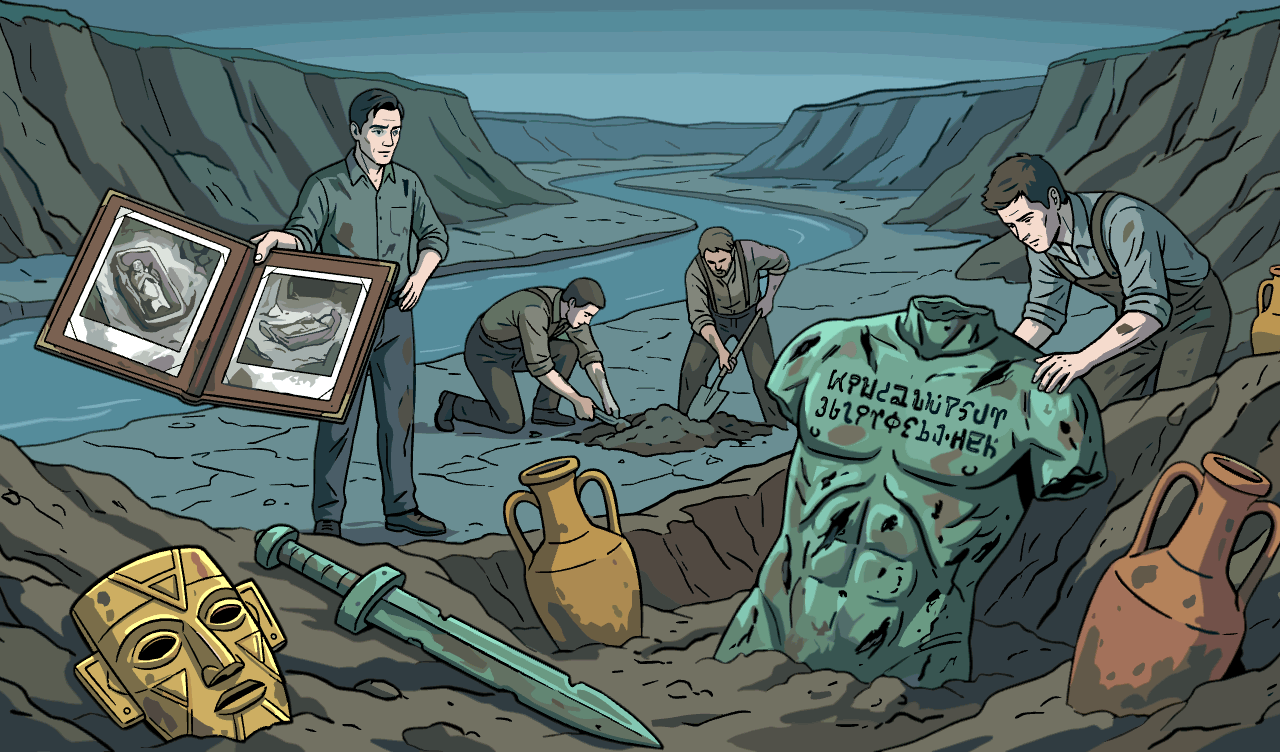
| ||
| .i la'e di'u rinka lo nu facki le du'u lo'e prenu poi djuno lo du'u lo nu tai sisku cu cipra cu na rinka lo nu snada | This is how the inappropriateness of witnesses who knew the experimental nature of the search was discovered... | Así se descubrió la improcedencia de testigos que conocieran la naturaleza experimental de la busca... |
| .i le nu so'i mei sisku cu rinka lo nu penmi lo dacti poi lo'i su'o pagbu be ke'a cu simxu lo ka na mapti .i ka'u dai ca le cabna cedra cu nelci lo'e nu pa da gunka fi lo su'o va'e lo ka na te platu | Mass investigations produce contradictory objects; now individual and almost improvised works are preferred. | Las investigaciones en masa producen objetos contradictorios; ahora se prefiere los trabajos individuales y casi improvisados. |
| .i le ka di'i cupra lo me la xronir (to se tcidu fi le pa pa moi slecku toi) cu mutce te sidju le so'i lanli be le purci | The methodical elaboration of hrönir (says the Eleventh Volume) has rendered prodigious services to archaeologists. | La metódica elaboración de hrönir (dice el Onceno Tomo) ha prestado servicios prodigiosos a los arqueólogos. |
| .i la'e di'u rinka lo nu ka'e senpi lo du'u su'o da purci kei gi'e gasnu lo ji'a galfi be lo purci noi ca ku na mleca le balvi lo ka ka'e cenba gi'e tinbe | It has made it possible to question and even modify the past, which is now no less plastic and docile than the future. | Ha permitido interrogar y hasta modificar el pasado, que ahora no es menos plástico y menos dócil que el porvenir. |
| .i cinri fatci fa le du'u lo'e efku be la'e zo xron bei li re a li ci bei lo ka se dzena cu zmadu le krasi me la xron lo ka cizra .i le'e efku be fi le mu cu simxu lo ka so'a va'e lo ka mintu .i na'o da poi me la xron zo'u le'e efku be da bei li so cu simsa le'e efku be da bei li re .i je le'e efku be da bei li papa cu zmadu da lo ka cnici lo ka se pagbu lo linji | Fun fact: second and third degree hrönir - hrönir derived from another hrön, hrönir derived from the hrön of a hrön - exaggerate the aberrations of the initial one; those of fifth degree are almost uniform; those of ninth degree are confused with those of second; in those of the eleventh there is a purity of lines that the originals do not have. | Hecho curioso: los hrönir de segundo y de tercer grado -los hrönir derivados de otro hrön, los hrönir derivados del hrön de un hrön- exageran las aberraciones del inicial; los de quinto son casi uniformes; los de noveno se confunden con los de segundo; en los de undécimo hay una pureza de líneas que los originales no tienen. |
| .i le'e pruce cu dikni .i mu'a lo'e efku be la'e zo xron bei li pa re cu tende lo ka fusra | The process is periodic: the twelfth degree hrön is already beginning to decay. | El proceso es periódico: el hrön de duodécimo grado ya empieza a decaer. |
| .i zmadu ro se cmene be zo xron fi lo ka cizra gi'e curve kei fa lo'e se cmene be zo ur be'o noi dacti gi'e jai jalge lo nu jai gau krici e lo nu pacna | Stranger and purer than all hrön is sometimes the ur: the thing produced by suggestion, the object educed by hope. | Más extraño y más puro que todo hrön es a veces el ur: la cosa producida por sugestión, el objeto educido por la esperanza. |
| .i misno mupli fa le bi'u nai banli je solji firgai | The great gold mask I have mentioned is an illustrious example. | La gran máscara de oro que he mencionado es un ilustre ejemplo. |
| .i bu'u la tlon ka'e ku ta'e ku lo dacti cu se fukpi da gi'e jdika lo ka se tcila xo kau da kei ri'a lo nu lei remna cu jdika lo ka xokau lu'a ce'u morji fi lo nei | Things are duplicated in Tlön; they also tend to fade and lose details when people forget them. | Las cosas se duplican en Tlön; propenden asimismo a borrarse y a perder los detalles cuando los olvida la gente. |
| .i misno mupli fa le vorme poi ke'a stali ze'a lo nu le pindi ta'e litru klama ke'a zi'e poi ba lo nu le pindi co'a morsi cu co'u se penmi ca su'o da | The example of a doorway that lasted as long as a beggar visited it and was lost from sight when he died is classic. | Es clásico el ejemplo de un umbral que perduró mientras lo visitaba un mendigo y que se perdió de vista a su muerte. |
| .i mu'a gau so'o cipni e pa xirma pa fusra amfite'atro ca'o zasti | Sometimes some birds, a horse, have saved the ruins of an amphitheater. | A veces unos pájaros, un caballo, han salvado las ruinas de un anfiteatro. |
| .i di'u se ciska bu'u la'o .span.Salto Oriental.span. de'i li nanca bu 1940 | -- Salto Oriental, 1940. | |
| .i de'i li nanca bu 1947 ba'o fasnu | Postscript/Posdata (1947) | |
| .i mi ciska le fukpi be le lidne notci poi ca'o stali le cukta be zoi gy.Anthology of Fantastic Literature.gy. bei de'i li 1940 .i mi vimcu no drata pagbu e so'o metfo e lu'e lo nu ckasu ve skicu noi ca simlu lo ka na se junri | I reproduce the previous article as it appeared in the Anthology of Fantastic Literature, 1940, with no other omission other than a few metaphors and a kind of mocking summary that now considered frivolous. | Reproduzco el artículo anterior tal como apareció en la Antología de la literatura fantástica, 1940, sin otra escisión que algunas metáforas y que una especie de resumen burlón que ahora resulta frívolo. |
| .i so'i da pu fasnu ba la'e do'i | So much has happened since then... | Han ocurrido tantas cosas desde esa fecha... |
| .i ai ei mi ciska le liste vau sa'u | I will just remember them. | Me limitaré a recordarlas. |
| .i de'i li nanca bu 1941 masti bu 3 penmi le noi se ciska le xance ku'o xatra be fi la'o gy.Gunnar Erfjord.gy. le nenri be le cukta be fi la'o gy.Hinton.gy. be'o noi se ponse la .xerbert.ac. | In March 1941 a handwritten letter from Gunnar Erfjord was discovered in a book by Hinton that had belonged to Herbert Ashe. | En marzo de 1941 se descubrió una carta manuscrita de Gunnar Erfjord en un libro de Hinton que había sido de Herbert Ashe. |
| .i le papri tanxe be le xatra cu se jaspu fi la'o .span.Ouro Preto.span. i je le te xatra cu mulno ciksi le cizra pe la .tlon. | The envelope had the Ouro Preto postage stamp, the letter fully elucidated the mystery of Tlön. | El sobre tenía el sello postal de Ouro Preto, la carta elucidaba enteramente el misterio de Tlön. |
| .i le te xatra cu jalge jinvi le du'u je'a jetnu fa le se smadi be la'o .span.Martínez Estrada.span. | Its text corroborates the hypotheses of Martínez Estrada. | Su texto corrobora las hipótesis de Martínez Estrada. |
| .i ca le krasi be le pa ze moi sorna'acedra ca pa nicte bu'u la .lucern. a bu'u la .london. co'a fasnu fa le banli lisri | At the beginning of the 17th century, on a night in Lucerne or London, the splendid story began. | A principios del siglo XVII, en una noche de Lucerna o de Londres, empezó la espléndida historia. |
| .i le pa zabna je sivni cecmu be le se cmima be la'o gy.Dalgarno.gy. e ba bo la djordj.berklis. cu co'a zasti gi'e se finti fi le nu finti lo gugde | A benevolent secret society (which included Dalgarno and later George Berkeley among its affiliates) arose to invent a country. | Una sociedad secreta y benévola (que entre sus afilados tuvo a Dalgarno y después a George Berkeley) surgió para inventar un país. |
| .i le'i cfari te zukte noi na'e klina cu se cmima le saske be la ermetik fe le saske be lo nu sidju lo'e prenu fe le xebro saske be lo pruxi | Included in the vague initial program were "hermetic studies," philanthropy, and the cabala. | En el vago programa inicial figuraban los "estudios herméticos", la filantropía y la cábala. |
| .i le cizra se cukta pe la'o .span.Andreä.span. pu se finti ca le go'i cedra noi clira | Andreä's curious book dates from that early period. | De esa primera época data el curioso libro de Andreä. |
| .i ba le noi nanca li so'o ku'o nu darlu gi'e xa'o troci lo ka zbasu lo ka'e se pilno zo'u le se cecmu co'a jimpe le du'u lo nu na kansa lo se rirni cu na banzu lo nu finti lo gugde | After a few years of conciliations and premature syntheses, they understood that one generation was not enough to articulate form to a country. | Al cabo de unos años de conciliábulos y de síntesis prematuras comprendieron que una generación no bastaba para articular un país. |
| .i le se cecmu cu finti le javni be lo nu ro da poi me le certu pe le cecmu zo'u da cuxna lo nu pa se ctuca ba ca'o gunka lo pu se zukte be da | They decided that each one of the masters the society was composed of would choose a disciple for the continuation of the work. | Resolvieron que cada uno de los maestros que la integraban eligiera un discípulo para la continuación de la obra. |
| .i le di'u se cuxna cu jinga .i baku ba le nu de'a fasnu kei cedryna'a be li re le noi se jersi ku'o se cecmu bu'u le mergu'e ce'e di'a zvati | This hereditary disposition prevailed; after a hiatus of two centuries, the persecuted fraternity re-emerged in America. | Esa disposición hereditaria prevaleció; después de un hiato de dos siglos la perseguida fraternidad resurge en América. |
| .i de'i li ji'i nanca bu 1824 bu'u la .memfis. poi diklo la .tenesis. pa le cmima be le cecmu cu tavla la .ezras.baklis. noi jai zu'e sepli gi'e ricfu | Around 1824, in Memphis (Tennessee), one of the affiliates conversed with the ascetic millionaire Ezra Buckley. | Hacia 1824, en Memphis (Tennessee) uno de los afiliados conversa con el ascético millonario Ezra Buckley. |
| .i .ebu.by. fau le nu ri na'e sinma kei cu curmi le nu le di'u cecmu cu ciksi .i ja'e bo .ebu.by. frati lo ka cmila kei lo nu .ebu.by. jinvi le du'u le pruce na banli | The latter lets him speak with some disdain - and laughs at the modesty of the project. | Éste lo deja hablar con algún desdén -y se ríe de la modestia del proyecto. |
| .i .ebu by. ciksi fo le du'u bu'u le merko lo nu finti lo gugde cu fenki .i je .ebu.by. stidi lo ka finti lo plini | He tells him that in America it is absurd to invent a country and proposes the invention of a planet. | Le dice que en América es absurdo inventar un país y le propone la invención de un planeta. |
| .i ji'a .ebu by. stidi ka bu noi banli e le drata noi se krasi le'e tcaci be lo nu na krici (to mu mai toi) zi'e voi ka mipri le tcebarda pruce | To this gigantic idea he adds another, the daughter of his nihilism (5): that of keeping the enormous undertaking in silence. | A esa gigantesca idea añade otra, hija de su nihilismo(5): la de guardar en el silencio la empresa enorme. |
| .i ca le di'u cerda so'i prenu cu tcidu fi le re no slecku be la brito skecku .i la baklis. stidi lo ka zbasu le skecku be le noi satci gi'e se platu ku'o ve ciksi be le xanri munje | The twenty volumes of the Encyclopaedia Britannica were then in circulation; Buckley suggests a methodical encyclopedia of the illusory planet. | Circulaban entonces los veinte tomos de la Encyclopaedia Britannica; Buckley sugiere una enciclopedia metódica del planeta ilusorio. |
| .i .ebu by. nupre lo ka posydu'a fi le cecmu fe le derxi be lo cmana poi ke'a lo solji cu te kunra ce'e le rirxe noi fe ke'a lo ka se bloti cu ka'e litru ce'e le purdi noi lo bakni e lo bakrbisoni ke'a cadzu ce'e le selfu e le glebarja e le merko jdini .i ku'i minde fi lo ka na tugni la .iesus.krist. noi ebu by. jinvi le du'u ke'a jai gau tcica .i la .baklis. na krici le du'u zasti fa le cevni .i ku'iby. djica le nu jarco fi le cevni noi na zasti ku'o fa lei remna noi ka'e morsi ce'e fe le ka kakne je ckaji lo ka finti lo munje | He will leave them his gold-bearing mountain ranges, his navigable rivers, his prairies trodden down by bulls and bison, his slaves, his brothels, and his dollars, under one condition: "The work will not agree with the impostor Jesus Christ." Buckley disbelieves in God, but wants to prove to the non-existent God that mortal men are capable of conceiving a world. | Les dejará sus cordilleras auríferas, sus ríos navegables, sus praderas holladas por el toro y por el bisonte, sus negros, sus prostíbulos y sus dólares, bajo una condición: "La obra no pactará con el impostor Jesucristo." Buckley descree de Dios, pero quiere demostrar al Dios no existente que los hombres mortales son capaces de concebir un mundo. |
| .i la .baklis. se catra fi lo ka jmina lo vindu lo cidja bu'u la .baton.ruj. de'i li nanca bu 1828 .i de'i li nanca bu 1914 le cecmu cu benji fi lu'a lei noi su'o ci no no mei ku'o kansa be le nei fe le romoi be le'i slecku be la pamoi skecku be la .tlon. | Buckley is poisoned in Baton Rouge in 1828; in 1914 the society sent to his collaborators, who were some three hundred in number, the final volume of the First Encyclopedia of Tlön. | Buckley es envenenado en Baton Rouge en 1828; en 1914 la sociedad remite a sus colaboradores, que son trescientos, el volumen final de la Primera Enciclopedia de Tlön. |
| .i le di'u cukta cu sivni .i le vo no selci be le go'i (to je'u traji lo ka barda kei fo lo'i pu'i se ciska be loi remna toi) cu da'i jicmu lo drata noi da'i zmadu fi lo ka cukta lo nu skicu xokau tcila zi'e noi te ciska lo glico na e lo se gerna be bu'u la .tlon. | The edition was a secret one: the forty volumes that it comprised (the most vast work that men have undertaken) would be the basis of another more detailed one, written no longer in English, but in one of the languages of Tlön. | La edición es secreta: los cuarenta volúmenes que comprende (la obra más vasta que han acometido los hombres) serían la base de otra más minuciosa, redactada no ya en inglés, sino en alguna de las lenguas de Tlön. |
| .i le di'u krefu be fi le nu skicu lo xanri munje cu zasni se cmene zoi gy.Orbis Tertius.gy. .i pa le cumla finti be le krefu cu du la xerbert.ac. .i mi na djuno le du'u ri selfu sa'u la .gunar.erfiord. gi'i kau me le cecmu | That revision of an illusory world is provisionally called Orbis Tertius and one of its modest demiurges was Herbert Ashe, I don't know if as an agent of Gunnar Erfjord or as an affiliate. | Esa revisión de un mundo ilusorio se llama provisoriamente Orbis Tertius y uno de sus modestos demiurgos fue Herbert Ashe, no sé si como agente de Gunnar Erfjord o como afiliado. |
| .i le nu xy.abu pu cpacu le fukpi be le pa pa moi slecku cu simlu lo ka sinxa le du'u jetnu fa le remoi se smadi | His having received of a copy of the Eleventh Volume seem to favor the latter assumption. | Su recepción de un ejemplar del Onceno Tomo parece favorecer lo segundo. |
| .i ku'i lei drata cu mo | But what about the others? | Pero ¿y los otros? |
| .i de'i li ji'i nanca bu pa so vo re lei fasnu cu zenba lo ka vajni | Towards 1942 the events escalated. | Hacia 1942 arreciaron los hechos. |
| .i mi carmi vedli le pa me le so'u moi .i pe'i mi cinmo fi le se go'i le na'o kajde | I remember one of the first of them with singular clarity and it seems to me that I felt something of its premonitory character. | Recuerdo con singular nitidez uno de los primeros y me parece que algo sentí de su carácter premonitorio. |
| .i fasnu bu'u le selci zdani be vi le klaji be me'e zoi .span. Laprida .span. be'o gi'e crane le balni poi klina gi'e galtu zi'e noi ca le nu nei cu ragve le solri ca le pu'o nicte | It happened in an apartment on Laprida street, in front of a clear and high balcony overlooking the sunset. | Ocurrió en un departamento de la calle Laprida, frente a un claro y alto balcón que miraba el ocaso. |
| .i le noltruti'u pe la fosinis.luSINJ. ca'o mo'u cpacu le rijno palta la .puaties. | The Princesse de Faucigny Lucinge had received her silverware from Poitiers. | La princesa de Faucigny Lucinge había recibido de Poitiers su vajilla de plata. |
| .i fi le barda dizlo be le tanxe noi se tcita lo vrici be lo ka se mrilu fo lo gugde poi du makau cu tolpu'i so'i zabna dacti poi na muvdu .i me lei dacti fa le rijno palta be ra'i la .utrext. fa le rijno palta be ra'i la .paris. be'o noi se jadni lo jdari pixra be lo mabru pe le'e lanci ku'o fa le ji'a pa me la .samovar. | Fine immobile things were emerging from the vast bottom of a box signed with international stamps: silverware from Utrecht and Paris with hard heraldic fauna, and a samovar. | Del vasto fondo de un cajón rubricado de sellos internacionales iban saliendo finas cosas inmóviles: platería de Utrecht y de París con dura fauna heráldica, un samovar. |
| .i jbini le za'u dacti fau le nu le nei lo'e sipna cipni lo ka se zgana je ruble desku cu simsa ce'e fa le pa makfartci cu cizra slilu | Between them - with a perceptible and faint tremor of a sleeping bird - a compass was mysteriously beating. | Entre ellas -con un perceptible y tenue temblor de pájaro dormido- latía misteriosamente una brújula. |
| .i le noltruti'u cu jarco lo ka na se slabu ra | The princess did not recognize it. | La princesa no la reconoció. |
| .i le blanu jesni cu jersi lo berti poi maksi .i le tanxe cu se zorkru .i lei lerfu poi se ciska fi le sefta be le cukla cu lerfu pa le so'o se pilno be bu'u la .tlon. | The blue needle longed for magnetic north; the metal box was concave; the letters on the sphere corresponded to one of the Tlön alphabets. | La aguja azul anhelaba el norte magnético; la caja de metal era cóncava; las letras de la esfera correspondían a uno de los alfabetos de Tlön. |
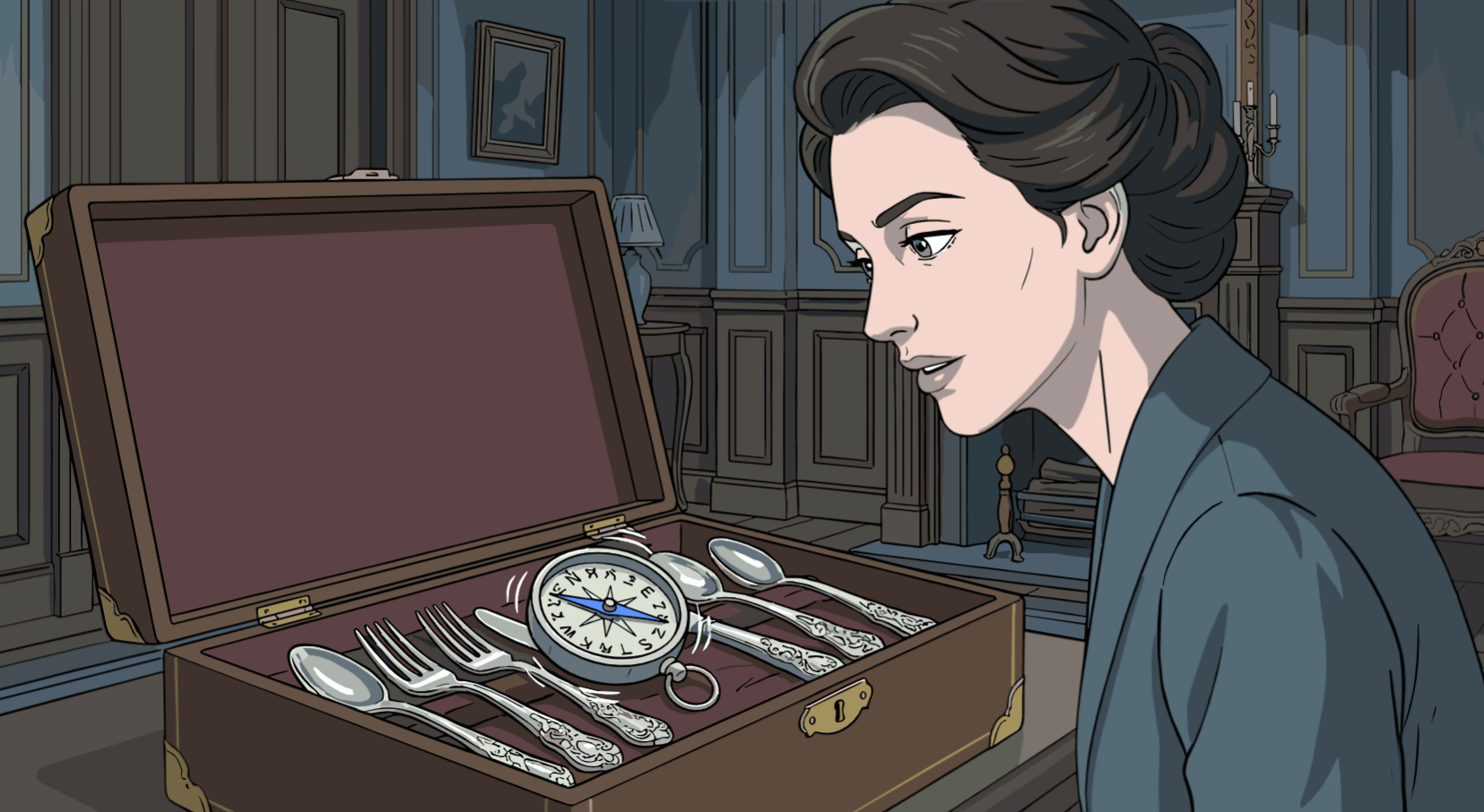
| ||
| .i la'e di'u pa moi nu gunta fa le xanri munje le zasti munje | Such was the first intrusion of the fantastic world into the real world. | Tal fue la primera intrusión del mundo fantástico en el mundo real. |
| .i le snuti noi mi ca'o xanka ke'a cu rinka le nu mi zgana le remoi nu gunta | A chance that still worries me made me also witness the second intrusion. | Un azar que me inquieta hizo que yo también fuera testigo de la segunda. |
| .i fasnu ba za la'u le masti be li so'o bu'u le brazo zarci be lo cidja bu'u la'o .braz.Cuchilla Negra.braz. | It happened a few months later, in a Brazilian grocery store, in Cuchilla Negra. | Ocurrió unos meses después, en la pulpería de un brasilero, en la Cuchilla Negra. |
| .i la amorim e mi ca'o klama le jai purci la'o .itl.Sant'Anna.itl. | Amorim and I were returning from Sant'Anna. | Amorim y yo regresábamos de Sant'Anna. |
| .i le nu la'o .span.Tacuarembó.span noi rirxe cu bancu le zbani cu bapli le nu mi'a troci je renvi lo ka vitke co na'e prane | A flood of the Tacuarembó River forced us to try (and endure) that rudimentary hospitality. | Una creciente del río Tacuarembó nos obligó a probar (y a sobrellevar) esa rudimentaria hospitalidad. |
| .i le te vitke curmi le nu mi'a pilno le za'u ckana co se savru noi zvati le barda kumfa noi culno lo slanu botpi joi lo sunla | The storekeeper arranged some creaking cots for us in a large room, cluttered with barrels and hides. | El pulpero nos acomodó unos catres crujientes en una pieza grande, entorpecida de barriles y cueros. |
| .i mi'a troci gi'e fliba vau lo ka co'a sipna .i co'u le cermurse le pa xabju be lo drata kumfa be'o poi na se viska gi'e ba'o pinxe loi xalka cu jai zunti le nu mi'a sipna kei lo ka slilu fi lo ka cilce cusku lo mabla kei ce lo ka sanga lo me lai milongas. noi pamei sa'e | We went to bed, but the drunkenness of an invisible neighbor kept us from sleeping until dawn, who alternated inextricable insults with bouts of milongas - or rather with bouts of a single milonga. | Nos acostamos, pero no nos dejó dormir hasta el alba la borrachera de un vecino invisible, que alternaba denuestos inextricables con rachas de milongas -más bien con rachas de una sola milonga. |
| .i ba'a mi'a jinvi le du'u le nu ru'i cladu tavla cu se rinka tu'a le xalka be fi lo satysrasu be'o pe le jatna | As is to be expected, we attributed this insistent shouting to the fiery cane of the boss... | Como es de suponer, atribuimos a la fogosa caña del patrón ese griterío insistente... |
| .i ca le cermurse cu facki le du'u le nanmu cu morsi bu'u le nenri klaji | At dawn, the man was dead in the corridor. | A la madrugada, el hombre estaba muerto en el corredor. |
| .i le nu le voksa cu jursa cu tcica mi'a .i ra pu citno nanla | The harshness of his voice had fooled us: he was a young boy. | La aspereza de la voz nos había engañado: era un muchacho joven. |
| .i ca le nu ra tarti lo ka jai fenki kei le so'u sicni e le pa minra jinme konju noi dunli lo'e kelkubli lo ka se canlu makau cu mo'u farlu fi le karli be le xadmidju | In his delirium, a few coins and a shiny metal cone, the diameter of a dice, had fallen from the belt. | En el delirio se le habían caído del tirador unas cuantas monedas y un cono de metal reluciente, del diámetro de un dado. |
| .i le .i'u nai nanla cu fliba lo ka jbera le konju | In vain a boy tried to pick up that cone. | En vano un chico trató de recoger ese cono. |
| .i le .i'u nai makcu nanmu cu se nandu je snada lo ka lafygau ra | A man barely managed to lift it. | Un hombre apenas acertó a levantarlo. |
| .i mi pu jgari ra le xanflira be mi ze'a le mentu be li so'o .i ba'a nai pu mutce tilju ije ba le nu co'a vimcu kei mi ca'o cinmo lo ka se danre | I held it in the palm of my hand for a few minutes: I remember that its weight was intolerable and that after the cone was withdrawn, the oppression lasted. | Yo lo tuve en la palma de la mano algunos minutos: recuerdo que su peso era intolerable y que después de retirado el cono, la opresión perduró. |
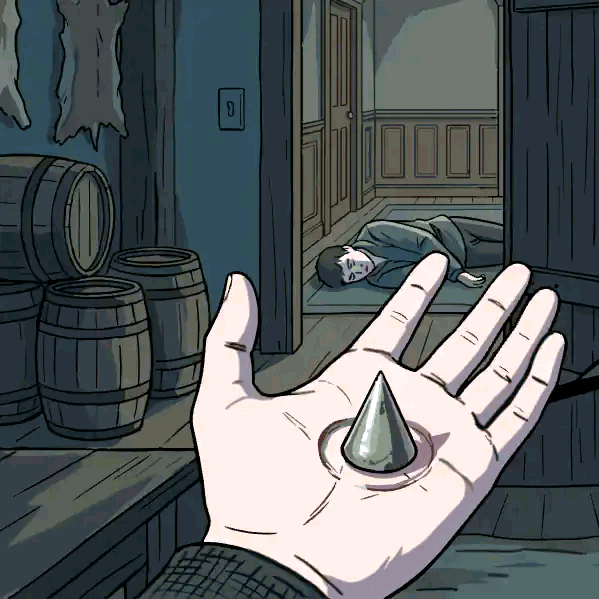
| ||
| .i ji'a mi ca'o carmi lifri lo ka le satci djine cu sraku le rectu be ce'u | I also remember the precise circle that it carved into my flesh. | También recuerdo el círculo preciso que me grabó en la carne. |
| .i le nu lifri tu'a su'o da poi mutce cmalu gi'e mutce tilju cu te cinmo lo ka se rigni gi'e se terpa | This sensation of a very small and at the same time very heavy object left an unpleasant impression of disgust and fear. | Esa evidencia de un objeto muy chico y a la vez pesadísimo dejaba una impresión desagradable de asco y de miedo. |
| .i le pa diklo prenu cu stidi lo ka renro le dacti le rirxe .i la amorim cu te vecnu tu'a ra fo tu'a le rupnu be li so'o | A fellow countryman suggested that it be thrown into the river. Amorim acquired it for a few pesos. | Un paisano propuso que lo tiraran al río correntoso. Amorim lo adquirió mediante unos pesos. |
| .i no ne'a prenu cu djuno fi le morsi prenu fe su'o da poi na du'u sa'a ri klama lo te korbi | Nobody knew anything about the dead man, except "that he came from the border." | Nadie sabía nada del muerto, salvo "que venía de la frontera". |
| .i le tai konju poi cmalu gi'e mutce tilju zi'e noi marji loi jinme poi se krasi lo bancu be ti voi munje cu pixra lo cevni va'o tu'a so'o lijda pe la tlon | Those small and very heavy cones (made of a metal that is not from this world) are an image of divinity, in certain religions of Tlön. | Esos conos pequeños y muy pesados (hechos de un metal que no es de este mundo) son imagen de la divinidad, en ciertas religiones de Tlön. |
| .i ca'e la'e di'u romoi pagbu le citri be le sivni be mi mi | Here I end the personal part of my narrative. | Aquí doy término a la parte personal de mi narración. |
| .i le drata cu jai se morji gi'u ta'o jai se pacna gi'a jai se terpa ro tcidu be dei | The rest is in the memory (if not in hope or fear) of all my readers. | Lo demás está en la memoria (cuando no en la esperanza o en el temor) de todos mis lectores. |
| .i be'ucu'i mi skicu le noi ba'e se lifri vau za'u ba fasnu fo lo ka cusku so'u da noi ja'e lo nu le'i se cecmu cu simxa lo ka tavla fi le se morji cu jai se ciksi fo lo ricfu gi'a te jmina so'i de | It is enough for me to recall or mention the subsequent events, with a mere brevity of words that the general recollection of all will enrich or amplify. | Básteme recordar o mencionar los hechos subsiguientes, con una mera brevedad de palabras que el cóncavo recuerdo general enriquecerá o ampliará. |
| .i de'i li ji'i nanca bu pa so vo vo le pa selfu be fi lo ka lanli bei fe tu'a le karni be me'e zoi gy.The American.gy. be'o pe la nacvil pe bu'u la tenesis cu co'a penmi le vo no cukta poi selci la pamoi skecku pe la tlon ku'o le ckumuzga be bu'u la memfis | Around 1944, a researcher for the newspaper The American (of Nashville, Tennessee) brought to light the forty volumes of the First Encyclopedia of Tlön in a Memphis library. | Hacia 1944 un investigador del diario The American (de Nashville, Tennessee) exhumó en una biblioteca de Memphis los cuarenta volúmenes de la Primera Enciclopedia de Tlön. |
| .i ta'e ca'o darlu le du'u le nu facki cu snuti kei le du'u ri te zukte be fi lei jatna be la .orbis.tertius. noi ca'o sivni | To this day it is disputed whether this discovery was accidental or if it was consented to by the directors of the still nebulous Orbis Tertius. | Hasta el día de hoy se discute si ese descubrimiento fue casual o si lo consintieron los directores del todavía nebuloso Orbis Tertius. |
| .i le te go'i cu lakne | The latter is plausible. | Es verosímil lo segundo. |
| .i so'o cizra tcila be le se slecku be le pa pa moi (to mu'a loi me la xron cu zenba lo ka xo kau mei toi) cu se vimcu fi le fukpi be bu'u la memfis gi'a se (to'e basna fukpi bu .i racli fa lo ka jinvi le du'u le di'u nu vimcu cu sarxu le sidbo be lo nu zgagau lo munje poi na mutce lo ka na mapti le zasti munje | Some incredible features of the Eleventh Volume (e.g., the multiplication of the hrönir) have been eliminated or attenuated in the Memphis copy; it is reasonable to imagine that these deletions obey the plan to exhibit a world that is not too incompatible with the real world. | Algunos rasgos increíbles del Onceno Tomo (verbigracia, la multiplicación de los hrönir) han sido eliminados o atenuados en el ejemplar de Memphis; es razonable imaginar que esas tachaduras obedecen al plan de exhibir un mundo que no sea demasiado incompatible con el mundo real. |
| .i lo nu so'i gugde cu te penmi lo dacti pe ra'i la tlon cu da'i romoi pagbu le se platu (to'i xa mai toi) .i fatci fa le du'u so'i da poi gugde zo'u so'i de karni ce'e fi tu'a da fe lo nu skicu fo lo ka sa'a se penmi | The dissemination of objects from Tlön in various countries would complement this plan...(6) The fact is that the international press endlessly trumpeted the "find". | La diseminación de objetos de Tlön en diversos países complementaría ese plan...(6)El hecho es que la prensa internacional voceó infinitamente el "hallazgo". |
| .i fa loi ctuca cukta fa loi te ganzu be lo cfika fa loi cukta be lo ve skicu fa loi satci fukpi e loi se zanru fukpi e loi zekri fukpi vu'o poi lu'a ke'a fukpi le za'u jai rai banli se finti be loi remna cu ba'o je ca'o festi culno le terdi | Manuals, anthologies, summaries, verbatim versions, authorized reprints, and pirated reprints of the Greater Works of Men littered and still litter the earth. | Manuales, antologías, resúmenes, versiones literales, reimpresiones autorizadas y reimpresiones piráticas de la Obra Mayor de los Hombres abarrotaron y siguen abarrotando la tierra. |
| .i ba zi ku lo'e zasti cu randa so'i tadji | Almost immediately, reality gave way in more ways than one. | Casi inmediatamente, la realidad cedió en más de un punto. |
| .i je'u lo'e go'i pu djica pe'a lo nu ri randa | The truth is that it longed to give in. | Lo cierto es que anhelaba ceder. |
| .i pu za la'u le nanca be li pa no fa ro mirlanxe poi simlu lo ka cnici zi'e noi me ke'a fa le nalmutske be lo fapro fa le si'o xebni lo'e xebro fa le si'o lo natmi cu ralju cu banzu lo nu trina so'i prenu | Ten years ago any symmetry with the appearance of order - dialectical materialism, anti-Semitism, Nazism - was enough to captivate men. | Hace diez años bastaba cualquier simetría con apariencia de orden -el materialismo dialéctico, el antisemitismo, el nazismo- para embelesar a los hombres. |
| .i ma paunai tadji lo nu na co'a lacri la .tlon. e le banli je condi platu be le cnici munje .i no da prali fi lo ka spusku le se du'u le ji'a dei munje cu cnici | How not to submit to Tlön, to the meticulous and vast evidence of an orderly planet? Useless to answer that reality is also ordered. | ¿Cómo no someterse a Tlön, a la minuciosa y vasta evidencia de un planeta ordenado? Inútil responder que la realidad también está ordenada. |
| .i ju'o cu'i go'i te ja'i ku'i lo cevni .i va'i sei mi fanva go'i te ja'i na'e bo lo remna ja'i lo no roi ro va'e lo ka se jimpe mi'o | Perhaps it is, but according to divine laws - I translate: inhuman laws - that we never quite grasp. | Quizá lo esté, pero de acuerdo a leyes divinas -traduzco: a leyes inhumanas- que no acabamos nunca de percibir. |
| .i la tlon cu ke ju'o cu'i canlu lo so'i pluta gi'e ju'a se finti lei remna gi'e se dimna lo ka lei remna cu jimpe fi ce'u | Tlön may be a labyrinth, but it is a labyrinth concocted by men, a labyrinth destined for men to decipher. | Tlön será un laberinto, pero es un laberinto urdido por hombres, un laberinto destinado a que lo descifren los hombres. |
| .i le nu co'a ku se slabu la .tlon. gi'e tarti tu'a ri kei pu daspo le nau munje | Tlön's contact and habit have disintegrated this world. | El contacto y el hábito de Tlön han desintegrado este mundo. |
| .i ki'u le nu prami le nu ra satci kei loi remna so'i re'u co'u morji le du'u satci ra'i lo pe'a ci'erkei be lo caxmati pe'e je nai lo angeli | Enchanted by its rigor, humanity forgets and forgets again that it is a rigor of chess players, not of angels. | |
| Encantada por su rigor, la humanidad olvida y torna a olvidar que es un rigor de ajedrecistas, no de ángeles. | " | |
| .i le se smadi za'e sampu bangu pe la .tlon. xa'o se tadni le'e ve ckule .i le nu ctuca le sarxe citri be ra be'o noi culno so'i te cinmo lisri cu mo'u vimcu le nu ctuca le purci citri pe le nu mi verba .i je xa'o ku le xanri purci poi se morji cu basti le drata purci noi ro da pe ke'a zo'u ma'a na birti da gi'e ji'a na djuno le du'u da jitfa | The (conjectural) "primitive language" of Tlön has already penetrated the schools; already the teaching of its harmonious history (and full of moving episodes) has obliterated the one that presided over my childhood; already in the memories a fictitious past occupies the place of another, of which we know nothing with certainty - not even that it is false. | Ya ha penetrado en las escuelas el (conjetural), "idioma primitivo" de Tlön; ya la enseñanza de su historia armoniosa (y llena de episodios conmovedores) ha obliterado a la que presidió mi niñez; ya en las memorias un pasado ficticio ocupa el sitio de otro, del que nada sabemos con certidumbre -ni siquiera que es falso. |
| .i lo'e sicni e lo'e farmako e lo'e tcepru mo'u cenba lo ka makau saske ce'u | Numismatics, pharmacology and archeology have been reformed. | Han sido reformadas la numismática, la farmacología y la arqueología. |
| .i mi jimpe le du'u ji'a denpa lo nu le muvyske e le cmaci cu se galfi | I understand that biology and mathematics also await their avatar... | Entiendo que la biología y las matemáticas aguardan también su avatar... |
| .i le lanzu cecmu be lo nonkansa prenu ba'o gasnu le galfi be le flira pe'a tarmi be le munje | A scattered dynasty of loners has changed the face of the world. | Una dispersa dinastía de solitarios ha cambiado la faz del mundo. |
| .i le nu zukte be le lanzu ca'o renvi | Their task continues. | Su tarea prosigue. |
| .i ganai le se smadi be mi'a na jitfa gi ba za la'u le nanca be li pa ki'o fa pa da penmi le pa ki'o slecku pe le remoi skecku be la .tlon. | If our forecasts are not wrong, a hundred years from now someone will discover the hundred volumes of the Second Encyclopedia of Tlön. | Si nuestras previsiones no erran, de aquí a cien años alguien descubrirá los cien tomos de la Segunda Enciclopedia de Tlön. |
| .i ba ku ca le di'u cedra no da bu'u le terdi be ma'a ba se bangu le glico a le fraso a le spano | Then English and French and mere Spanish will disappear from the planet. | Entonces desaparecerán del planeta el inglés y el francés y el mero español. |
| .i le munje be ma'a ba me la tlon | The world will be Tlön. | El mundo será Tlön. |
| .i go'i a'ucu'i .i mi ca'o zanzengau ca le smaji dorcte be fi la'o .span.Adrogué.span. noi xotli ku'o fe le milxe cunso je se tarmi be la'o .span.Quevedo.span. xe fanva (to ai nai prina cukta toi) be la'e "lu botpi le pulce be lo morsi lu'u ne fi'e la'o gy.Brown.gy. | I pay no attention to this, I continue revising, in the quiet days at the Adrogué hotel, an indecisive Quevedian translation (which I am not going to get it in print) of Browne's Urn Burial. | Yo no hago caso, yo sigo revisando en los quietos días del hotel de Adrogué una indecisa traducción quevediana (que no pienso dar a la imprenta) del Urn Burial de Browne. |
| .i pa mai la'o .glic.Haslam.glic. finti la'e ji'a "lu mulno citri lo'e lutseltcana li'u" | 1. Haslam has also published A General History of Labyrinths. | 1. Haslam ha publicado también A General History of Labyrinths. |
| .i re mai la'o gy.Russel.gy. cu ciska fi le 159 moi papri pe la'e "lu nu lanli le menli li'u" ne de'i li 1921 fe lu'i le nu le munje co'a gau zasti pu za la'u le mentu be li so'u fa lu'o le ji'a ro remna poi za'e morji fi le da'i purci poi da'i nai xanri | 2. Russell (The Analysis of Mind, 1921, page 159) supposes that the planet has been created a few minutes ago, endowed with a humanity that "remembers" an illusory past. | 2. Russell (The Analysis of Mind, 1921, página 159) supone que el planeta ha sido creado hace pocos minutos, provisto de una humanidad que "recuerda" un pasado ilusorio. |
| .i ci mai ji'u le si'o saclu fi li pa re lo ka sorna'acedra cu ka nanca li pa vo vo | 3. A century, according to the duodecimal system, means a period of one hundred and forty-four years. | 3. Siglo, de acuerdo con el sistema duodecimal, significa un período de ciento cuarenta y cuatro años. |
| lu .i vo mai caku pa le ckule be la tlon cu ckule fi lo nu le di'u nu cortu joi le crino bi'o pelxu joi le di'u ni glare joi le di'u sance cu olkai lo ka zasti | 4. Today, one of the churches of Tlön platonically maintains that such pain, such a greenish hue of yellow, such a temperature, such a sound, are the only reality. | 4. En el día de hoy, una de las iglesias de Tlón sostiene platónicamente que tal dolor, que tal matiz verdoso del amarillo, que tal temperatura, que tal sonido, son la única realidad. |
| .i lo'i remna poi fasnu fa lo noi fenki ku'o nu ke'a co'i ca'a gletu cu simxu lo ka du | All men, in the veniginous instant of coitus, are the same man. | Todos los hombres, en el vertiginoso instante del coito, son el mismo hombre. |
| .i ro da poi prenu gi'e fasnu fa lo noi krefu ku'o cusku lo se tcidu be fi lo linji pe la .ceikspir. cu du la .uiliam.ceikspir. li'u | Every man who repeats a line from Shakespeare is William Shakespeare." | Todos los hombres que repiten una línea de Shakespeare, son William Shakespeare. " |
| .i mu mai la'o gy.Buckley.gy. pu na'o zifre lo ka pensi lu'a lo vrici kei gi'e se lijda lo dimna gi'e darlu lo nu pilno lo'e bai selfu | 5. Buckley was a freethinker, a fatalist, and an advocate of slavery. | 5. Buckley era librepensador, fatalista y defensor de la esclavitud. |
| .i xa mai li'a za'o li'a nabmi fa lo nu so'o dacti zo'u ni ri marji kei fa makau | 6. Naturally, there remains the problem of the matter of some objects. | 6. Queda, naturalmente, el problema de la materia de algunos objetos. |