Learn Lojban
Lesson 4. Practice
Now we know the most crucial parts of the grammar and can start accumulating new words through situations.
Colloquial expressions
Here are some common structures used by fluent speakers of Lojban, along with examples illustrating their usage.
They may help you get used to colloquial Lojban more quickly.
-
- .i ku'i
- But…
mi djuno .i ku'i mi na ku djica
I know. But I don't want.
-
- mi djica le nu
- I want that …
mi djica le nu mi sipna
I want to sleep.
I want that I sleep.
-
- mi djuno le du'u ma kau
- I know what/who …
mi djuno le du'u ma kau smuni zo coi
I know what is the meaning of coi.
- smuni
- … means … (text)
mi na ku djuno
I don't know.
-
- jinvi le du'u
- … has an opinion that …
mi jinvi le du'u la .lojban. cu zabna
I think that Lojban is cool.
- zabna
- … is cool, … is nice
coi ro do
Hello, everyone!
co'o ro do
Bye, everyone!
-
- jinvi le du'u
- … has an opinion that …
ai mi cliva .i co'o
I'm going to leave. Bye!
-
- .ei mi
- I should …
.ei mi citka .i co'o
I should eat. Bye!
-
- ca le nu
- when …
mi pu bebna ca le nu mi citno
I was stupid when I was young.
- bebna
- … is foolish, … is stupid
- citno
- … is young
-
- va'o le nu
- provided that …
va'o le nu do djica kei mi ka'e ciksi
If you want I can explain.
- va'o
- modal term: provided that …
-
- simlu le ka
- … seems to be …
simlu le ka zabna
It seems to be cool.
- simlu
- … seems to be … (property)
-
- ca le cabdei
- today
pu ce'e ca le cabdei mi surla
Today I took a rest.
- le cabdei
- today
- surla
- … relaxes
-
- mi nelci
- I like
mi nelci le mlatu
I like the cat.
-
- le nu pilno
- using …
na ku le nu pilno le vlaste cu nandu
Using dictionaries isn't hard.
- le vlaste
- the dictionary, the dictionaries
- nandu
- … is difficult
-
- kakne le ka
- capable of …
xu do kakne le ka sutra tavla
Are you able to talk quickly?
-
- tavla fi
- talk about …
.e'ei tavla fi le skami
Let's talk about computers!
- le skami
- the computer, the computers
-
- mutce le ka
- very …
mi mutce le ka se cinri
I am very interested.
- mutce
- … is very, … is much
- se cinri
- … is interested
-
- troci le ka
- … tries to …
mi troci le ka tavla fo la .lojban.
I am trying to talk in Lojban.
-
- rinka le nu
- (event) leads to …
le nu mi tadni la .lojban. cu rinka le nu mi jimpe fi do
That I study Lojban makes me understand you.
- rinka
- … (event) causes … (event)
-
- gasnu le nu
- (agent) causes …
mi pu gasnu le nu le skami pe mi co'a spofu
I made it so that my computer got broken.
- gasnu
- … (agent) makes … (event) happen
- spofu
- … is broken, … doesn't work
-
- xusra le du'u
- assert that …
xu do xusra le du'u mi na ku drani
Do you state that I am not right?
- xusra
- … asserts that … (proposition)
- drani
- … is right, … is correct
-
- kanpe le du'u
- expect (in the sense of assessment, prediction) that …
mi na ku kanpe le du'u mi jinga
I don't expect myself to win.
- kanpe
- … expects that … (event)
A simple dialogue
coi la .alis.
Hi, Alice!
coi la .doris.
Hi, Doris!
do mo >How are you?
mi kanro .i mi ca tadni la .lojban. .i mi troci le ka tavla do
I'm healthy. I now study Lojban. I'm trying to talk to you.
- kanro
- to be healthy
- tadni
- to study … (something)
- troci
- to try … (to do something)
- tavla
- to talk [to someone]
zabna .i ma tcima ca le bavlamdei
Good. What will be the weather tomorrow?
- tcima
- … is the weather
- le bavlamdei
- tomorrow day (day as an event)
mi na ku djuno .i le solri sei mi pacna
I don't know. It'll be sunny, I hope.
- djuno
- to know (fact)
- le solri
- the sun
Note that le solri cu tcima (literally the sun is the weather) is the way of using tcima in Lojban.
- sei
- comment starts
- pacna
- to hope (for some event)
mi jimpe
I understand.
co'o
Goodbye.
Human senses
ju'i la .alis.
Hey, Alice!
- ju'i
- vocative that draws attention: Hey! Psst! Ahem! Attention!
re'i
Listening.
- re'i
- vocative: I'm ready to receive information.
xu do viska ta
Do you see that thing near you?
In English we say Сan you see, in Lojban we say just xu do viska — You see?
Relations describing perception will be explained after the dialogue.
viska .i plise
.i le plise cu xunre .i skari le ka xunre
Yes. It is an apple.
The apple is red. It's colored red.
xu do viska le tarmi be le plise
Can you see the form of the apple?
- tarmi
- … is the form of … (something)
viska .i le plise cu barda
Yes. The apple is big.
xu do jinvi le du'u le plise ca makcu
Do you think that the apple is ripe?
- jinvi
- … has opinion that … (proposition)
- makcu
- … is ripe
.au mi zgana le sefta be le plise
I'd like to palpate it.
- sefta
- … is a surface of … (something)
.i ua xutla
Oh, it is smooth.
- xutla
- … is smooth
.i mi pacna le nu makcu ie
I hope that it is ripe, yeah.
panci pei
What about the smell?
- panci
- … is an odor of … (something)
.i .e'o do sumne le plise
Please, smell it.
- sumne
- … smells … (odor)
le xrula cu panci
It smells of flowers.
.i .au mi zgana le vrusi be le plise
I'd like to taste the apple.
- vrusi
- … is the taste of … (something)
.i .oi nai le kukte cu vrusi
Yum, it tastes sweet.
.i .oi
Oh-no.
- le xrula
- the flower(s)

flower
ma pu fasnu
What happened?
- fasnu
- … (event) happens
mi pu farlu
I fell down.
- farlu
- ... falls down to ...
xu do cortu
Do you feel pain?
- cortu
- … has pain in … (body part)
cortu .i mi cortu le cidni
Yes, I feel pain in the knee.
- le cidni
- the knee, the knees
.i na ku ckape
It's not dangerous.
- ckape
- … is dangerous
.i ca ti mi ganse le nu da vi zvati
And now I can sense a presence of someone here.
- ganse
- … senses … (stimulus)
doi la .alis. do cliva .e'o sai
Alice, please, return immediately!
ko denpa .i mi ca tirna le sance
Wait, I can hear some sound.
- denpa
- … waits for … (event)
- le sance
- the sound, the sounds
le sance be ma
A sound of what?
mi pu tirna le nu le prenu cu tavla
I heard a person talking.
.i ca ti mi zgana le lenku
Now I feel cold.
- le lenku
- the cold
ju'i la .alis.
Hey, Alice!..
In this dialogue, the most important concepts for human senses were touched. In the following sections we shall explain their place structures, along with additional relations and examples.
Vision
- viska
- x1 sees x2 (object, form, color)
- skari
- x1 is an object with the color x2 (property)
- tarmi
- x1 is the form of x2
- cukla
- x1 is round (in form)
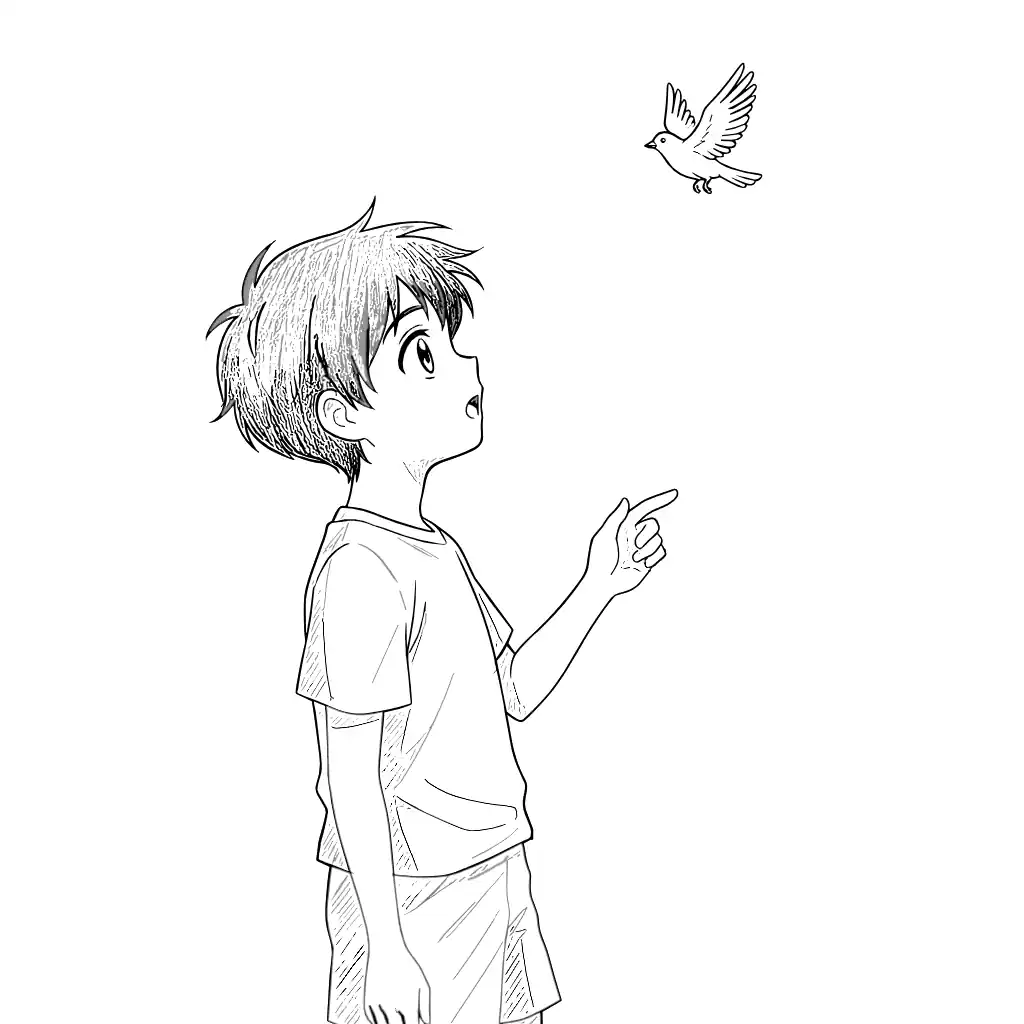
The person notices, begins to see the bird.
mi viska le plise
I see the apple.
mi viska le tarmi be le plise
I see the form of the apple.
.i le plise cu se tarmi le cukla
The apple is round.
.i le plise cu skari le ka xunre
The apple is colored red.
Note: we can both say see the form of the apple and see the apple.
Hearing
- tirna
- x1 hears x2 (object or sound)
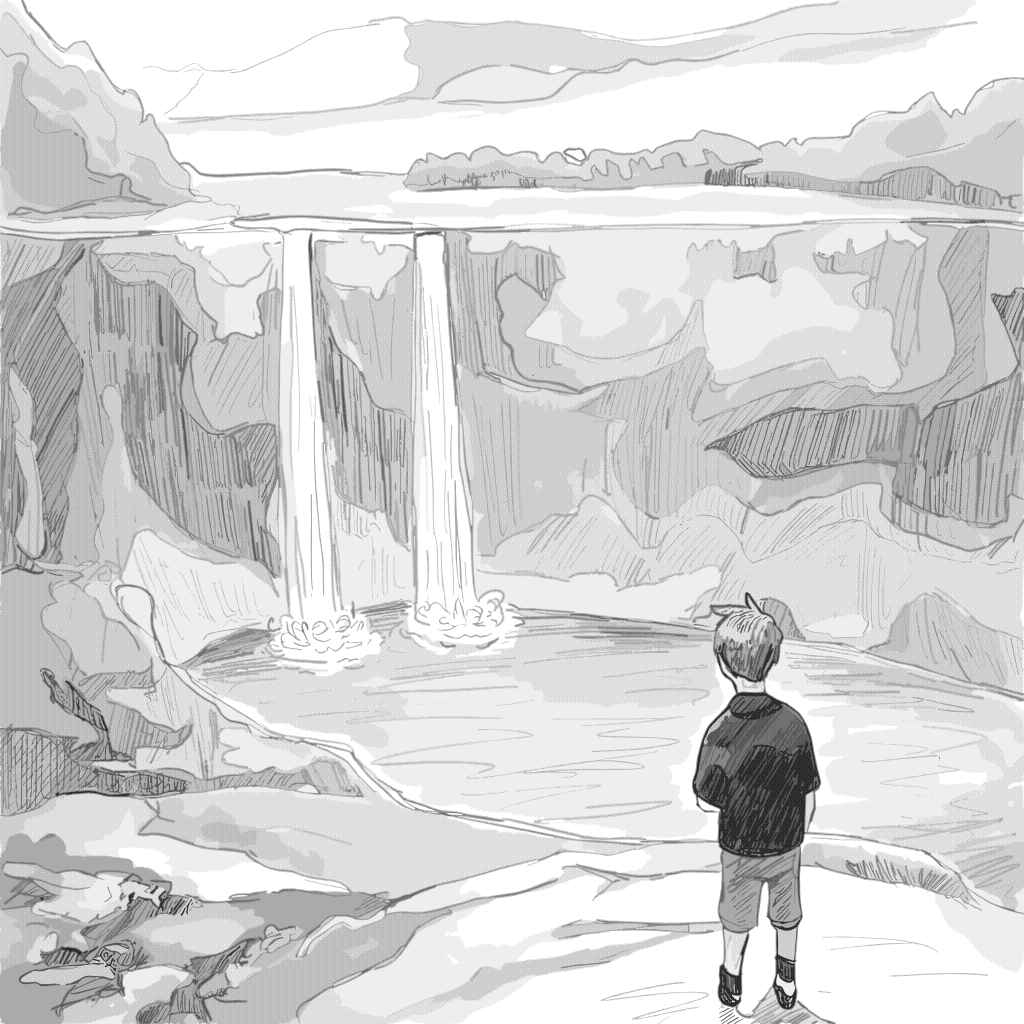
The person hears the waters.
mi tirna le palta
I hear the plate
- le palta
- the plate
mi tirna le sance be le palta poi ca'o porpi
I hear the sound of a plate that is falling.
- porpi
- … breaks, … shatters
.i le palta cu se sance le cladu
It sounds loud.
- cladu
- x1 is loud
- tolycladu
- x1 is quite in sound
- tonga
- x1 is a tone of x2
We can use cladu and similar words directly:
mi tirna le cladu
I hear something loud.
mi tirna le tolycladu
I hear something quite in sound.
mi tirna le tonga be le palta poi farlu
I hear the tone of the plate falling down.
Similarly to vision, we can say hear a sound and hear something producing the sound:
— ma sance gi'e se tirna do
— What sound do you hear?
— le zgike
— The music.
- le zgike
- the music
— do tirna le sance be ma
— You hear a sound of what?
— le plise poi co'i farlu
— The apple that has fallen down.
Perception in general
We can also use the vague ganse — to sense stimulus.
- ganse
- x1 senses stimulus x2 (object, event) by means x3
- ganse le glare
- to feel the heat
- ganse le lenku
- to feel the cold
mi ganse le plise
I sense the apple.
For observing our perceptions we can use zgana:
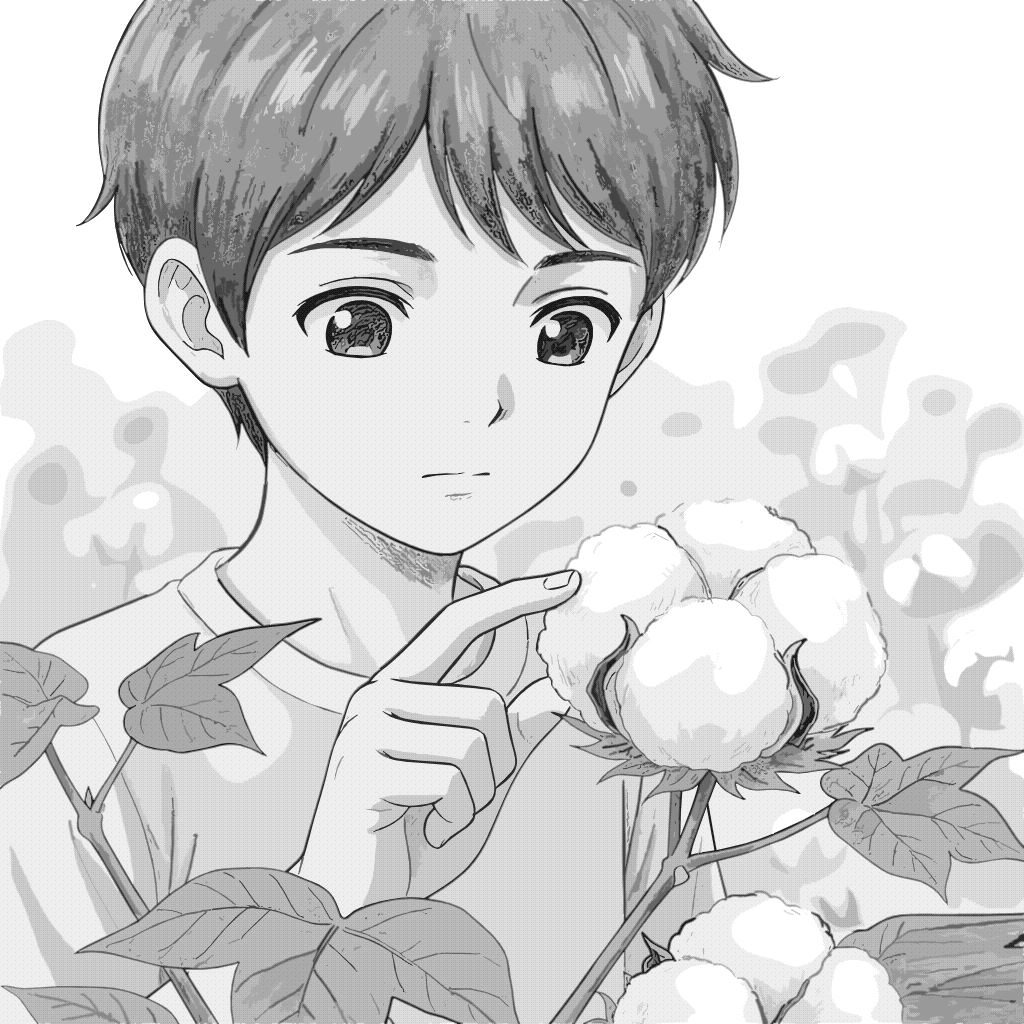
The person palpates the surface of the flower.
mi zgana le tarmi be le plise
I observe the form of an apple.
.i le plise cu se tarmi le'e cukla
The apple is round.
- zgana
- x1 notices, observes, watches x2. Not limited to vision
Some arguments can be used with different sensory relations. For example, we can
- viska le sefta
- to see the surface
- zgana le sefta
- to palpate the surface
Sense of smell
- sumne
- x1 smells x2 (odor)
- panci
- x1 is an odor of x2 (object)
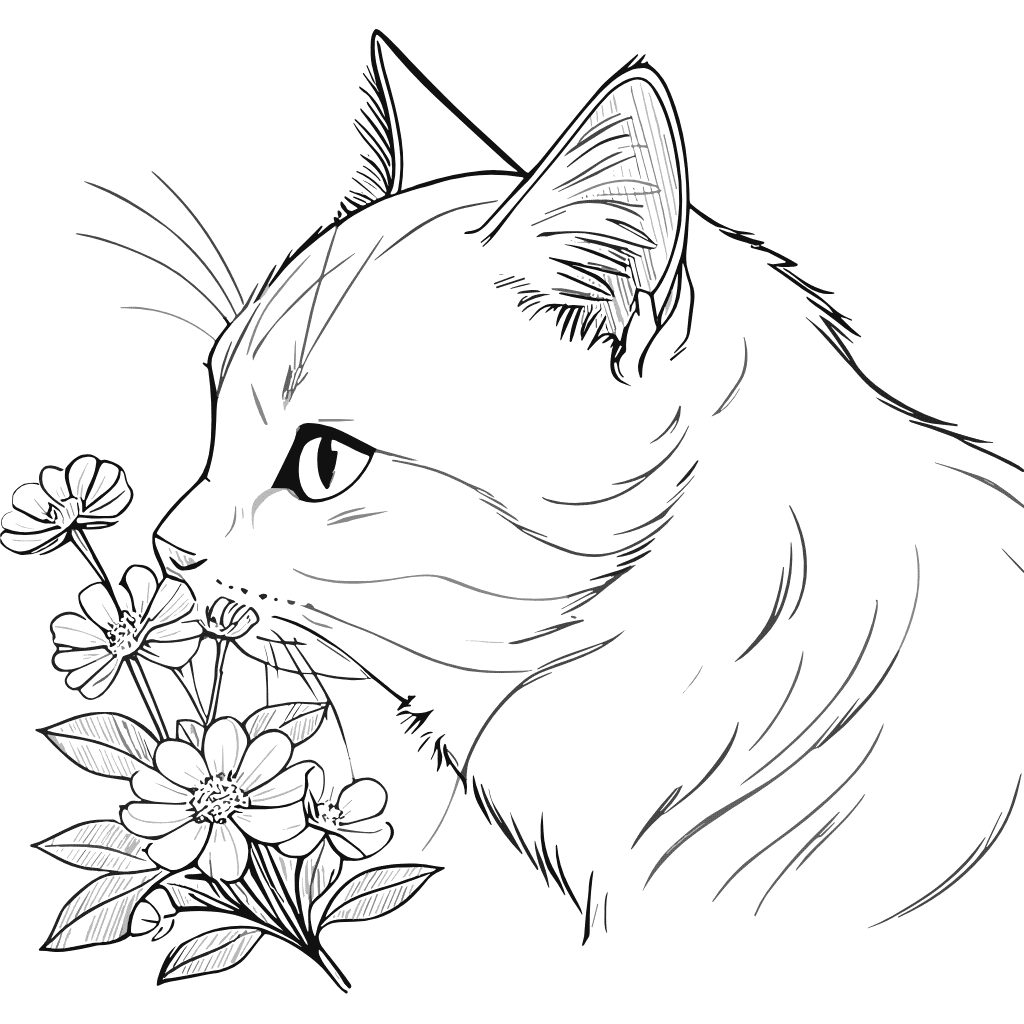
The cat smells the flower.
mi sumne le xrula
I smell the flower.
mi sumne le panci be le za'u xrula
I smell the odor of flowers.
mi sumne le panci be le plise
I smell the odor of the apple.
.i le plise cu se panci le xrula
The apple smells of flowers.
Note that English can be confusing when it comes to distinguishing between smelling an odor and smelling an object that produces that odor. We say to smell the apple, the apple smells of flowers (has the scent of flowers). This two-fold distinction is important because an apple produces aromatic particles that are distinct from the apple itself. The same applies to a falling plate and its sound — we may not want to mix them.
In Lojban, we can easily separate these cases, as demonstrated in the examples above.
Sense of taste
- vrusi
- x1 is a taste of x2
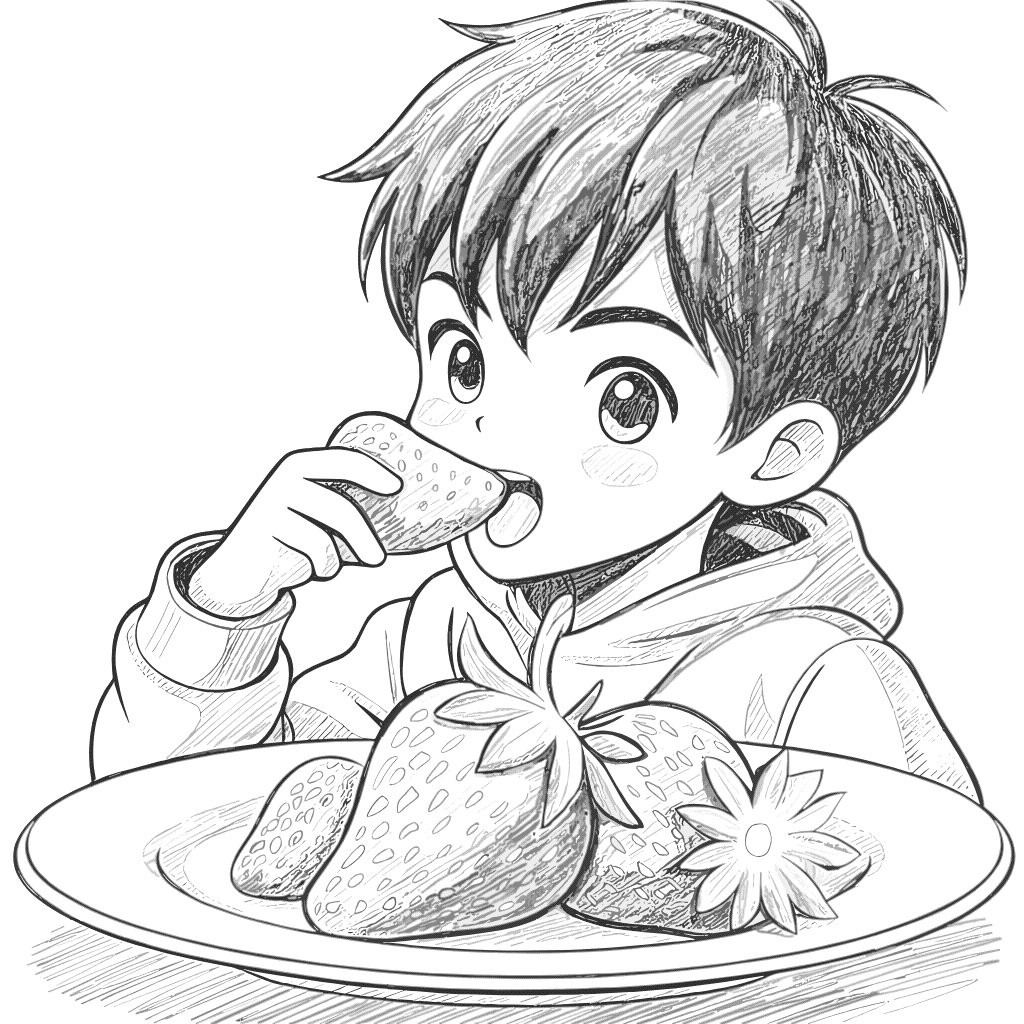
The person tastes, observes the taste of the fruit.
mi zgana le vrusi be le grute
I taste the apple.
I observe the taste of the fruit
- le grute
- the fruit, the fruits
.i le plise cu se vrusi le titla
The apple tastes sweet.
- titla
- … is sweet, … is a sweetie
Sense of touch
- sefta
- x1 is a surface of x2
mi zgana le sefta be le plise
I palpate, touch-feel the surface of the apple.
.i le plise cu se sefta le xutla
The apple has a smooth surface.
Pain
mi cortu le birka be mi
I feel pain in my arm.
My arm hurts.
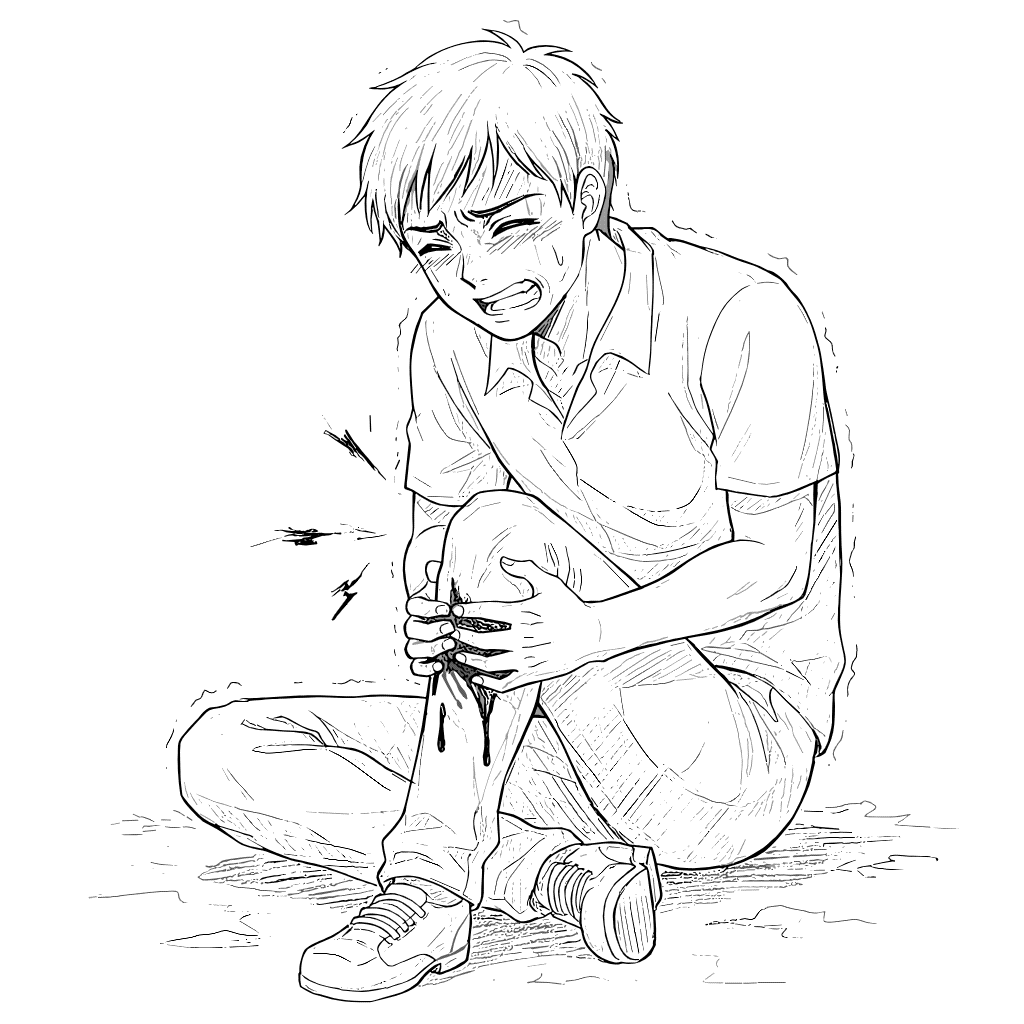
My knee hurts.
mi cortu le cidni
I feel pain in my knee, my knee hurts.
- cortu
- x1 has pain in organ x2, which is a part of x1's body
- cidni
- x1 is a knee of x2
Colors
Different languages use different sets of words to denote colors. Some languages simply refer to colors by referencing other "prototype" objects with similar colors, shades, or forms. In Lojban, we use all the options:
ti xunre
This is red.
- xunre
- x1 is red
ti skari le ka xunre
This is red. This has the color or red things.
ti skari le ka ciblu
This has the color of blood.
- le ciblu
- the blood
Here are some color examples that align with the English language. You can also use other color words, reflecting the way how speakers of different languages typically categorize things.
le tsani cu xunre ca le cerni
The sky is red in the morning.
- le tsani
- the sky
- le cerni
- the morning
.i le solri cu simlu le ka narju
The sun seems to be orange.
- le solri
- the Sun
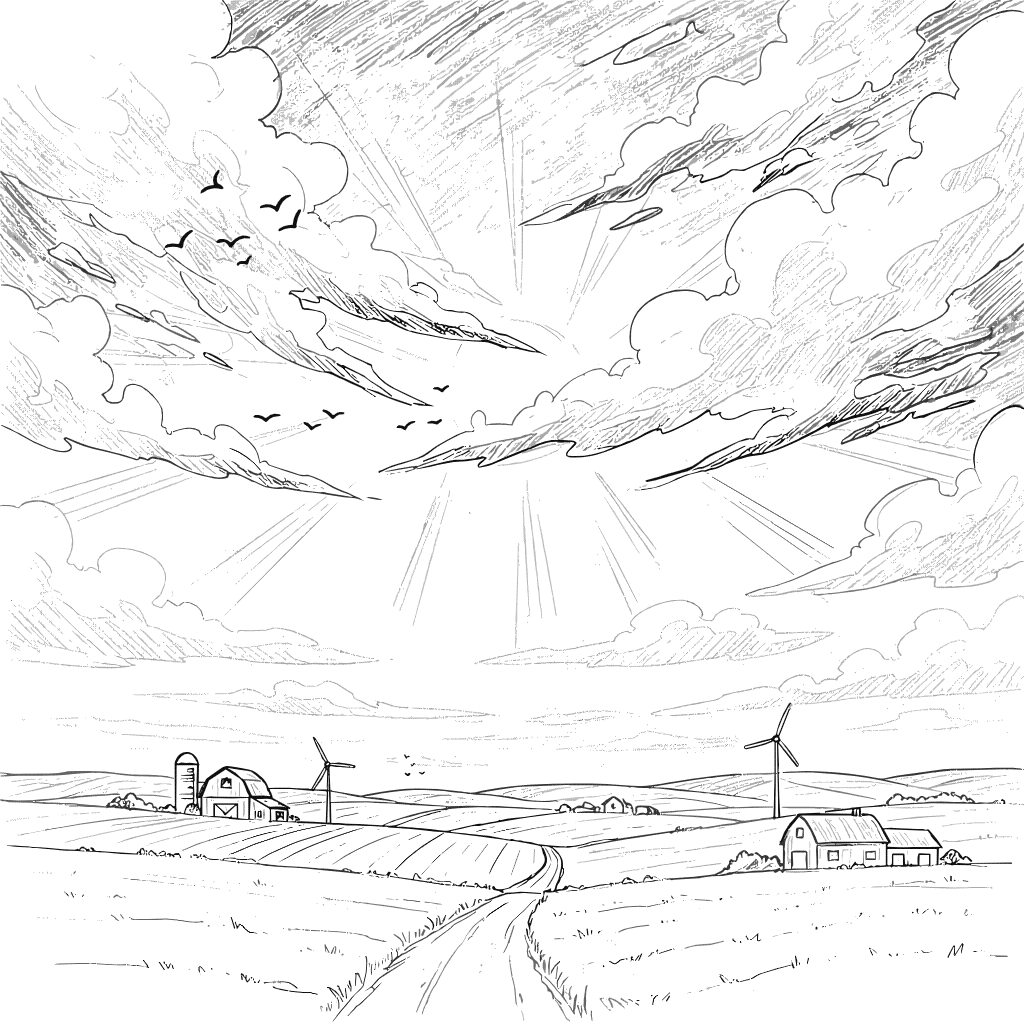
The sky. The sun.
- simlu
- x1 looks like x2 (property of x1)
- narju
- … is orange
.i le pelxu xrula cu se farna le solri
Yellow flowers are oriented towards the Sun.
- pelxu
- … is yellow
- se farna
- x1 is oriented towards x2
- farna
- x1 is the direction of x2
.i le pezli be le tricu cu crino
Leaves of trees are green.
- pezli
- x1 is a leaf of x2
- le tricu
- tree
- crino
- … is green
.i mi zvati le korbi be le blanu xamsi
I am at the border of a blue sea.
- zvati
- … is present at …
- korbi
- x1 is the border of x2
- le xamsi
- sea
- blanu
- … is blue
.i mi catlu le prenu noi dasni le zirpu taxfu
I look at a person who wears the violet dress.
- dasni
- x1 wears x2 (something)
- le taxfu
- the garment, the dress
- zirpu
- … is violet, … is purple
- xunre
- x1 is red
- narju
- x1 is orange
- pelxu
- x1 is yellow
- crino
- x1 is green
- blanu
- x1 is blue
- zirpu
- x1 is violet
Other useful relations:
le gusni be le manku pagbu pu na ku carmi
The light illuminating dark areas was not intense.
- le pagbu
- the part, the parts
le gusni be fi le solri pu carmi
The light from the Sun was intense.
- gusni
- x1 is a light illuminating x2 from the light source x3
- carmi
- x1 is intense, bright
- manku
- x1 is dark
«sipna» — ‘to sleep’, «sanji» — ‘to be aware’
The following examples illustrate some basic aspects of the mind:
pu ku mi cikna gi'e ku'i na ganse le nu do klama
I was awake but didn't sense your arrival.
pu ku ca le nu mi sipna kei mi ganse ku'i le nu do klama
While I was asleep I nevertheless sensed you coming.
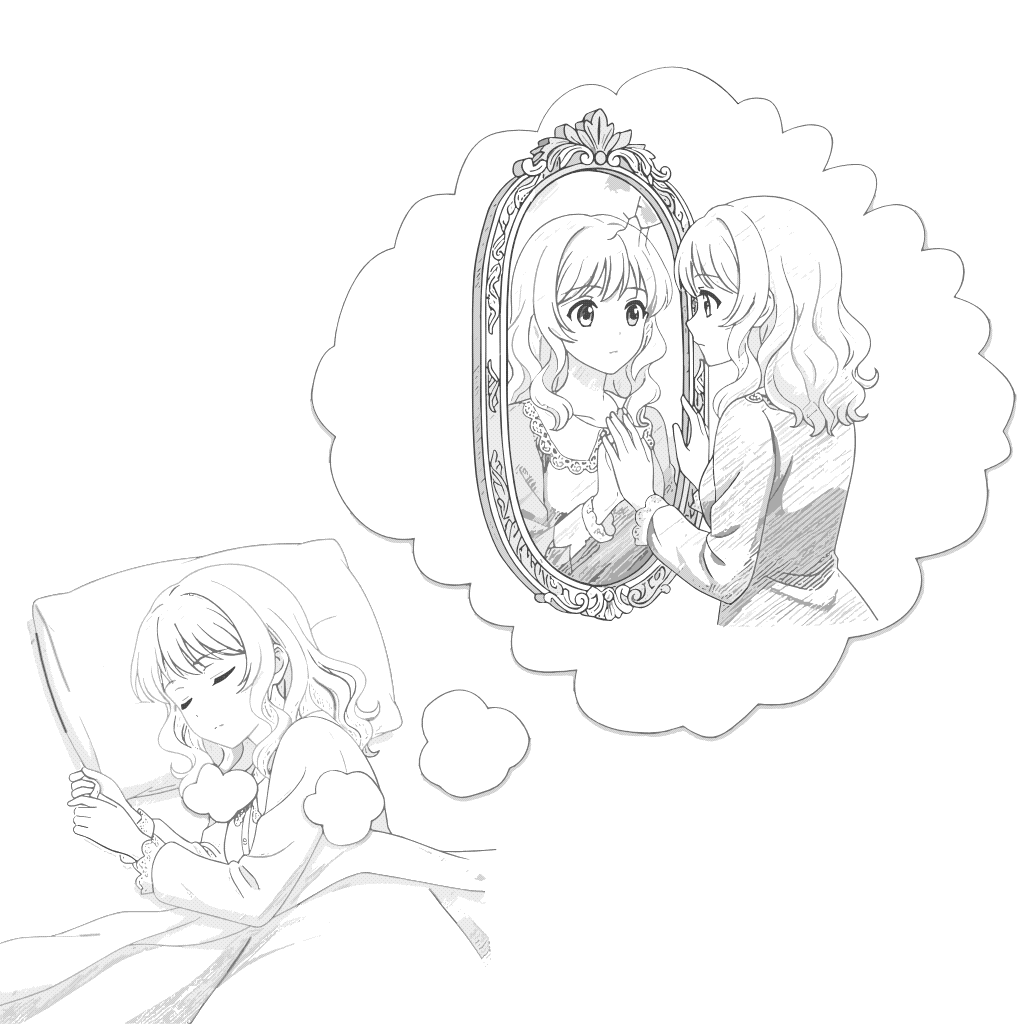
I sleep and I'm aware that I sleep.
pu ku mi ca'o sipna gi'e sanji le nu mi sipna
I was sleeping and I was aware that I was sleeping.
I was having a lucid dream.
mi sanji le nu mi sanji
I am aware that I'm aware.
I am self-conscious.
- sipna
- x1 sleeps
- cikna
- x1 is awake
- ganse
- observer x1 senses, notices some stimulus (event) by mrans x3
- sanji
- x1 is conscious, aware of x2 (event)
ganse doesn't imply any mental processing; it just describes perception, recognition, detection of some stimulus via sensory channels (specified in x3).
On the other hand, sanji describes passive sensing, which involves mental processing but not necessarily via sensory inputs at all (some mental relationships are not detected by the senses).
Emotions: «cmila» — ‘to laugh’, «cisma» — ‘to smile’
coi
.i ma nuzba
.i do simlu le ka badri
Hi.
What are the news?
You seem to be sad.
- nuzba
- … is news about … (something)
- badri
- x1 is sad about x2
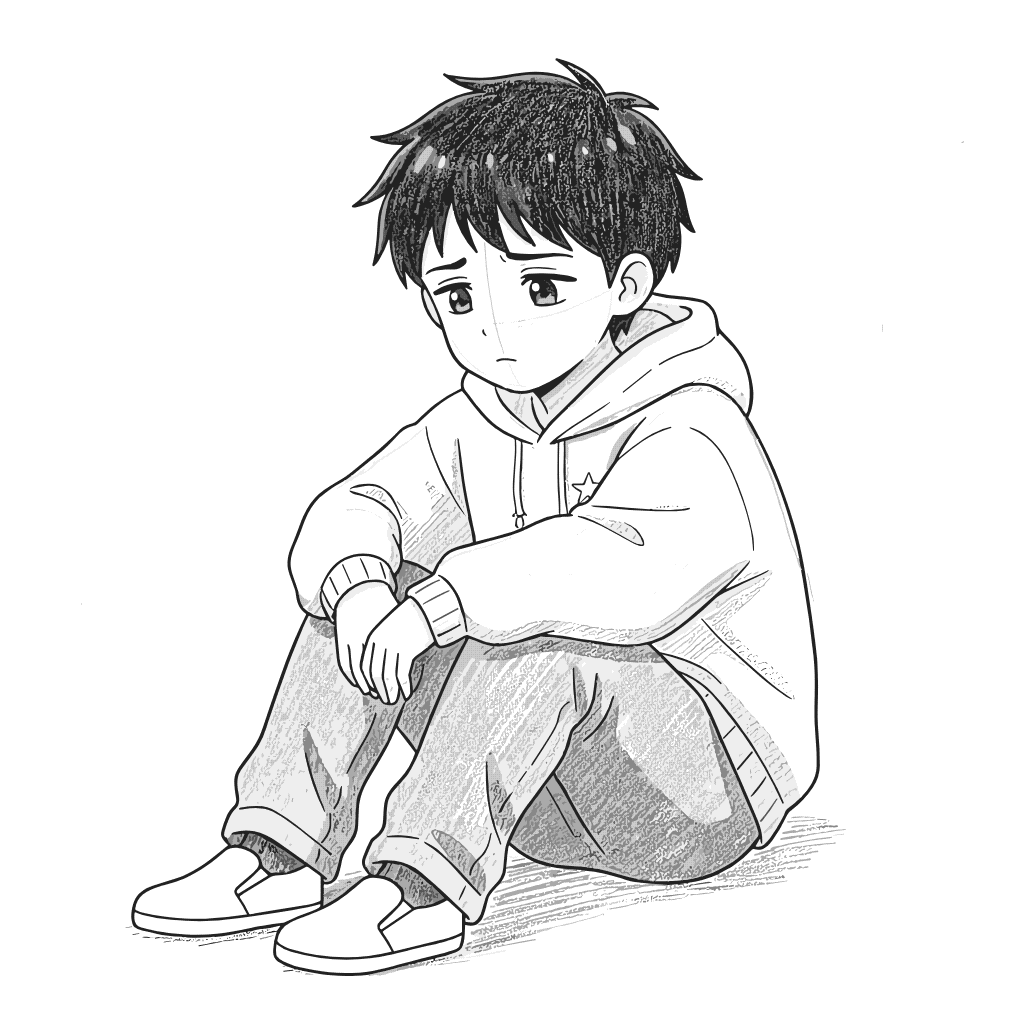
The person seems to be sad.
mi steba le nu le bruna be mi co'a speni le ninmu
I am frustrated that my brother gets married the woman.
- le bruna
- the brother, the brothers
- steba
- x1 feels frustration about x2
- speni
- … is married to … (someone)
mi se cfipu
.i xu do na ku gleki le nu le bruna co'a speni
I am confused.
You are not happy that the brother gets married?
- se cfipu
- x1 is confused about x2
- gleki
- x1 is happy about x2
ie
.i le ninmu cu pindi
.i le ninmu na ku ponse le jdini
.i mi na ku kakne le ka ciksi
Yeah.
The woman is poor.
She doesn't have money.
I am not able to explain.
- pindi
- … is poor
- le jdini
- the money
- ponse
- … owns … (something)
- kakne
- x1 is capable of x2 (property of x1)
- ciksi
- … explains … (something)
ua
.i la'a do kanpe le nu le ninmu na ku prami le bruna
Ah!
Probably, you expect that the woman doesn't like the brother.
- la'a
- interjection: probably, it's likely
- kanpe
- x1 expects x2 (some event )
mi terpa le nu le ninmu ba tarti lo xlali
.i ku'i le bruna cu cisma ca ro nu ri tavla le ninmu
.i ri ta'e cmila
I am afraid that she will behave bad.
But the brother smiles every time he talks to her.
And she usually laughs.
- terpa
- x1 fears x2
- tarti
- … behaves as … (property)
- lo xlali
- something bad
- cisma
- x1 smiles
- cmila
- x1 laughs
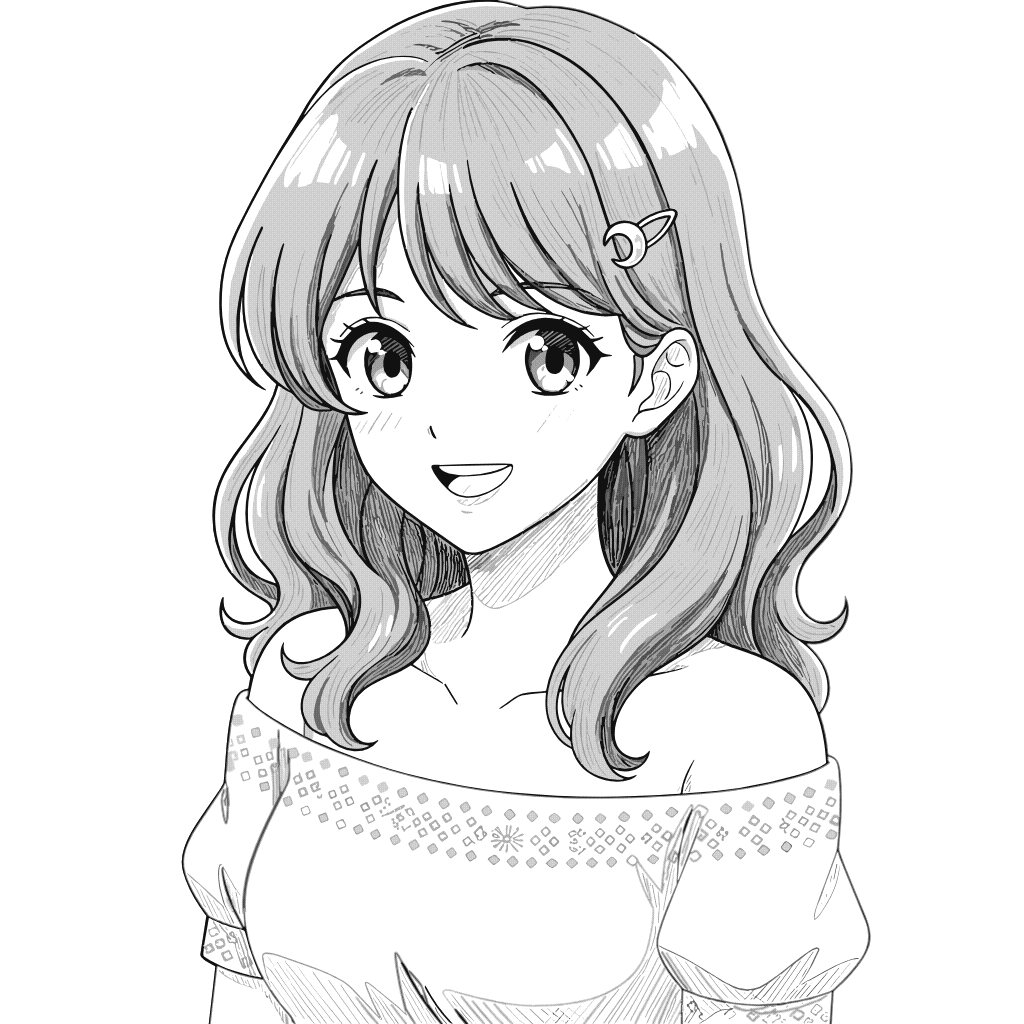
The person smiles.
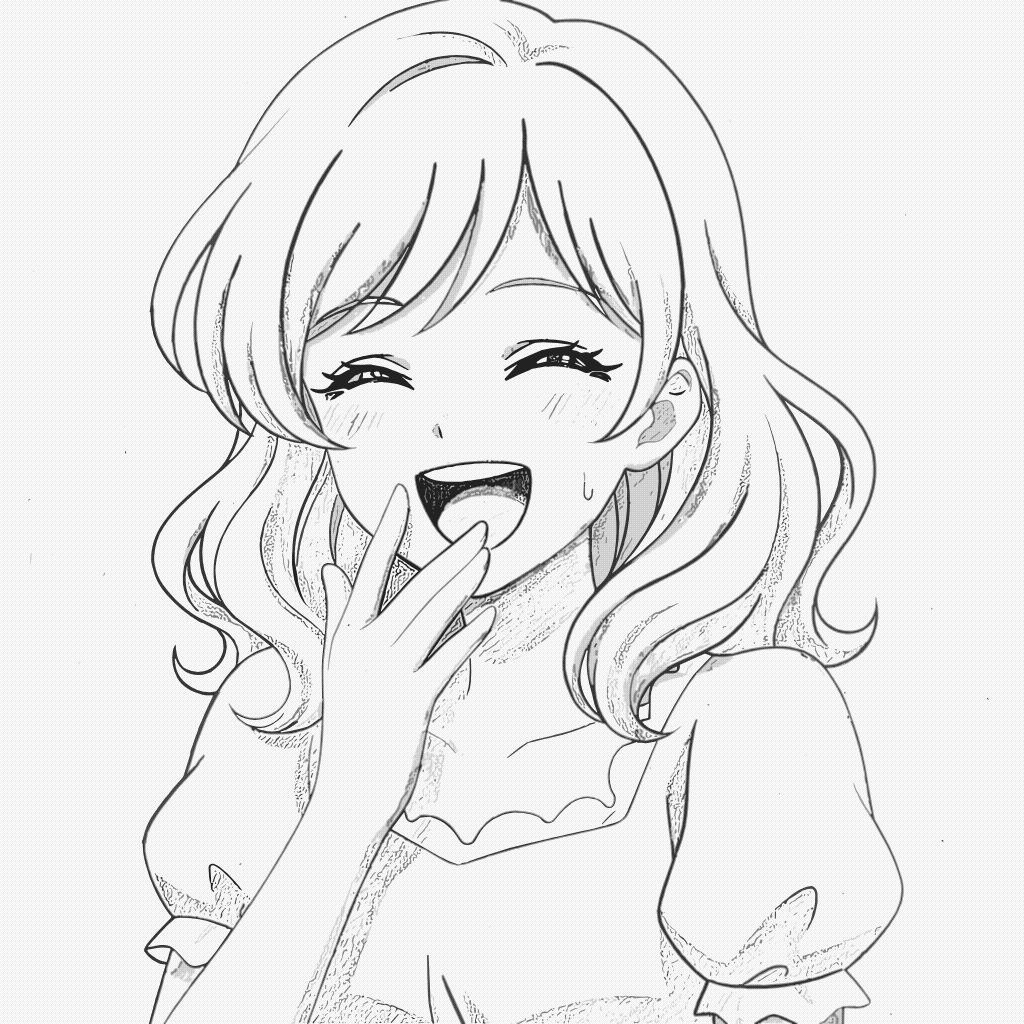
He/she laughs.
mi kucli le nu le ninmu cu prami le bruna
I wonder whether the girl likes the brother.
- kucli
- x1 is curious of x2
mi na ku kanpe
I don't expect that.
- kanpe
- x1 expects that x2 (event) happens
ko surla
Relax!
- surla
- x1 relaxes by doing x2 (property of x1)
- cinmo
- x1 feels emotion x2 (property of x1)
- nelci
- x1 likes x2
- manci
- x1 feels awe or wonder about x2
- fengu
- x1 is angry about x2
- xajmi
- x1 thinks x2 is funny
- se zdile
- x1 is amused by x2
- zdile
- x1 is amusing
- djica
- x1 desires x2
- pacna
- x1 hopes that x2 is true
Health
ca glare
It's hot now.
- glare
- … is hot
.i ku'i mi ganse le lenku
But I feel cold.
- ku'i
- interjection: but, however
xu do bilma
Are you ill?
- bilma
- … is ill
bilma
Yes.
xu do bilma fi le vidru
.i .e'u do klama le mikce
Do you have a virus? I suggest you go to a doctor.
- le vidru
- the virus
- le mikce
- doctor
mi bilma le ka cortu le galxe
.i mi sruma le du'u mi bilma fi la .zukam.
My symptoms is that my throat aches.
I assume that I have a cold.
- le galxe
- the throat
- cortu
- x1 has pain in organ x2, which is a part of x1's body
- sruma
- … assumes that … (proposition)
- la .zukam.
- common cold (disease)
ko kanro
Get well!
- kanro
- x1 is healthy
ki'e
Thanks.
- bilma
- x1 is ill or sick with symptoms x2 from disease x3
Note that the second place of bilma describes symptoms, such as le ka cortu le galxe = to have pain in the throat. The third place indicates the name of the disease causing those symptoms. Obviously, you may wish to skip filling these places of bilma.
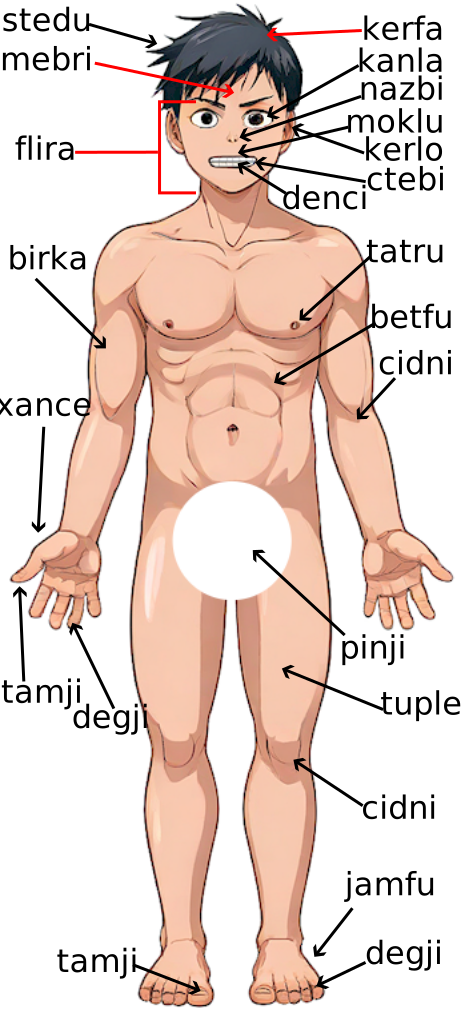
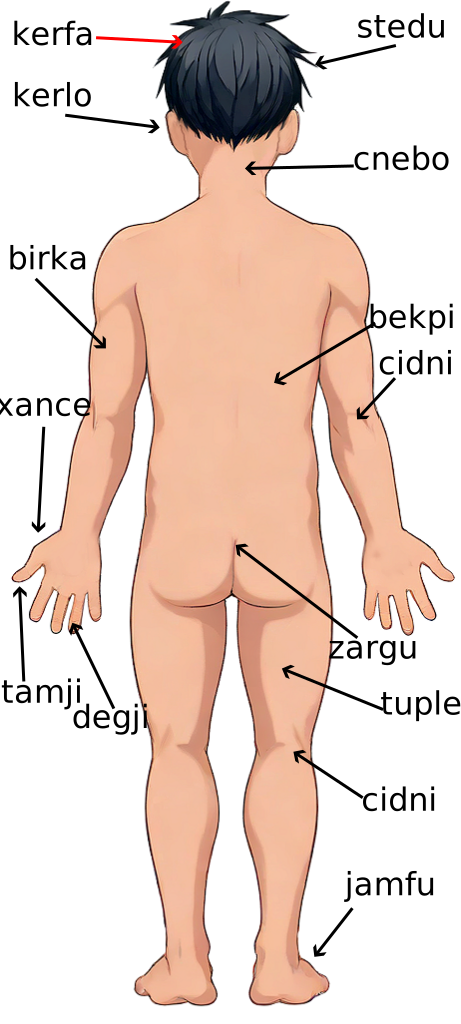
Human body
le nanmu cu se xadni le clani
The man has a long body. The man is tall.
- se xadni
- x1 has the body x2
- xadni
- x1 is the body of x2
mi pu darxi fi le stedu .e le zunle xance
.i ca ti le degji be le xance cu cortu
.i ku'i le pritu xance na ku cortu
I hit something with the head and the left hand. Now the finger of the hand hurts. But the right hand doesn't hurt.
- darxi
- x1 hits x2 with x3
- le stedu
- the head
- le xance
- the hand, the hands
- zunle
- … is to the left of … (something) as viewed by … (someone)
- pritu
- … is to the right of … (something) as viewed by … (someone)
Most of words for parts of body have the same place structure as xadni:
- stedu
- x1 is a head of x2
However, some describe smaller parts:
- degji
- x1 is a finger/toe on part x2 (hand, foot)
le degji be le xance be le ninmu cu clani
The woman's fingers are long.
Digits of hand of the woman are long
- clani
- … is long
mi viska le jamfu .i ku'i mi na ku viska le degji be le jamfu
I can see the feet. But I don't see its toes.
- le jamfu
- the foot, the feet
- janco
- x1 is a joint attaching limbs x2
- ctebi
- x1 is a lip of mouth, orifice x2
- cidni
- x1 is a knee or elbow of limb x2
Kinship
coi do mi se cmene zo .adam.
.i ti du la .alis.
.i ri speni mi
Hello to you. I am called "Adam".
This is Alice.
She is my wife.
- se cmene
- … is called … (name)
- speni
- … is married to … (someone)
pluka fa le nu penmi do
.i .e'o do klama le nenri be le dinju
Pleasure to meet you.
Please, come into the house.
- pluka
- … is pleasant
- penmi
- … meets … (someone)
- le nenri
- the interior
- le dinju
- the building, the house
ki'e
Thanks.
.i .au gau mi do co'a slabu le lanzu be mi
.i le re verba cu panzi mi
.i le tixnu cu se cmene zo .flor.
.i la .karl. cu du le bersa
I'd like you to get to know my family.
The two children are my offspring.
The daughter is called "Flor".
Karl is the son.
- gau
- modal term: caused by … (agent)
- slabu
- … is familiar with … (something)
- le lanzu
- the family
- panzi
- … is a child of … (someone)
- le tixnu
- the daughter, the daughters
- le bersa
- the son, the sons
la .karl. cu mutce citno
Karl is very young.
ie
Yeah.
.i ji'a mi se tunba re da noi ca na ku zvati le dinju
.i sa'e mi se tunba le pa bruna .e le pa mensi
Also I have two siblings who are now not in the house.
To be precise, I have a brother and a sister.
- ji'a
- interjection: additionally, also
- tunba
- … is a sibling of … (someone)
- sa'e
- interjection: to be precise
- mensi
- … is a sister of … (someone)
ue
.i le lanzu be do cu barda
Wow!
Your family is large.
je'u pei
Really?
- je'u
- interjection: truly
The words for names of family members have a similar place structure:
- speni
- x1 is a husband/wife of x2
co'a speni means to get married:
mi co'a speni la .suzan.
I married Susan.
- lanzu
- x1 is a family including x2
- panzi
- x1 is a child of x2
- tixnu
- x1 is a daughter of x2
- bersa
- x1 is a son of x2
- tunba
- x1 is a sibling (brother/sister) of x2
- bruna
- x1 is a brother of x2
- mensi
- x1 is a sister of x2
Note that panzi can be applied to grown-up children:
- verba
- x1 is a child, immature person of age x2 (event)
- panzi
- x1 is a child, offspring of x2
verba doesn't necessarily talk of the child as of a family member:
le bersa be le pendo be mi cu verba le nanca be li ci
The son of my friend is a child of three years old.
- citno
- x1 is young
- laldo
- x1 is old, aged
Pairs of traditional words (for humans only):
- le ninmu
- woman / women
- le nanmu
- male man / male men
- le nixli
- the girls
- le nanla
- the boys
- le remna
- the humans
Note that le prenu means the people or the persons. In fairy tales and fantastic stories, not only humans (lo'e remna) but also animals or alien beings from other planets can be considered persons.
These words can be used to describe genetically determined sex (both in animals and humans) as opposed to gender:
- le fetsi
- the female
- le nakni
- male
These word describe parental (not necessarily genetic) relations:
- mamta
- x1 is a mother of x2, x1 acts maternally
- patfu
- x1 is a father of x2
- rirni
- x1 is a parent of x2, x1 raises x2
In the shop
ue
do pu te vecnu le laldo karce
Wow!
You bought an old car.
- te vecnu
- … buys … (something)
- laldo
- … is old
ie
.i ku'i mi na ku pu pleji le so'i jdini
Yeah.
But I didn't pay much money.
- pleji
- … pays … (payment) to … (recipient)
- so'i
- many
ma pu jdima le karce
What was the price of the car?
- jdima
- … is the price of … (something)
mi pu pleji le rupnusudu be li pa ki'o le kagni le karce
I paid a thousand dollars to the company for the car.
- rupnusudu
- … costs … (number) US dollars
- le kagni
- the company, the companies
mi pu vecnu le laldo karce pe mi le pendo be mi
.i le pendo pu pleji le rupne'uru be li re ki'o mi le karce
I sold an old car of mine to my friend.
The friend paid 2 000 euro for the car.
- vecnu
- … sells … (something) to … (recipient)
- rupne'uru
- … costs … (number) euro
- ki'o
- comma between digits so that pa ki'o is 1, 000 (one thousand)
Shop, buildings
ma stuzi le zdani be do
What is the location of your home?
- stuzi
- … is a place, … is a location
le korbi be le cmana
.i mi se zdani le nurma
.i le zdani be mi cu barda dinju gi'e se sledi'u ci da .e le vimstu .e le lumstu
The edge of the mountain.
I live in the country.
My home is a big house and has three rooms plus a toilet plus a bathroom.
- le cmana
- the mountain, the mountains
- se zdani
- … lives in … (place)
- le nurma
- the rural area, the countryside
- sledi'u
- … is a room
- vimstu
- … is a toilet
- lumstu
- … is a bathroom
je'e
.i ku'i mi pu jbena le tcadu .i je ca ti mi se zdani le jarbu be la .paris.
.i mi xabju ne'a le zarci
I see.
But I was born in the city, and now I live in the suburbs of Paris.
I live near a shop.
- je'e
- interjection: I see, understood
- jbena
- … is born
- le tcadu
- the city
- jarbu
- … is a suburban area of … (city)
- xabju
- … inhabits … (place)
- ne'a
- modal term: near …